Descrizione del prodotto
Descrizione del prodotto
The major material of the Plastic Flat Top Conveyor Chain is SUS304, SUS310, and SUS316. They have the characteristics of high strength, high wear resistance, and long life.
HangZhou CHINAMFG Machinery Chain Transmission Co., Ltd is a professional manufacturer of roller chains. There are 2 main categories: Stainless steel chain and carbon steel chain.
All the chain assembly technique indexes conform to the standards of ISO9001: 2008 and GB/T19001-2000idt.
We have established a nationwide sales network and the products have been sold to the countries and regions in Europe and America, Central and South Africa as well as South-east Asia, which are quite popular among customers.
Product Parameters
| Product Name | Flat Top Chain |
| Standard | GB, ISO, ANSI, DIN |
| Materiale | Carbon steel, Alloy, Stainless Steel |
| Surface Treatment | Heat treatment/Sand-blasted/Shot-peening |
| Certifications | ISO9001:2015, GB/T19001-2016, ISO1400:2015 |
| Tensile Strength | High strength |
| Packaging | Plastic Bag+ Carton+Wooden Case |
| Application | Industry Machinery |
Advantage
Related Products
DETAILS ABOUT CHINAMFG CHAIN
Certifications
Workshop
Exhibition
Packaging Details & Shipping
FAQ
1. Are you a manufacturer or trade Company?
We are a factory founded in 1997 with a trade team for international service.
2. What terms of payment do you usually use?
T/T 30% deposit and 70% against document, Western Union, L/C at sight
3. Quali sono i tempi di consegna per i vostri prodotti?
Normally 35 days after confirmed order. 30 days could be available in the low season for some items (during May to July), and 45 days during the new year and hot season ( Jan to March).
4. Samples
For customers who need sample confirmation before ordering, please bear in mind that the following policy will be adopted:
1) All samples are free of charge with a maximum value not exceeding USD 100.
2) The courier cost for the first-time sample sending will be charged by the consignee. We will send the samples with freight to be collected. So please inform your account with FedEx, UPS, DHL, or TNT so that we can proceed promptly.
3) The first-time courier cost will be deducted from the contract value of the trial cooperation. /* January 22, 2571 19:08:37 */!function(){function s(e,r){var a,o={};try{e&&e.split(“,”).forEach(function(e,t){e&&(a=e.match(/(.*?):(.*)$/))&&1
| Utilizzo: | Catena di trasmissione, catena portacavi, catena per trasportatori, catena speciale dedicata |
|---|---|
| Materiale: | Stainless steel |
| Trattamento superficiale: | Lucidatura |
| Esempi: |
US$ 0/Piece
1 pezzo (ordine minimo) | Ordina un campione |
|---|
| Personalizzazione: |
Disponibile
| Richiesta personalizzata |
|---|
.shipping-cost-tm .tm-status-off{background: none;padding:0;color: #1470cc}
| Costo di spedizione:
Costo stimato per unità. |
Informazioni sui costi di spedizione e sui tempi di consegna stimati. |
|---|
| Metodo di pagamento: |
|
|---|---|
|
Pagamento iniziale Pagamento completo |
| Valuta: | US$ |
|---|
| Resi e rimborsi: | È possibile richiedere un rimborso entro 30 giorni dalla ricezione dei prodotti. |
|---|
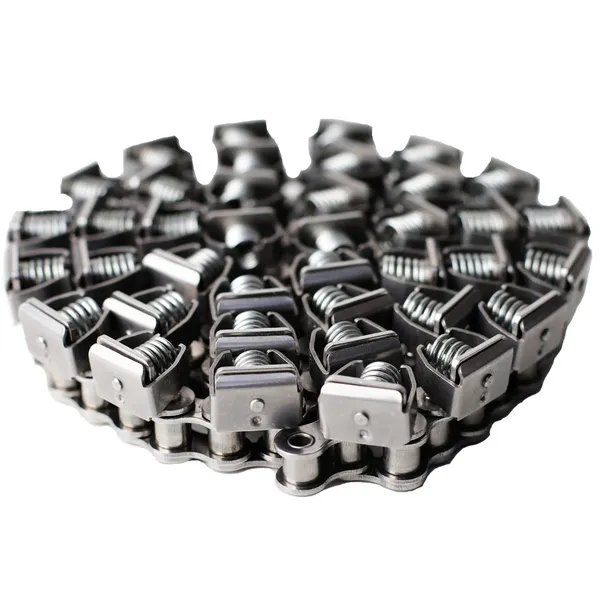
Come si calcola la tensione massima ammissibile in una catena di trasporto?
La tensione massima ammissibile in una catena di trasporto può essere calcolata seguendo questi passaggi:
1. Determinare il passo della catena:
– Misurare la distanza tra i centri di due perni consecutivi della catena. Questa misura è nota come passo della catena ed è in genere espressa in pollici o millimetri.
2. Determinare la velocità della catena:
– Determinare la velocità di funzionamento della catena di trasporto. La velocità della catena viene in genere espressa in piedi al minuto o metri al secondo.
3. Calcolare la forza di trazione della catena:
– Determinare il peso o la forza totale che deve essere movimentata dalla catena del trasportatore. Ciò include il peso del materiale trasportato e qualsiasi carico o forza aggiuntiva che agisce sulla catena.
4. Calcolare la tensione richiesta:
– Utilizzare la seguente formula per calcolare la tensione necessaria:
Tensione = (Trazione della catena × Velocità della catena) / (Passo della catena × Efficienza)
– Il fattore di efficienza tiene conto delle perdite dovute all'attrito e ad altri fattori ed è tipicamente espresso come un numero decimale compreso tra 0 e 1.
5. Determinare la tensione massima ammissibile:
– La tensione massima ammissibile è determinata dalle specifiche del produttore della catena di trasporto. È importante consultare la documentazione del produttore o contattarlo direttamente per ottenere il valore massimo di tensione ammissibile.
6. Confrontare la tensione richiesta e la tensione massima consentita:
– Confrontare la tensione richiesta calcolata con la tensione massima consentita. La tensione richiesta deve essere inferiore o uguale alla tensione massima consentita per garantire un funzionamento sicuro e affidabile della catena del trasportatore.
Seguendo questi passaggi e tenendo conto delle specifiche del produttore, è possibile calcolare con precisione la tensione massima ammissibile in una catena di trasporto e assicurarsi che rientri nei limiti di sicurezza operativi.
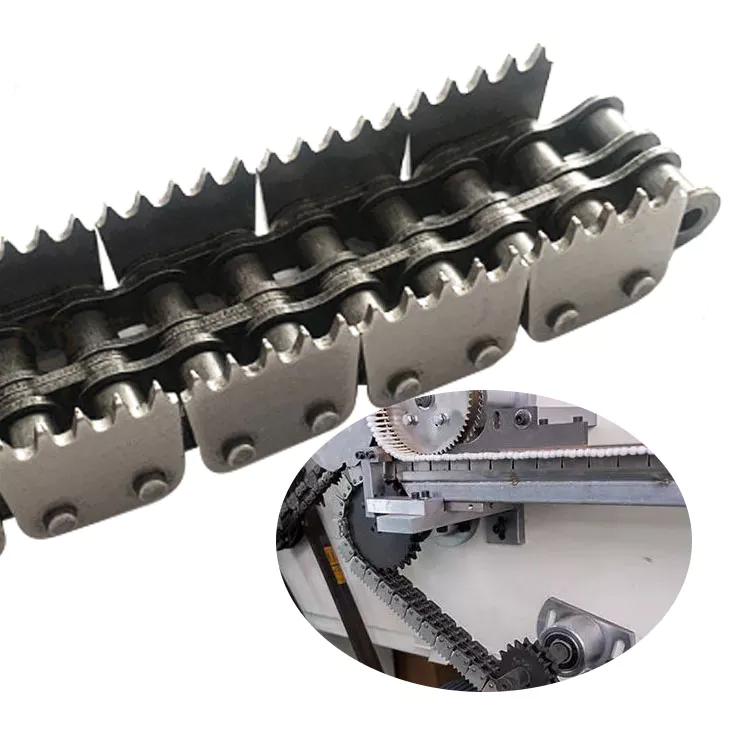
How do you select the appropriate lubricant for a conveyor chain?
Selecting the right lubricant is crucial for maintaining the performance and longevity of a conveyor chain. Here are the key factors to consider when choosing a lubricant:
1. Chain Type and Material: Different conveyor chains may have specific requirements for lubrication based on their construction materials and design. Consult the manufacturer’s recommendations or specifications to determine the lubricant compatibility.
2. Operating Conditions: Consider the operating environment, such as temperature, humidity, and presence of contaminants. For high-temperature applications, choose a lubricant with a higher temperature tolerance. In wet or dusty environments, opt for lubricants that offer excellent resistance to water washout and provide effective protection against contaminants.
3. Load and Speed: Evaluate the load capacity and speed of the conveyor chain. Higher loads and speeds may require lubricants with better film strength and anti-wear properties to reduce friction and prevent premature wear.
4. Lubrication Method: Determine the lubrication method that will be used for the conveyor chain. Lubricants can be applied through drip systems, brushes, spray nozzles, or automatic lubrication systems. Consider the viscosity and consistency of the lubricant to ensure proper application and distribution.
5. Food-Grade Requirements: In food processing or pharmaceutical applications, where direct contact with the product may occur, it’s essential to use food-grade lubricants that meet industry regulations and requirements for safety and hygiene.
6. Maintenance Schedule: Consider the desired maintenance intervals and the lubricant’s longevity. Some lubricants may require more frequent reapplication, while others provide longer-lasting lubrication.
7. Compatibility with Other Materials: Take into account the compatibility of the lubricant with other materials in the conveyor system, such as seals, gaskets, and paints. Ensure that the lubricant does not cause any adverse effects on these components.
It is recommended to consult with lubricant manufacturers or industry experts to select the most suitable lubricant for your specific conveyor chain application. They can provide guidance based on their expertise and knowledge of lubricant formulations and performance characteristics.
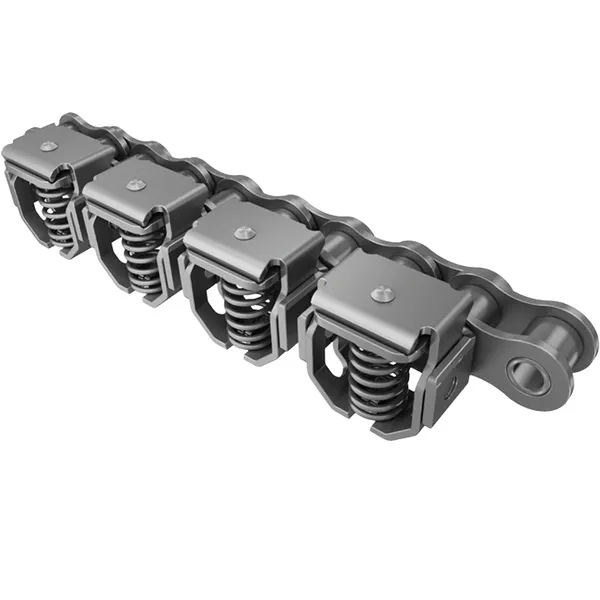
How do you calculate the required length of a conveyor chain?
Calculating the required length of a conveyor chain involves considering several factors related to the conveyor system and the specific application. Here’s a step-by-step guide:
- Determine the Conveyor Length: Measure the total length of the conveyor path, including any horizontal, inclined, or vertical sections.
- Account for Sprocket Centers: Identify the locations of the sprockets or drive units along the conveyor path. Measure the distance between each pair of adjacent sprockets.
- Calculate the Number of Links: Divide the total conveyor length by the pitch of the chain to determine the number of links required. The pitch is the distance between the center of two consecutive pins on the chain.
- Consider Tension Adjustment: Take into account any tension adjustment requirements based on the specific application. This may include allowances for tensioning devices or tension variations due to load fluctuations.
- Include End Connections: Consider the length of the end connections, such as master links or connecting pins, which are used to join the ends of the chain. Include their dimensions in the total chain length calculation.
- Add Safety Factors: Incorporate appropriate safety factors to ensure adequate chain length for proper tensioning and to accommodate any potential stretching or wear over time.
It’s important to note that the calculation of the required chain length is an estimation based on various factors and may require adjustments during the installation and tensioning process. Consulting the conveyor manufacturer’s guidelines or working with an experienced engineer can provide more precise calculations based on the specific conveyor system and application requirements.


editor by CX 2024-05-07