Produktbeskrivning
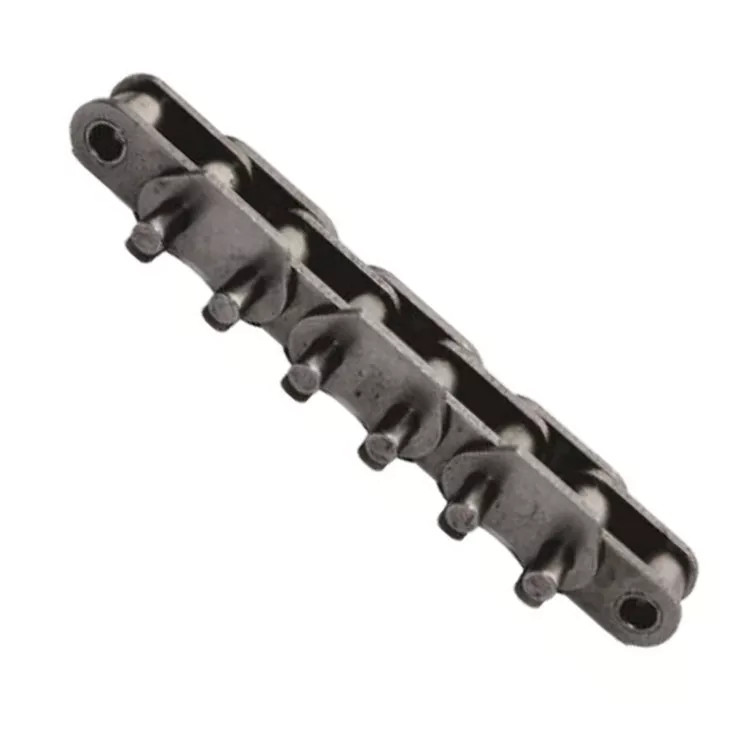
Stainless Steel Hollow Pin Chain C2060 For Conveyor line
1). Quality standard: ISO9001 certificate
2). Materialsteel, ss316, ss304
3). Modle: Simplex, duplex, triplex and so on
4). Long service life
5). Big Pitch, 20A (100) – 48A ( 240), 20B-72B
6). Excellent and high quality control, advanced producing equipment.
1. Short pitch transmission precision roller chains(A series)
2. Short pitch transmission precision roller chains(B series)
3. Roller chains with straight side plates(A series)
4. Roller chains with straight side plates(B series), and so on.
5. Stainless steel hollow pin conveyor roller chain
6. Triple roller chain, duplex roller chain.
We are the manufacturer of sprockets and machinery transmission parts. Main products include chains, sprockets, timing belt pulleys, gears, bushes & hubs, pulleys, and others.
We can supply different types of chainswith good price and high quality.
Please contact us if you have any requirment.
Our conveyor chains are as following items:
Short pitch, double pitch conveyor roller chain:
1)European standard short pitch roller conveyor accessories: A1 – WSK2
2)European Standard Short Pitch Hollow Pin Chains and accessories: 08BHP – 12BHP
3)European standard short pitch bending roller conveyor: 08BSB, 10BSB, 4)12BSB
4)European standard double pitch conveyor chain: C208B – C232BL
5)American Standard Short pitch conveyor chain attachments: A1 – WSK2
6)American Standard Short Pitch Hollow Pin Chain: 40HP – 80HP
7)American Standard short pitch bending roller conveyor: 35SB – 80SB
8)American Standard Double pitch conveyor roller: C2040 – C2162H
9)American Standard Double pitch conveyor roller attachment: A1 – WSK2
10)American standard double pitch hollow pin chain: C2040HP – C2082HP
11)American Standard Double pitch conveyor roller scoliosis: C2040SB, C2050SB, C2060SB
12)American standard double pitch conveyor roller Plastic Large: C2042D – C2102HD
13)American Standard controllable beat conveyor (speed chain): C2030VR – C2080VR
14)American Standard side-mounted conveyor roller (short pitch double pitch): 40PSR – 100PSR; C2040PSR – C2100PRS
15)American Standard overhead plastic roller conveyor chains (short pitch, double pitch and long pitch): 40TR – 100TR; C2040TR – C2100TR
Long pitch conveyor chain
1)American Standard (ANSI) standard overloaded conveyor (large roller flange roller chain): UM0703 – UM2430
2)International Standard (ISO) CZPT pin conveyor (metric conveyor chains, conveyor chains metric) and accessories Chains: M, MT Series
3)International Standard (ISO) hollow pin conveyor (metric conveyor chains, conveyor chains metric) and accessories Chains: MC, MCT Series
4)British Standard (BS) Metric CZPT pin conveyor chains and accessories Chains: E, ET Series
5)British Standard (BS) Metric Hollow Pin Chains and accessories Chains: EC, ECT series
6)British Standard (BS) inch CZPT pin conveyor and conveyor accessories: Z, ZT Series
7)British Standard (BS) Inch Hollow Pin Chains and accessories Chains: ZC, ZCT Series
8)DIN Standard (DIN) CZPT pin and hollow shaft conveyor and conveyor accessories: FV, FVT Series; FVH, FVHT series
9)Japanese standard (JIS) long pitch straight roller conveyor and conveyor accessories: JM Series
10)Japanese standard (JIS) bearing sleeve Chains: Please contact the sales department.
11)Japanese standard (JIS) Bearing Roller Conveyor: Please contact the sales department.
12)Japanese standard (JIS) plastic bushing conveyor roller: Please contact the sales department.
13)Special conveyor chains, non-standard conveyor chains, special conveyor chains, special conveyor chains, special-purpose conveyor chains
|
| Material: | Alloy Steel |
|---|---|
| Strukturera: | Hollow Chain |
| Ytbehandling: | Putsning |
| Kedjestorlek: | 1/2"*11/128" |
| Särdrag: | Oljebeständig |
| Color: | Enfärgad |
| Anpassning: |
Tillgänglig
| Anpassad förfrågan |
|---|

How do you ensure proper tensioning and alignment of a conveyor chain?
Proper tensioning and alignment are essential for the efficient and reliable operation of a conveyor chain. Here are the steps to ensure correct tensioning and alignment:
1. Initial Installation:
– Ensure that the conveyor frame and supports are properly aligned and leveled before installing the chain. Any misalignment or unevenness can lead to tensioning and alignment issues.
– Follow the manufacturer’s guidelines and specifications for chain installation. This includes proper placement of sprockets, tensioners, and guides.
2. Tensioning:
– Adjust the tension of the chain to the manufacturer’s recommended specifications. Proper tension prevents excessive sagging or tightness, reducing wear and extending the chain’s life.
– Use tensioning devices, such as adjustable take-up units or tensioning screws, to achieve the desired tension. Refer to the manufacturer’s guidelines for the appropriate method of tensioning for your specific conveyor chain.
– Regularly check and adjust the tension as needed. Factors such as chain wear, load variations, and temperature changes can affect the chain’s tension over time.
3. Alignment:
– Check the alignment of the chain with respect to the sprockets and guides. Misalignment can cause uneven wear, increased friction, and premature failure of the chain.
– Inspect the alignment by visually examining the chain’s path along the sprockets and guides. It should run smoothly without any signs of rubbing or excessive deviation.
– Use alignment tools, such as laser alignment devices or straightedges, to accurately assess and correct any misalignment. Adjust the position of sprockets, guides, and supports as necessary.
4. Regular Maintenance:
– Implement a scheduled maintenance program to regularly inspect and maintain proper tensioning and alignment of the conveyor chain.
– Monitor the chain’s performance, including wear patterns, noise levels, and power consumption, as indicators of potential tensioning or alignment issues.
– Keep the chain clean and free from debris or contaminants that can affect its movement and alignment.
By following these steps and regularly monitoring the tensioning and alignment of the conveyor chain, you can ensure smooth and reliable operation, minimize chain wear, and reduce the risk of unexpected failures.
Hur hanterar en transportkedja olika typer av material?
En transportkedja är konstruerad för att hantera en mängd olika material i olika industriella tillämpningar. Den kan effektivt transportera olika typer av material, inklusive:
1. Bulkmaterial: Transportörkedjor används ofta för att hantera bulkmaterial som spannmål, kol, malm, ballast och pulver. Kedjans design, inklusive länkarnas avstånd och form, hjälper till att förhindra materialspill och säkerställer ett jämnt och jämnt flöde.
2. Förpackade varor: Transportörkedjor används också för att transportera förpackade varor som lådor, kartonger, backar och pallar. De ger en stabil och pålitlig metod för att transportera dessa varor längs produktionslinjen, vilket minskar manuell hantering och ökar produktiviteten.
3. Smådelar: Transportörkedjor med specialfästen eller konfigurationer med liten stigning är lämpliga för hantering av smådelar eller komponenter. Dessa kedjor säkerställer exakt positionering och skonsam transport av ömtåliga eller invecklade föremål.
4. Tunga laster: Industriella transportkedjor kan hantera tunga laster, såsom bildelar, maskinkomponenter och stor utrustning. De är konstruerade för att motstå vikten och påfrestningarna från dessa föremål, vilket ger pålitlig och effektiv materialhantering i krävande miljöer.
5. Livsmedels- och dryckesprodukter: Transportörkedjor som används inom livsmedels- och dryckesindustrin är utformade för att uppfylla strikta hygien- och säkerhetsstandarder. De är tillverkade av material som är korrosionsbeständiga, lätta att rengöra och uppfyller livsmedelsklassificeringsföreskrifterna. Dessa kedjor säkerställer säker och kontamineringsfri hantering av livsmedelsprodukter.
6. Farliga material: Transportörkedjor kan användas för att säkert transportera farliga material, såsom kemikalier eller avfallsprodukter. Specialiserade kedjor med ytterligare säkerhetsfunktioner, såsom förseglade höljen eller inneslutningssystem, används för att minimera risken för spill eller läckor.
Transportörkedjor kan anpassas med olika kedjekonfigurationer, tillbehör och fästen för att tillgodose specifika materialegenskaper och hanteringskrav. Valet av lämplig kedjetyp, material och designparametrar säkerställer optimal prestanda och effektiv materialhantering för ett brett spektrum av material.
What are the environmental considerations when using a conveyor chain?
When using a conveyor chain, there are several environmental considerations to take into account:
1. Temperature and Humidity: Conveyor chains may be exposed to different temperature and humidity levels depending on the application and operating environment. Extreme temperatures or high humidity can affect the performance and lifespan of the chain. It is important to select a chain material and lubrication that can withstand the specific environmental conditions.
2. Contamination and Cleanliness: The presence of dust, dirt, debris, or other contaminants can impact the operation and efficiency of the conveyor chain. Regular cleaning and maintenance should be performed to prevent build-up and ensure smooth chain movement.
3. Chemical Exposure: Conveyor chains used in industries such as chemical processing or food production may come into contact with corrosive chemicals or cleaning agents. It is crucial to choose a chain material that is resistant to chemical corrosion and select appropriate lubricants compatible with the chemicals present in the environment.
4. Noise and Vibration: Conveyor systems can generate noise and vibration during operation, which may have environmental implications. Noise reduction measures, such as using noise-dampening materials or implementing vibration isolation techniques, can help minimize the impact on the surrounding environment and comply with noise regulations.
5. Energy Efficiency: Consideration should be given to energy consumption and efficiency when using a conveyor chain. Optimize the system design, minimize friction losses, and utilize energy-efficient components to reduce the environmental impact and operational costs.
6. Sustainability: Increasingly, sustainability is an important consideration in industrial operations. Choosing conveyor chains made from recyclable or renewable materials, implementing energy-saving measures, and practicing responsible waste management can contribute to a more environmentally friendly operation.
By taking these environmental considerations into account, industries can ensure the proper functioning of conveyor chains while minimizing environmental impact and complying with relevant regulations.


editor by CX 2023-08-11