Feeder Breaker Chain Shutdown Inspection: What to Prepare Before the Stop
Prepare a feeder breaker chain shutdown inspection with drawings, tools, photo plan, measurement datums, access, sample labels, RFQ fields, and decision.
Engineering GuideUpdated ستمبر 16, 2026
A feeder breaker chain shutdown can provide the only safe opportunity to inspect hidden joints, measure repeating geometry, review sprocket condition, document repairs, and remove samples. If the team discovers during the stop that it lacks the old drawing, a large enough measuring tool, a method for numbering flights, or the correct contact for engineering decisions, the window can close before the evidence is complete.
Preparation should therefore be built around questions the shutdown must answer. Is the chain model confirmed? Which dimensions are missing for replacement? Has one strand needed repeated adjustment? Is uneven flight wear localized or systematic? Do the sprockets need inspection for a coordinated replacement decision? Which samples may need to be removed? Each question becomes an access, tool, photograph, and record requirement.
This checklist does not replace the site’s safety planning, isolation procedure, permits, or machine-specific maintenance instructions. It organizes the engineering evidence work that should happen after the equipment is safely available.
Documents ready
Bring the current/candidate drawings, previous order records, inspection history, and open discrepancy list into the shutdown.
Evidence tools ready
Prepare measuring tools, lighting, camera, approved markers/tags, sketch sheets, sample labels, and data forms before access begins.
Decisions ready
Define who can confirm model identity, approve additional measurements, request sample removal, and close RFQ discrepancies during the stop.
1. Write the Shutdown Questions Before Writing the Checklist
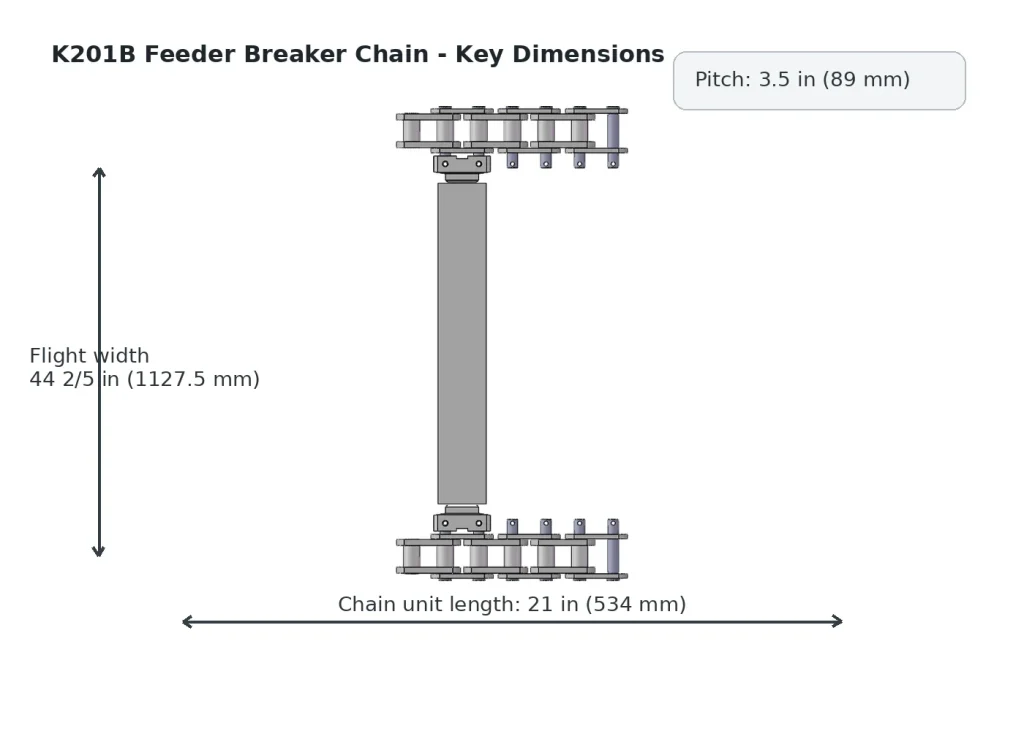
List the decisions that must be made by the end of the inspection. Examples: confirm K201B versus K207B candidate; establish scraper width from intact flights; document chain unit and flight spacing; inspect sprocket tooth condition; explain repeated left-side adjustment; remove one traceable damaged joint sample; or collect data for a custom drawing.
Prioritize questions that cannot be answered after guarding is reinstalled or the machine returns to service. The checklist should protect those opportunities first.
2. Assemble the Document Pack and Mark What Is Uncertain
Gather drawings, prior purchase specifications, chain or sprocket part references, previous inspection logs, adjustment history, repair records, and photographs. Note revision status and machine relationship. Highlight the fields that still need physical verification.
Do not hand the team ten conflicting drawings without a control sheet. Create a one-page document index showing which file is approved, which is historical, and which is a candidate reference.
Shutdown question
A decision the inspection must answer while safe access is available.
Evidence opportunity
A view, dimension, sample, or machine condition that may be unavailable after reassembly.
Stop-time review
A final completeness check performed before access is lost.
Open requirement
A technical or commercial field intentionally left unresolved because supporting evidence is not yet available.
3. Prepare Measurement Tools for the Actual Dimensions Needed
Select tools that can reach pitch spans, chain unit length, scraper width, flight spacing, and any required component geometry. Confirm range, readability, calibration requirements under the site system, batteries for electronic tools, and whether a straightedge or extension aid is needed.
Prepare a field sheet that names the physical endpoints for each measurement. A tool without a datum plan still produces ambiguous data.
4. Plan the Photograph Sequence and File Naming
Define the required views before the shutdown: overall machine, each strand, complete repeating unit, chain section, flight section, critical measurements, markings, sprocket, guides, damage, repairs, and any removed sample. Assign a naming pattern so photographs can be indexed on site.
Bring sufficient lighting and a clean lens. If the environment is wet or dusty, plan how the camera/phone will be protected without compromising image clarity or site requirements.
5. Define Chain Location and Numbering Before Detailed Inspection
Choose a master flight or machine datum and decide how flights/repeating units will be numbered. Plan left/right or strand naming and travel direction. Prepare approved tags or markers and a sketch template.
The numbering system should support measurements and samples. A pitch span, damaged flight, repaired section, and removed pin should all be traceable to the same unit map.
6. Plan As-Found and Cleaned Inspection States
If material build-up is expected, specify which photographs must be taken before cleaning and which reference surfaces must be exposed afterward. Bring approved cleaning equipment and record the cleaning method where it affects measurements.
This prevents the team from cleaning away the operating pattern before it is documented or ending the shutdown with dirty datums that cannot be measured reliably.
7. Include Sprocket, Tracking, and Take-Up Checks in the Access Plan
If chain replacement is under consideration, schedule access to the sprockets and take-up area rather than assuming the chain itself will explain the condition. Define required photos and observations for tooth wear, seating, side contact, take-up position, left/right relationship, guides, and transition areas.
Where guards or covers must be removed, coordinate that work with the maintenance plan so inspection access is available at the correct time and does not delay restart.
8. Prepare Sample Identification and Packaging Before Cutting Anything
If a damaged component may be removed, prepare sample IDs, orientation tags, bags/containers or blocking for heavy pieces, and a chain-of-location record. Define who authorizes the sample removal and whether cleaning is permitted.
A sample without location is much less valuable. Mark the parent unit and photograph the sample in place before separation.
9. Define the RFQ Data Capture While the Machine Is Open
Prepare the commercial/engineering fields now: model status, pitch, unit length, scraper width, flight spacing, component structure, quantity, drawing revision, machine context, required documentation, and open customer-controlled requirements. Do not wait until purchasing asks after the shutdown.
If a dimension is not obtainable, mark it missing with the reason and identify the alternative evidence needed. The objective is a complete or honestly incomplete RFQ, not a sheet of blank cells that later gets filled from guesswork.
Shutdown evidence preparation checklist
Preparation area
Have ready
Output expected
Questions
Prioritized identification, wear, replacement, or RFQ decisions
Clear inspection objectives
Documents
Controlled/candidate drawings, prior orders, logs, repair history
Revision-aware comparison set
Measurement
Tools, datum sheet, unit/precision plan
Raw dimensions with repeatable endpoints
Photography
Shot list, lighting, file naming, photo index
Traceable context and detail images
Location control
Master datum, flight numbering, strand names, travel direction
Chain map for all observations
Cleaning
As-found photo requirements and approved cleaning tools
Before/after condition evidence
System checks
Sprocket/take-up/guide access and observation fields
Chain-and-machine context
Samples
IDs, orientation tags, packaging, authorization
Traceable removed evidence
RFQ capture
Model status, dimensions, quantity, drawing, open requirements
Purchasing-ready evidence package
Record rule
Before the machine is closed, run a short evidence-completeness review against the priority questions defined at the start of the shutdown.
Identify who can answer drawing questions, who can approve an additional measurement or sample, and who will decide whether evidence is sufficient before the machine is closed. Schedule a short evidence review before reassembly begins.
At that review, check that every priority question has either an answer or a documented next step. This final gate is often the cheapest opportunity to catch a missing photograph or endpoint measurement.
Practical Handoff Checklist
Use this handoff checklist to close the field record for Feeder Breaker Chain Shutdown Inspection: What to Prepare Before the Stop. The goal is not to create another generic maintenance form. It is to preserve the specific observations, reference points and machine context that the next reviewer needs in order to understand how the result was obtained. Keep machine-specific acceptance limits under the approved drawing, maintenance procedure or engineering instruction rather than inventing a universal web value.
Checkpoint
What to record
How the record is used
Write the Shutdown Questions Before Writing the Checklist
Record the exact machine location, strand or side, current operating/shutdown state, and the observation that relates to write the shutdown questions before writing the checklist. Include a photograph that lets another reviewer find the same area.
Establishes the context so later measurements are not detached from the machine and chain position.
Assemble the Document Pack and Mark What Is Uncertain
Capture the physical reference used for assemble the document pack and mark what is uncertain. Keep the raw dimension, image or marking beside the interpretation, and note any wear, repair, build-up or access limitation that could affect the reading.
Makes the result repeatable and prevents a damaged or poorly defined reference from becoming the replacement requirement.
Prepare Measurement Tools for the Actual Dimensions Needed
Cross-check prepare measurement tools for the actual dimensions needed against any controlled drawing, previous purchase reference or retained spare that is available. Keep current field data and historical information in separate fields when they differ.
Preserves traceability when field condition, historical records and nominal product information do not agree perfectly.
Plan the Photograph Sequence and File Naming
For plan the photograph sequence and file naming, state what is confirmed, what is only observed, and what still needs engineering confirmation. Attach the image or measurement that supports the statement rather than relying on a product name alone.
Gives maintenance, purchasing and the supplier a clear list of what can be acted on now and what must be resolved before release.
Separate as-found condition from required replacement geometry. A worn, repaired, dirty or partially dismantled component may still be very useful for identification, but its current shape is not automatically the manufacturing requirement. Label field measurements as observed data, retain the original unit and measurement method, and identify any feature that may have been altered by service. For feeder breaker chain shutdown inspection checklist, photographs should show the measurement endpoints or component relationship clearly enough that a remote reviewer can reproduce the logic.
Resolve conflicting information instead of hiding it. If a drawing, old order, marking and current measurement point in different directions, keep each source visible and describe the conflict. Do not average values or silently choose the most convenient one. Use additional photographs, measurements from another intact repeating unit, machine interface information and the controlled document revision to determine which value governs. If assign decision owners and a stop-time review cannot be confirmed during the shutdown, state that limitation explicitly so the open question survives the handoff.
Make the next action obvious for Feeder Breaker Chain Shutdown Inspection: What to Prepare Before the Stop. The completed record should tell maintenance what should be rechecked, tell purchasing what information belongs in the RFQ, and tell engineering which dimensions or interfaces still need approval. Before the machine returns to service, confirm that the file set includes an overall machine view, a complete repeating chain/flight view, close-ups of relevant components or markings, and the dimensions used in this guide. For feeder breaker chain shutdown inspection checklist, a traceable set of observations is more useful than a long narrative with no datum, and it reduces the risk that a replacement decision is made from pitch, appearance or an old part number alone.
Field Decision Notes for This Task
The inspection record for Feeder Breaker Chain Shutdown Inspection: What to Prepare Before the Stop should be easy to use after the shutdown is over. The following three notes convert the article into a practical handoff without creating a machine-specific acceptance limit. They are especially useful when maintenance observations must be reviewed later by engineering or purchasing and the original chain is no longer accessible.
Confirm Write the Shutdown Questions Before Writing the Checklist
Start by identifying where and how the observation was made. Record the machine, chain side or strand, repeating unit or flight location, and the state of the chain when the check was performed. If the component was dirty, loaded, slack, removed, repaired or visibly deformed, keep that condition beside the reading. A photograph should include enough surrounding structure to let another person find the same location. For this article, the aim is to preserve the context behind write the shutdown questions before writing the checklist rather than to reduce it to an isolated number.
Cross-check Assemble the Document Pack and Mark What Is Uncertain
Use a second observation or controlled reference to challenge the first result. That may be a neighbouring intact repeating unit, another chain strand, a drawing revision, an earlier purchase record, or a retained spare part. Keep the original field value visible even when the comparison suggests a different nominal requirement. When the two do not agree, describe why the difference may exist and identify what must be confirmed next. This is particularly important for assemble the document pack and mark what is uncertain, because service wear, measurement method and prior repair can affect the as-found condition.
Prepare Prepare Measurement Tools for the Actual Dimensions Needed for review
Package the result so it can be checked remotely. Include the raw measurement or observation, its unit, reference faces or endpoints, at least one close photograph and one context photograph, and any drawing or marking used during identification. State whether the item is confirmed, candidate or unknown. If prepare measurement tools for the actual dimensions needed depends on an assumption, write the open question in the RFQ instead of converting the assumption into a specification. The receiving reviewer should be able to understand the chain condition without reconstructing the method from memory.
Keep the decision boundary visible. Plan the Photograph Sequence and File Naming may influence the next maintenance or sourcing step, but the website does not set a universal discard, tension or interchangeability limit. Use the equipment procedure, approved drawing and order-specific engineering requirements for acceptance decisions. The purpose of this record is to make the observation behind feeder breaker chain shutdown inspection checklist traceable enough that the correct product or engineering route can be chosen without guessing.
Questions to Resolve Before the Next Decision
What is the most important thing to prepare before a short shutdown?
Define the decisions that require physical access. From those questions, derive the exact drawings, tools, photos, datums, sample plan, and decision contacts needed.
Should the shutdown checklist include safety steps?
Use the site and machine safety documentation for isolation, permits, stored energy, and access. This checklist focuses on the engineering evidence work performed after safe access is established.
Why plan sample labels in advance?
Once a chain is broken into handling lengths, location and orientation can be lost quickly. Prepared IDs preserve the sample’s relationship to the machine and inspection map.
What if a key measurement cannot be obtained?
Record why it is unavailable and identify an alternate evidence path such as drawing verification, an intact spare, a removed sample, or a follow-up engineering review.
Next Step: Close the Technical Record
A successful feeder breaker chain shutdown inspection is largely designed before the machine stops. Questions drive access; access drives tools and photo plans; the evidence plan drives RFQ completeness and replacement decisions.
Use the shutdown window to collect what cannot be recreated later: traceable chain locations, clean reference dimensions, sprocket and take-up context, as-found condition, and controlled samples. Before closing the machine, verify that each priority question has an answer or a named next action.