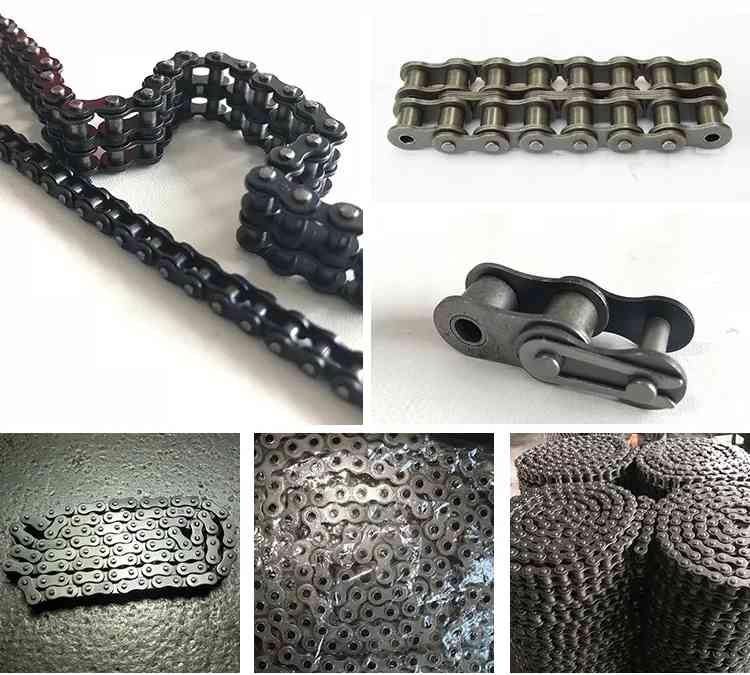
Product Description
| DIN Chain No. | ISO/ANSI Chain No. | P/mm | d1/mm | L/mm | b1/mm | T/mm | |||||||||||||||||||||||||||||||||||||||||||||||||||||||||||||||||||||||||||||||||||||||||||||||||||||||||||||||||||||||||
| 08A-1 | 40 | 12.70 | 7.92 | 16.70 | 7.85 | 1.50 | |||||||||||||||||||||||||||||||||||||||||||||||||||||||||||||||||||||||||||||||||||||||||||||||||||||||||||||||||||||||||
| 10A-1 | 50 | 15.875 | 10.16 | 20.70 | 9.40 | 2. Abbreviation: CHOHO Industry. √ HangZhou CHOHO Industrial Co., Ltd. was founded in 1999. Has become the leader of chain system technology, the first batch of natioal recognized enterprise technology center,national technology innovation demonstration enterprise,and the first A-share listed company in China’s chain drive industry.The securities code is 003033.
We are very close to the port of HangZhou, which saves a lot of logistics costs and transportation time! We have our own logistics company and transportation department. If you need me to deliver goods to your warehouse or other ports in China, such as ZheJiang Port and ZheJiang Port, we can also do it!
√ CHOHO has a natural brand awareness. As of January 2571, CHOHO has registered the “CHOHO” trademark in more than 60 countries, including the United States, Japan, the United Kingdom, France, Germany, Russia, Spain, Austria, Belgium, Bulgaria, Croatia, Czech Republic, Denmark, Finland, Greece , Hungary, Ireland, Italy, Netherlands, Poland, Portugal, Romania, Ukraine, Sweden, Australia, Algeria, Egypt, Kenya, Morocco, South Korea, Kazakhstan, Mongolia, Syria, Thailand, Pakistan, India, Brazil, Mexico, Colombia, etc. CHOHO has been invited to participate in many international exhibitions around the world, including industrial exhibitions, agricultural exhibitions, motorcycle exhibitions, engine exhibitions, such as Hannover Messe, Bologna Fair, Canton Fair ,VIV ASIA and other world famous exhibitions! COOPERATIVE CLIENT Broad Customer Channels Market Continues to Develop! Choho Provide Chain System Solutions for The Global Top 500 and The Enterprises in Various Fields Top 10! FAQ 1. Are you manufacturer or trade Company?
How do you calculate the required horsepower for a conveyor chain drive?The calculation of required horsepower for a conveyor chain drive involves considering various factors related to the conveyor system and the specific application. Here is a step-by-step process: 1. Determine the Total Resistance: – Calculate the total resistance that the conveyor chain needs to overcome during operation. This includes the resistance due to the load being conveyed, frictional losses, elevation changes, and any other resistances in the system. 2. Convert the Resistance to Equivalent Inertia: – Convert the total resistance to an equivalent inertia by multiplying it by the square of the chain speed. 3. Calculate the Total Inertia: – Determine the total inertia of the system by considering the inertia of all the rotating components, such as the conveyor chain, sprockets, and any other driven elements. 4. Determine the Required Torque: – Calculate the required torque by multiplying the total inertia by the desired acceleration or deceleration rate. 5. Convert Torque to Horsepower: – Convert the required torque to horsepower by dividing it by the motor speed (in RPM) and multiplying by a conversion factor. 6. Consider Safety Factors and Efficiency: – Apply safety factors to the calculated horsepower to account for variations, contingencies, and future growth. – Consider the efficiency of the drive system, including the motor, gearbox, and other transmission components, to ensure accurate power transmission. It’s important to note that the above calculation method provides an estimate of the required horsepower. Consulting with conveyor system manufacturers, engineers, or industry-specific guidelines is recommended for precise calculations and to ensure the selected conveyor chain drive meets the application requirements.
How do you calculate the power requirements for a conveyor chain?Calculating the power requirements for a conveyor chain involves considering various factors. Here’s a step-by-step process: 1. Determine the total weight to be transported: Measure or estimate the total weight of the material or product that will be carried by the conveyor chain. This includes the weight of the product itself, any packaging, and additional loads. 2. Determine the speed of the conveyor: Determine the desired speed at which the conveyor chain will operate. This is typically measured in feet per minute (FPM) or meters per second (m/s). 3. Calculate the required capacity: Multiply the total weight by the desired speed to determine the required capacity of the conveyor system. This will give you the weight per unit of time (e.g., pounds per minute or kilograms per hour). 4. Consider the conveyor’s design factors: Take into account various design factors such as the type and pitch of the conveyor chain, the coefficient of friction between the chain and the conveyor components, and any incline or decline angles of the conveyor system. These factors affect the power requirements. 5. Determine the required power: Use the following formula to calculate the power requirements: Power (in horsepower) = (Capacity × Friction Factor) ÷ (33,000 × Efficiency) Where: – Capacity is the weight per unit of time (from step 3) – Friction Factor is the ratio of chain tension to chain weight, taking into account the design factors – 33,000 is a conversion factor to convert the units to horsepower – Efficiency is the overall efficiency of the conveyor system, typically expressed as a decimal value (e.g., 0.95 for 95% efficiency) 6. Select a suitable motor: Based on the calculated power requirements, select a motor that can provide the necessary power to drive the conveyor chain. Consider factors such as motor type, motor efficiency, and overload capacity. It’s important to note that the power requirements may vary depending on specific conveyor system designs and operating conditions. Consulting with a qualified engineer or conveyor manufacturer is recommended to ensure accurate calculations and proper motor selection.
What are the noise levels associated with conveyor chains?The noise levels associated with conveyor chains can vary depending on several factors: 1. Chain Type: Different types of conveyor chains produce varying noise levels. For example, roller chains tend to generate more noise compared to silent chains or plastic modular chains. 2. Speed: The speed at which the conveyor chain operates can influence the noise level. Higher speeds generally result in increased noise due to the impact and friction between the chain and other components. 3. Chain Condition: The condition of the conveyor chain plays a role in noise generation. Worn-out or improperly maintained chains can produce more noise due to increased friction and vibration. 4. Surrounding Environment: The noise levels can also be affected by the environment in which the conveyor system operates. Factors such as the presence of other machinery, acoustics of the facility, and noise insulation measures can impact the overall noise level. 5. Design and Components: The design of the conveyor system and the choice of components can influence noise levels. Factors such as the use of noise-reducing materials, proper alignment of components, and vibration dampening measures can help reduce noise. It is important to note that excessive noise levels in the workplace can have adverse effects on the well-being of employees and may require noise control measures to comply with occupational health and safety regulations. Implementing noise reduction strategies like using noise-dampening materials, incorporating proper lubrication, maintaining chain tension, and applying vibration isolation techniques can help minimize the noise associated with conveyor chains.
China Motorcycle Spare Parts Motorcycle Driving Chains 530 a2040 roller chainSolution Description
Our Companies Pre-sales: FAQ: Q1: Do you inspect the completed items?
###
###
###
###
###
###
###
###
What is a drive chain?A drive chain is a wheeled device that transmits power from one gear to another. The drive chain is usually an oval ring around a corner or worm gear. On the other hand, idler pulleys do not transmit power and are not used to move the chain. In some cases, drive chains can be used with idler pulleys to transport objects. This allows the drive chain to recover some power from the second gear. conveyor chainThere are many types of conveyor chains to choose from. One type is a closed joint chain. It consists of the barrel and connecting rod, made from a single casting and heat-treated for high strength and durability. Conveyor chains typically have low running speeds and are typically made of malleable iron. Another type of chain is the power transmission chain, which is used to transmit mechanical power. They feature efficient lubrication and are stronger than conventional conveyor chains. roller chainThe performance of a drive chain depends on how well it is maintained and lubricated. Careful attention to detail is required when selecting a roller chain, which is one of the most important components in a drive chain. Its proper lubrication and assembly will significantly affect its wear life. Here are some important tips to follow when buying a roller chain: closed pivotClosed-end pivot drive chains are used in a variety of applications. They are known for their durability, high strength, and long life. They are available in a variety of grades, including grade 400, grade 600, and grade 800 pivots, which can withstand the high forces required for certain applications. Enclosed pivot chains can be used to lift, pull, convey and transfer heavy loads. Linear chainCZPT is an important part of linear drive technology. This type of chain is capable of delivering real power in tight spaces. Typically, loads are moved by pulling or pushing. CZPT can perform both types of movements. They can push and pull additional loads. This type of chain can also be wound and stored in the magazine. It is a popular choice for small machine tools and many other uses.
China manufacturer Driving chain Short pitch precision roller chains (B series) 04B-1 with Best SalesQuick Details Applicable Industries: Building Material Shops, Manufacturing Plant, Machinery Repair Shops Standard or Nonstandard: Standard Type: Roller Chain Tensile Strength: Standard Place of Origin: Zhejiang, China Brand Name: ep Model Number: All Product name: Roller chain Certificate: ISO, ANSI, DIN, BS Pitch: 4.7625~114.3mm Surface Treatment: natural/sand-blasted Application: Machinery Parts Service: OEM ODM Row: Simplex/Duplex/Triplex roller chains Port: Any sea port or airport in China Packing: Chain+ Plastic Bag+ Carton+ Wooden case Supply Ability Supply Ability: 10000 Meter/Meters per Month Standard Roller Chains Are In stock Packaging & Delivery Packaging Details: Standard Roller Chains: Packaged in boxes and wooden cases, or packaged in reels and then on pallets. Port: Any sea port or airport in China drive chain1 drive chain2 drive chain3 drive chain4
China high quality Driving chain Short pitch precision roller chains A series 16A-5 near me shopQuick Details Applicable Industries: Building Material Shops, Manufacturing Plant, Machinery Repair Shops Standard or Nonstandard: Standard Type: Roller Chain Tensile Strength: Standard Place of Origin: Zhejiang, China Brand Name: ep Model Number: All Product name: Roller chain Certificate: ISO, ANSI, DIN, BS Pitch: 4.7625~114.3mm Surface Treatment: natural/sand-blasted Application: Machinery Parts Service: OEM ODM Row: Simplex/Duplex/Triplex roller chains Port: Any sea port or airport in China Packing: Chain+ Plastic Bag+ Carton+ Wooden case Supply Ability Supply Ability: 10000 Meter/Meters per Month Standard Roller Chains Are In stock Packaging & Delivery Packaging Details: Standard Roller Chains: Packaged in boxes and wooden cases, or packaged in reels and then on pallets. Port: Any sea port or airport in China drive chain2 drive chain3 drive chain4 drive chain1 |