How to Compare an Installed Feeder Breaker Chain with an Old Drawing
Compare an installed feeder breaker chain with an old drawing by controlling revision, datums, field measurements, component structure, repairs, and.
Guía de ingenieríaActualizado el 16 de septiembre de 2026
Old drawings are valuable during feeder breaker chain replacement, but age alone does not make a drawing authoritative for the chain currently installed. Machines are rebuilt, chains are replaced, flights are repaired, and drawings circulate without clear revision control. The correct review therefore treats the drawing and the field chain as two evidence sets that must be reconciled.
The process begins with document identity: drawing number, revision, issue date, machine or assembly reference, and whether the drawing controls the complete chain or only one component. Then measure the installed chain using the same physical datums wherever possible. Compare pitch, unit length, flight spacing, scraper width, component structure, attachment details, and markings line by line.
Differences should be preserved, not corrected in the spreadsheet. A field measurement may be affected by wear or access; an old drawing may describe a previous revision; a repair may have altered one unit. The review succeeds when it explains which source controls each requirement and which discrepancies need engineering approval.
Control the document
Record drawing number, revision, issue status, machine relationship, units, and whether it is approved or reference-only.
Match datums
Field measurements must use the same physical reference points before numbers can be compared meaningfully.
Keep discrepancies visible
Use a comparison table with drawing value, field value, method, status, and next action instead of overwriting one value.
1. Establish Whether the Old Drawing Actually Belongs to This Machine
Verify the machine identifier, chain or assembly description, historical order reference, and any title-block information that links the drawing to the installed feeder breaker. A drawing found in the correct folder is not enough. If the machine has multiple similar conveyors, identify which one the drawing was issued for.
If the relationship is uncertain, mark the drawing “candidate reference.” It can still guide measurements, but it should not control procurement until the machine connection is proven.
2. Record Revision and Approval Status Before Reading Dimensions
Capture drawing number, revision, issue date, approval/status, and any superseded references. If a PDF or printed copy has handwritten notes, scan or photograph them separately and determine whether they were formally incorporated. Do not treat an annotation as approved design without evidence.
When several revisions exist, list them and identify the latest controlled revision associated with the installed or last-approved order. A newer revision for a different machine variant may not be the correct reference.
Controlled drawing
A drawing with identifiable revision/status that is approved to define the relevant chain or component.
Field record
Measured and photographed evidence from the installed chain under stated conditions.
Datum equivalence
Confirmation that drawing and field measurements use the same physical reference points.
Discrepancy
A difference that remains visible until measurement, revision history, repair evidence, or engineering approval resolves it.
3. Translate Drawing Datums into Field Measurement Points
Study where each dimension starts and ends. A scraper width may reference finished plate faces rather than worn outside edges. Unit length may be pin-center to pin-center rather than flight-edge to flight-edge. Pitch may be defined through joint centers. Mark those datums on a field photograph before measuring.
If a drawing datum is hidden or inaccessible on the assembled machine, record the alternative field method and do not compare the numbers as though they were identical. A removed sample or approved fixture measurement may be required to close the gap.
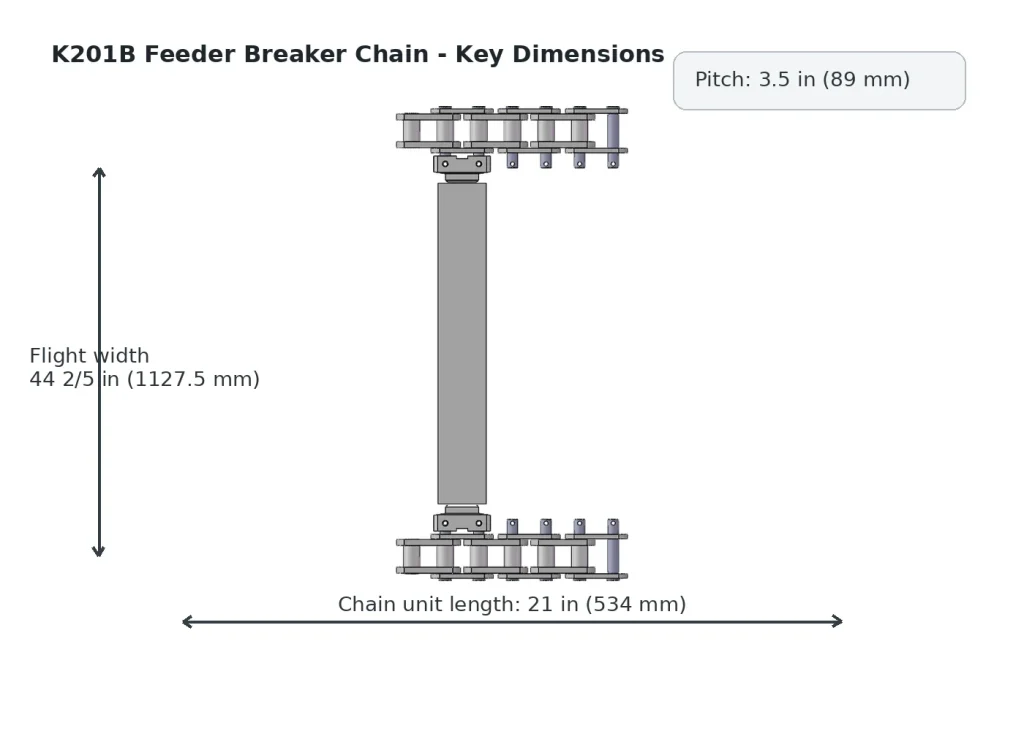
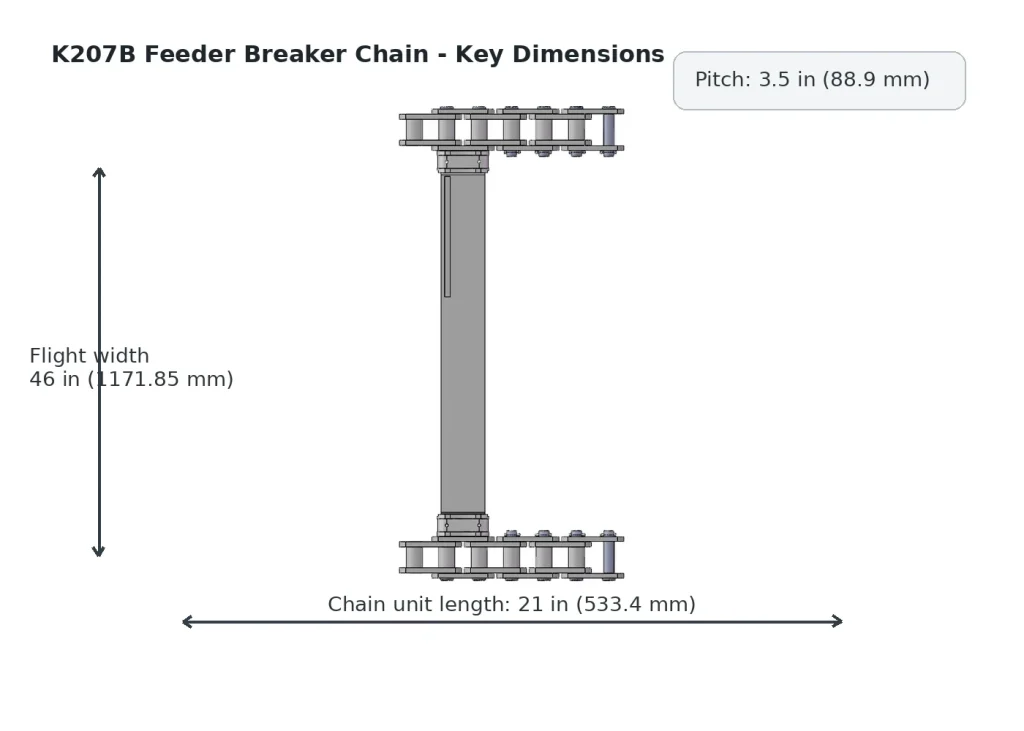
Pitch establishes joint spacing, while unit length describes a larger structural repeat. Record both. A chain can match pitch and still differ in the number of chain sections between flights, flight spacing, or attachment geometry.
The K201B/K207B examples demonstrate why. Both share nominal 3 1/2 inch pitch and a 21 inch unit, yet they differ in scraper width and detailed structure. The comparison sheet should therefore never stop after the first two rows agree.
5. Compare Scraper Width and Flight Geometry
Measure an intact or best-available flight from the drawing-defined faces. Photograph the endpoints and record wear or repair that could alter the observed width. Then compare head/plate shape, attachment, pin positions, and flight orientation with the drawing.
If the drawing width and field width differ, check whether the measurement references are identical before concluding the chain is a different model. If they are identical and the difference remains, keep it as a formal discrepancy.
6. Compare Component and Retention Details
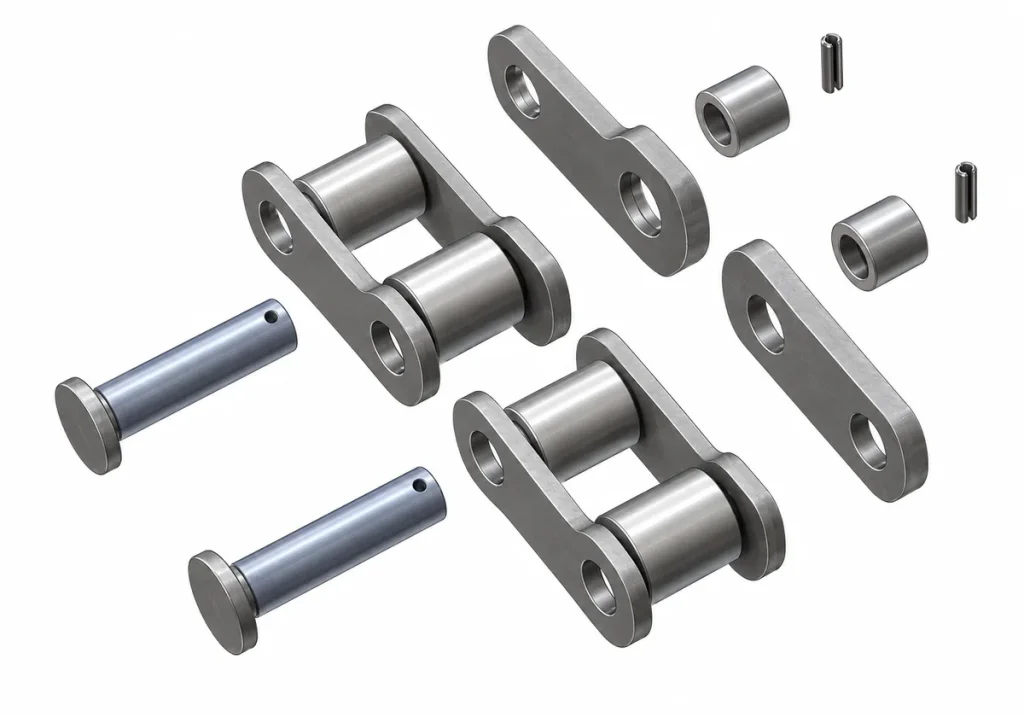
Use exploded or component views to check plate shapes, inner/outer link relationships, pins, bushes, extended pins, T-pins or spring pins, scraper outer links, and attachment features. Photograph visible field features at similar angles to the drawing where practical.
A different retention detail may reflect a revised design, field repair, or an entirely different chain. It should not be silently “updated” on the old drawing without engineering approval.
7. Separate Wear and Repair from Design Difference
A worn scraper edge, polished plate, elongated joint, bent flight, or field weld can make the installed chain look unlike the drawing even when the underlying design is the same. Mark these observations as condition-related and compare intact sections when available.
Conversely, a systematic difference repeated around the chain is stronger evidence of a configuration change. Several identical extended pins, a consistent different flight width, or a repeating attachment pattern should be treated as design/configuration evidence rather than local damage.
8. Control Unit Conversion and Rounding
If the drawing is imperial and the field record metric, keep the original values and add conversions in separate columns. Confirm that the reference geometry is the same before comparing converted numbers. Do not “normalize” a drawing value by silently replacing it with a calculator result.
This is relevant to the listed models: technically specified inch and metric values are preserved as documented. The same traceability principle should be applied to old customer drawings.
9. Create a Discrepancy Register with Owners and Actions
For every difference, record drawing value/feature, field value/feature, evidence source, possible explanation if known, impact on fit/function, owner, and next action. Classify it as resolved, acceptable by approval, or open. Avoid vague notes such as “close enough.”
Typical actions include repeat measurement, retrieve prior order drawing, inspect another flight, compare removed sample, verify machine revision, or obtain engineering approval for a custom configuration.
Drawing-to-field discrepancy register
Feature
Drawing record
Field record
Status / next action
Paso
Nominal value + datum
Raw multi-pitch measurement + method
Match / remeasure / investigate
Unit length
Defined repeating unit
Field repeat + endpoints
Match / pattern differs
Ancho del raspador
Controlled faces
Observed width + condition
Match / wear / configuration discrepancy
espaciamiento de vuelos
Drawing datum and interval
Measured span + interval count
Match / local repair / unknown
Component structure
Exploded/component callouts
Photos of links, pins, retention, attachments
Match / revision / field repair
Marcas
Drawing or BOM identifiers
Installed markings + locations
Supports / conflicts / not found
Revision evidence
Issue status and order relationship
Maintenance/PO history
Controls / candidate / superseded
Regla de registro
Do not close a discrepancy by editing the field value to the expected drawing value. Close it with evidence or formal engineering approval.
10. Issue a Controlled Replacement Basis
At the end of the review, state which drawing or revised specification will control the replacement. If the old drawing is confirmed, reference it explicitly. If the installed chain contains an approved later change, create or obtain an updated controlled drawing rather than letting the discrepancy table become the permanent production specification.
If evidence remains incomplete, the RFQ can state the confirmed geometry and list open items for engineering review. Do not convert an unresolved old-drawing conflict into an automatic standard-model match.
Lista de verificación práctica para la transferencia de información
Utilice esta lista de verificación de traspaso para cerrar el registro de campo para How to Compare an Installed Feeder Breaker Chain with an Old DrawingEl objetivo no es crear otro formulario de mantenimiento genérico, sino preservar las observaciones específicas, los puntos de referencia y el contexto de la máquina que el siguiente revisor necesita para comprender cómo se obtuvo el resultado. Mantenga los límites de aceptación específicos de la máquina según el plano aprobado, el procedimiento de mantenimiento o las instrucciones de ingeniería, en lugar de inventar un valor universal para la malla.
Control
Qué grabar
Cómo se utiliza el registro
Establish Whether the Old Drawing Actually Belongs to This Machine
Record the exact machine location, strand or side, current operating/shutdown state, and the observation that relates to establish whether the old drawing actually belongs to this machine. Include a photograph that lets another reviewer find the same area.
Establece el contexto para que las mediciones posteriores no se desvinculen de la máquina y la posición de la cadena.
Record Revision and Approval Status Before Reading Dimensions
Capture the physical reference used for record revision and approval status before reading dimensions. Keep the raw dimension, image or marking beside the interpretation, and note any wear, repair, build-up or access limitation that could affect the reading.
Garantiza la repetibilidad del resultado y evita que una referencia dañada o mal definida se convierta en el requisito de reemplazo.
Translate Drawing Datums into Field Measurement Points
Cross-check translate drawing datums into field measurement points against any controlled drawing, previous purchase reference or retained spare that is available. Keep current field data and historical information in separate fields when they differ.
Preserva la trazabilidad cuando las condiciones sobre el terreno, los registros históricos y la información nominal del producto no coinciden a la perfección.
Compare Pitch and Repeating Unit Separately
For compare pitch and repeating unit separately, state what is confirmed, what is only observed, and what still needs engineering confirmation. Attach the image or measurement that supports the statement rather than relying on a product name alone.
Proporciona al departamento de mantenimiento, al de compras y al proveedor una lista clara de lo que se puede hacer ahora y lo que debe resolverse antes del lanzamiento.
Separe el estado actual de la geometría de reemplazo necesaria. A worn, repaired, dirty or partially dismantled component may still be very useful for identification, but its current shape is not automatically the manufacturing requirement. Label field measurements as observed data, retain the original unit and measurement method, and identify any feature that may have been altered by service. For compare installed chain to drawing, photographs should show the measurement endpoints or component relationship clearly enough that a remote reviewer can reproduce the logic.
Resuelva la información contradictoria en lugar de ocultarla. If a drawing, old order, marking and current measurement point in different directions, keep each source visible and describe the conflict. Do not average values or silently choose the most convenient one. Use additional photographs, measurements from another intact repeating unit, machine interface information and the controlled document revision to determine which value governs. If issue a controlled replacement basis cannot be confirmed during the shutdown, state that limitation explicitly so the open question survives the handoff.
Make the next action obvious for How to Compare an Installed Feeder Breaker Chain with an Old Drawing. El registro completo debe indicar a mantenimiento qué se debe volver a comprobar, a compras qué información pertenece a la RFQ y a ingeniería qué dimensiones o interfaces aún necesitan aprobación. Antes de que la máquina vuelva a estar en servicio, confirme que el conjunto de archivos incluye una vista general de la máquina, una vista completa de la cadena/vuelo repetitiva, primeros planos de los componentes o marcas relevantes y las dimensiones utilizadas en esta guía. Para compare installed chain to drawingUn conjunto de observaciones rastreables es más útil que una narración larga sin datos, y reduce el riesgo de que la decisión de reemplazar se tome basándose únicamente en el tono, la apariencia o un número de pieza antiguo.
Notas de decisión de campo para esta tarea
El registro de inspección para How to Compare an Installed Feeder Breaker Chain with an Old Drawing Debería ser fácil de usar una vez finalizado el cierre. Las siguientes tres notas convierten el artículo en una transferencia práctica sin establecer un límite de aceptación específico para la máquina. Son especialmente útiles cuando las observaciones de mantenimiento deben revisarse posteriormente por ingeniería o compras y la cadena original ya no está disponible.
Confirm Establish Whether the Old Drawing Actually Belongs to This Machine
Comience por identificar dónde y cómo se realizó la observación. Registre la máquina, el lado de la cadena o el hebra, la unidad repetitiva o la ubicación del vuelo, y el estado de la cadena cuando se realizó la verificación. Si el componente estaba sucio, cargado, flojo, retirado, reparado o visiblemente deformado, mantenga esa condición junto a la lectura. Una fotografía debe incluir suficiente estructura circundante para que otra persona pueda encontrar la misma ubicación. Para este artículo, el objetivo es preservar el contexto detrás de establish whether the old drawing actually belongs to this machine en lugar de reducirlo a un número aislado.
Cross-check Record Revision and Approval Status Before Reading Dimensions
Utilice una segunda observación o referencia controlada para cuestionar el primer resultado. Puede tratarse de una unidad repetitiva intacta vecina, otro hilo de la cadena, una revisión del dibujo, un registro de compra anterior o una pieza de repuesto conservada. Mantenga visible el valor del campo original incluso cuando la comparación sugiera un requisito nominal diferente. Cuando los dos no coincidan, describa por qué puede existir la diferencia e identifique qué debe confirmarse a continuación. Esto es particularmente importante para record revision and approval status before reading dimensions, porque el desgaste por el uso, el método de medición y las reparaciones previas pueden afectar el estado en el que se encuentra.
Prepare Translate Drawing Datums into Field Measurement Points for review
Empaquete el resultado para que pueda verificarse de forma remota. Incluya la medición u observación bruta, su unidad, caras de referencia o puntos finales, al menos una fotografía de primer plano y una fotografía de contexto, y cualquier dibujo o marca utilizada durante la identificación. Indique si el elemento está confirmado, es candidato o desconocido. Si translate drawing datums into field measurement points Depende de una suposición; escriba la pregunta abierta en la solicitud de cotización en lugar de convertir la suposición en una especificación. El revisor receptor debería poder comprender la condición de la cadena sin reconstruir el método de memoria.
Mantén visible el límite de decisión. Compare Pitch and Repeating Unit Separately may influence the next maintenance or sourcing step, but the website does not set a universal discard, tension or interchangeability limit. Use the equipment procedure, approved drawing and order-specific engineering requirements for acceptance decisions. The purpose of this record is to make the observation behind compare installed chain to drawing lo suficientemente rastreable como para que se pueda elegir el producto o la ruta de ingeniería correcta sin tener que adivinar.
Cuestiones que deben resolverse antes de la próxima decisión.
Which should control if the field chain and old drawing disagree?
Do not choose automatically. Verify drawing revision and machine relationship, measurement datums, wear/repair history, and prior order evidence. Engineering should define the controlled replacement basis.
Can I update the old drawing myself with field dimensions?
Use a marked-up copy for review if helpful, but do not turn it into an approved production drawing without the organization’s drawing-control process.
What if only one flight differs from the drawing?
Map that flight and investigate repair or damage. A local exception should not automatically redefine the whole chain configuration.
How do I handle an imperial drawing and metric field measurement?
Preserve both original values, convert separately, and confirm that the same physical datums were used before comparing the numbers.
Siguiente paso: Cerrar el registro técnico.
An old drawing is powerful evidence when its machine relationship and revision are controlled. An installed chain is powerful evidence when its measurements and photographs are repeatable. The replacement review should make those two evidence sets meet without rewriting either one.
When they disagree, use a discrepancy register and resolve the cause through measurement, history, sample review, or engineering approval. The result should be a clearly controlled replacement basis, not a collection of “close enough” assumptions.