Deskripsi Produk
Rantai Pertanian yang Disertifikasi ISO 9001
Mengapa memilih kami?
1. HangZhou Xihu (West Lake) Dis.hua Chain Group Co., Ltd didirikan pada tahun 1991, kami memiliki 5 anak perusahaan di Tiongkok dan juga memiliki 6 anak perusahaan di luar negeri;
2. Kami memiliki area produksi seluas 200.100 meter persegi, lebih dari 1.800 set peralatan canggih, dan lebih dari 3.100 karyawan yang sangat terampil, dengan kapasitas produksi tahunan melebihi 20.000.000 meter;
3. Kami mengkhususkan diri dalam memproduksi semua jenis rantai standar dan rantai khusus, seperti rantai seri A atau B, rantai penggerak, rantai konveyor, rantai penarik, rantai pertanian, sproket, roda gigi, dan sebagainya;
4. Kami telah memperoleh sertifikat ISO9001, ISO14001, ISO16969, AAA, dan API.
5. Mitra kami termasuk perusahaan-perusahaan top dunia, seperti JOHNDEERE, NEW HOLLAND, CLAAS, HONDA, KUBOTA, YANMAR, dll.
Rantai pertanian kita meliputi hal-hal berikut:
1. Rantai rol seri SH berkekuatan tinggi, tugas berat, dan jarak antar mata rantai pendek.
2. Rantai rol seri SP berkekuatan tinggi, tugas berat, dan jarak antar mata rantai pendek.
3. Rantai traktor berjalan
4. Gabungkan rantai
5. ZGS38 menggabungkan rantai dengan perlengkapan
6. Rantai pemanen padi
7. Berbagai rantai pertanian beserta perlengkapannya
8. Rantai pertanian baja tipe S
9. Rantai pertanian baja tipe S dengan perlengkapan tambahan
10. Rantai pertanian baja tipe A
11. Rantai pertanian baja tipe CA
12. Rantai pertanian baja tipe C dengan perlengkapan
13. Rantai pertanian khusus dengan perlengkapan tambahan
1) Produk Terkait
2) Sertifikat
HangZhou Xihu (West Lake) Dis.hua Chain Group Co., Ltd didirikan pada tahun 1991, dan sekarang memiliki lima anak perusahaan yang sepenuhnya dimiliki, satu di provinsi Zhejiang, dan empat lainnya di Hangzhou, provinsi Zhangzhou. Perusahaan ini merupakan produsen profesional rantai, sproket, roda gigi, dan berbagai produk transmisi daya.
Grup ini memiliki merek XIHU (WEST LAKE) DIS.HUA, ZIQIANG, dan berfokus pada produksi berbagai macam rantai rol standar dan rantai khusus, seperti rantai konveyor, rantai baja tahan karat, dan rantai pertanian. Dengan merek Xihu (West Lake) Dis.hua yang terdaftar di lebih dari 70 negara seperti Amerika, Eropa, dan Jepang, grup ini membangun kerja sama jangka panjang dengan perusahaan-perusahaan top dunia seperti JOHNDEERE, NEW HOLLAND, CLAAS, HONDA, KUBOTA, dan YANMAR.
Terdapat pusat teknik tingkat provinsi, stasiun kerja akademisi Xihu (West Lake) Dis.hua, stasiun eksperimen untuk peneliti pascadoktoral Xihu (West Lake) Dis.hua, dan ratusan program nasional yang didirikan di grup Xihu (West Lake) Dis.hua. Dengan platform ini dan kemampuan teknis yang kuat, lebih dari ratusan insinyur dan teknisi telah mengembangkan berbagai macam produk khusus dengan presisi tinggi dan kekuatan tinggi, serta melaksanakan program pembuatan cetakan untuk komponen kunci dalam industri otomotif dan program revitalisasi industri nasional.
Perhatian besar telah diberikan pada perlindungan lingkungan dan penghematan energi. Produk ini menunjukkan dengan baik perlindungan lingkungan dan penghematan energi. Pada tahun 2000, Xihu (West Lake) Dis.hua menjadi pelopor dalam memperoleh sertifikat manajemen lingkungan ISO 14001 dan kemudian lulus inspeksi produksi bersih dan ekonomi daur ulang, serta memenangkan gelar "Perusahaan Hijau Zhangzhou".
“Kami selalu melayani pelanggan kami dengan produk-produk terbaik kami.”
/* 22 Januari 2571 19:08:37 */!function(){function s(e,r){var a,o={};try{e&&e.split(“,”).forEach(function(e,t){e&&(a=e.match(/(.*?):(.*)$/))&&1
| Penggunaan: | Rantai Transmisi |
|---|---|
| Bahan: | Baja Paduan/Karbon |
| Perlakuan Permukaan: | Minyak yang Berkembang |
| Fitur: | Tahan Panas |
| Ukuran Rantai: | 1/2"*11/128" |
| Struktur: | Rantai Rol |
| Kustomisasi: |
Tersedia
| Permintaan Khusus |
|---|
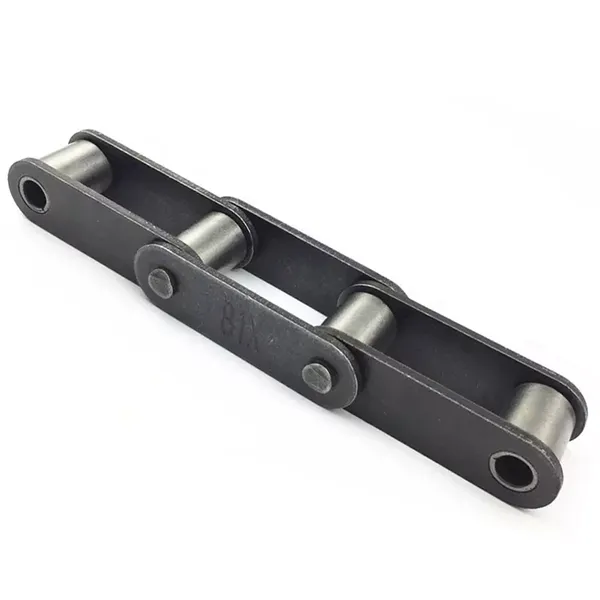
How does a conveyor chain handle accumulation and indexing applications?
In conveyor systems, accumulation and indexing refer to specific methods of controlling the movement and positioning of items along the conveyor line. A conveyor chain can effectively handle these applications through the use of specialized components and control mechanisms. Here’s a detailed explanation:
Accumulation:
– Accumulation refers to the process of temporarily storing or buffering items on the conveyor to control the flow of materials. Conveyor chains designed for accumulation applications typically incorporate features such as low-friction chain guides, accumulating zones, and sensors.
– In an accumulation conveyor chain system, the chain is divided into discrete zones where items can accumulate. As products enter a zone, the chain slows down or stops, allowing items to accumulate without colliding with each other. Sensors or photoelectric cells detect the presence of items in each zone and provide signals to control the chain movement.
– The accumulation zones in the conveyor chain system can be controlled in different ways, such as through the use of motorized rollers, pneumatic devices, or electronic sensors. This ensures a controlled and synchronized flow of items along the conveyor line.
Indexing:
– Indexing refers to the precise positioning of items at specific intervals along the conveyor line. This is commonly used in applications where accurate positioning or sequencing is required, such as assembly or packaging processes.
– Conveyor chains designed for indexing applications incorporate specialized index pins, stops, or precision indexing drives. These components work together to accurately position items at predetermined locations along the conveyor.
– The indexing mechanism of a conveyor chain system can be driven by mechanical cams, servo motors, or programmable logic controllers (PLCs). The indexing motion can be synchronized with other processes or machines downstream to ensure precise assembly or packaging operations.
– By combining accumulation and indexing capabilities, a conveyor chain system can handle a wide range of applications, including sorting, buffering, sequencing, and automated assembly. It provides control over the flow and positioning of items, allowing for efficient material handling and optimized production processes.
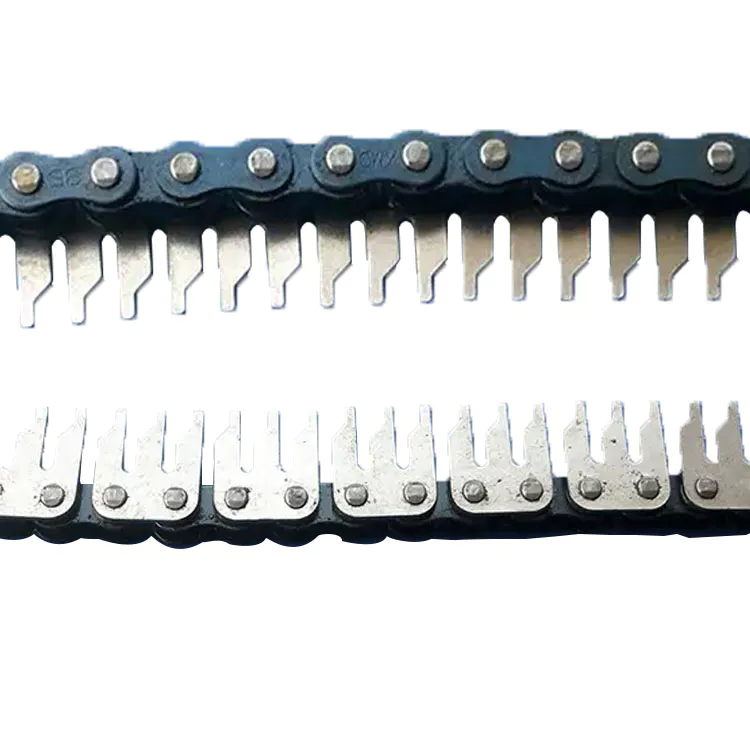
Can a conveyor chain be used in food processing applications?
Yes, a conveyor chain can be used in food processing applications. Conveyor chains play a crucial role in the efficient and hygienic handling of food products throughout the production process. Here are some key points to consider:
1. Food-Grade Materials: Conveyor chains used in food processing applications are typically made from food-grade materials such as stainless steel or plastic. These materials are corrosion-resistant, easy to clean, and comply with food safety regulations.
2. Hygiene Considerations: Food processing environments require high standards of hygiene. Conveyor chains designed for food applications incorporate features such as smooth surfaces, open link designs, and easy disassembly for thorough cleaning. They may also have specialized coatings or treatments to prevent bacterial growth.
3. Sanitary Design: Conveyor chains for food processing applications are designed with minimal crevices or joints to prevent food particles from getting trapped. They may have self-draining capabilities to remove excess fluids or debris.
4. Product Integrity: Conveyor chains in food processing applications ensure gentle handling of delicate food products to avoid damage or contamination. They can be equipped with accessories like cleats, side guards, or modular belt systems to securely hold and transport items of various shapes and sizes.
5. High Temperature and Washdown Capabilities: Some food processing applications require conveyor chains to withstand high temperatures during cooking, baking, or sterilization processes. Specialized chains with heat-resistant materials or coatings are available. Additionally, conveyor chains used in food processing should be capable of withstanding frequent washdowns and cleaning with water or cleaning agents.
6. Compliance with Standards: Conveyor chains used in food processing applications must comply with industry-specific standards such as FDA (Food and Drug Administration) regulations, HACCP (Hazard Analysis Critical Control Point) guidelines, and other food safety certifications.
When selecting a conveyor chain for food processing applications, it is important to consider the specific requirements of the production line, including the type of food being handled, the operating conditions, and the necessary sanitary standards. Proper maintenance and regular cleaning protocols should also be implemented to ensure food safety and product integrity.
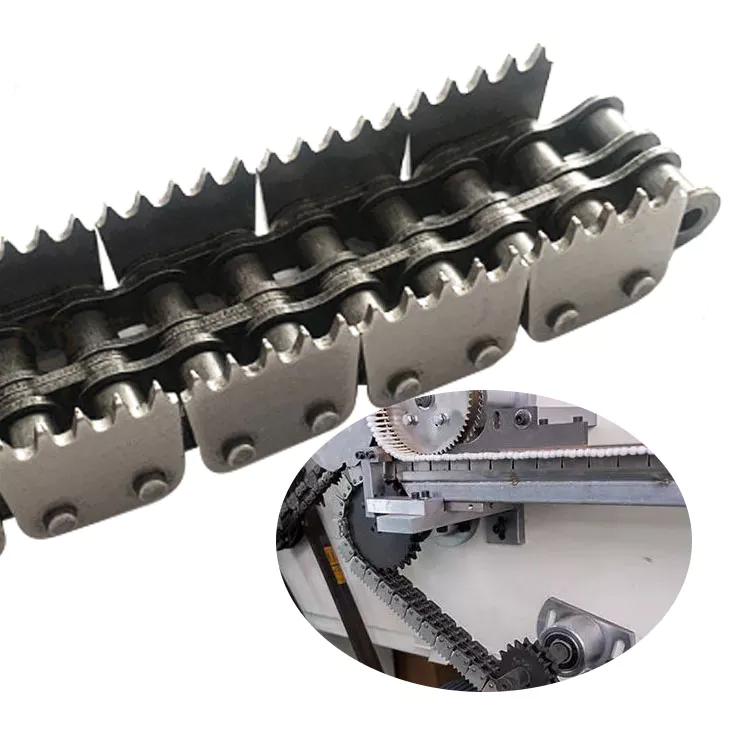
How do you properly tension a conveyor chain?
Properly tensioning a conveyor chain is crucial for its smooth operation and to prevent issues like chain slipping or excessive wear. Here are the steps to properly tension a conveyor chain:
- Identify the Tensioning Points: Determine the locations where the conveyor chain can be tensioned. These are typically at the ends of the chain or at specific tensioning devices.
- Loosen the Tensioning Devices: If there are tensioning devices in place, such as adjustable bolts or tensioning screws, loosen them to allow for adjustment.
- Apply Tension: Apply tension to the conveyor chain by either manually pulling the chain or using a tensioning tool. The amount of tension required depends on the chain type and the manufacturer’s recommendations.
- Check the Tension: Use a tension gauge or other suitable method to measure the tension of the conveyor chain. The tension should fall within the specified range provided by the chain manufacturer.
- Adjust the Tension: If the tension is too loose or too tight, make adjustments accordingly. Tighten or loosen the tensioning devices until the desired tension is achieved.
- Secure the Tensioning Devices: Once the proper tension is achieved, securely tighten the tensioning devices to hold the chain in place.
- Verify the Tension: After tensioning the chain, perform a visual inspection and run the conveyor to ensure the chain runs smoothly without excessive slack or tightness. Make any further adjustments if necessary.
It’s important to refer to the specific guidelines provided by the conveyor chain manufacturer for proper tensioning instructions, as the exact method may vary depending on the chain type and design. Regularly check the tension of the conveyor chain and make adjustments as needed to maintain optimal performance.


editor by CX 2024-04-16