K201B
Rantai Pemecah Pengumpan K201B
Melempar3 1/2 inci (89 mm)
Unit rantai21 inci (534 mm)
Lebar pengikis44 2/5 inci (1127,5 mm)
Rantai pengikis pemutus pengumpan Seri K dengan unit berulang 21 inci dan lebar pengikis 44 2/5 inci.
SPESIALIS RANTAI PEMUTUS UMPAN
Pemilihan rantai pemecah pengumpan harus dimulai dengan geometri dan tugas sistem pengangkutan yang terpasang, bukan dengan daftar ukuran rantai pertambangan umum. Rantai, susunan pengikis atau baling-baling, keterlibatan sproket, dan antarmuka mesin bekerja bersama-sama, sehingga tinjauan penggantian harus membandingkan detail yang mengontrol kesesuaian: jarak antar mata rantai, panjang unit rantai berulang, lebar pengikis, struktur mata rantai dan sambungan, susunan baling-baling, dan kondisi rakitan yang ada.
Rangkaian pemutus pengumpan saat ini berpusat pada Seri K dan konfigurasi rantai pengikis pemutus pengumpan K201B dan K207B. Kedua model menggunakan jarak antar mata rantai nominal 3 1/2 inci, sementara lebar dan struktur komponen yang ditentukan memberikan poin identifikasi penting. Jika rantai yang terpasang tidak diketahui atau telah diperbaiki saat beroperasi, foto, pengukuran, dan gambar yang ada harus ditinjau bersama sebelum pesanan dikeluarkan.
RANGKAIAN PRODUK
Semua produk yang termasuk dalam kategori Rantai Pemutus Feeder ditampilkan di bawah ini sebagai kartu katalog langsung. Setiap kartu menggunakan gambar utama produk, dimensi spesifik model yang saat ini dipublikasikan untuk produk tersebut, dan tautan langsung ke halaman detail produk.
K201B
Rantai pengikis pemutus pengumpan Seri K dengan unit berulang 21 inci dan lebar pengikis 44 2/5 inci.

K207B
Rantai pengikis pemutus pengumpan Seri K dengan unit berulang 21 inci, lebar pengikis 46 inci, dan struktur mata rantai luar pengikis khusus model.
KONTEKS APLIKASI
Informasi produk Seri K mencakup konveyor rantai pemecah pengumpan bawah tanah dan layanan penanganan atau pencucian batubara. Ilustrasi di bawah ini digunakan untuk menjelaskan konteks pengoperasian; batasan spesifik mesin, nilai tegangan, dan prosedur perawatan harus selalu mengikuti dokumentasi peralatan yang disetujui.

Rangkaian rantai dan pengikis yang berat memindahkan material melalui pemecah pengumpan saat beroperasi di lingkungan pertambangan yang sempit dan rawan kontaminasi.

Tugas penanganan batubara menjadikan geometri rantai, susunan ulir, kondisi keausan, dan keterlibatan sproket sebagai bagian penting dari perencanaan penggantian.

Catat kondisi pemasangan sebelum dilepas. Foto keseluruhan, foto detail sambungan, dan titik referensi dimensi membantu mempertahankan konfigurasi aslinya.
LOGIKA SELEKSI
Ukuran nominal merupakan titik awal yang penting, tetapi bukan identitas produk yang lengkap. Gunakan keempat pengecekan di bawah ini secara bersamaan saat membandingkan model yang sudah dikenal atau rantai yang belum teridentifikasi.
Ukur jarak antara pusat sendi yang bersesuaian. Jika akses memungkinkan, pengukuran di beberapa lapangan dapat mengurangi kesalahan pembacaan di lapangan.
Catat panjang rakitan berulang yang berisi bagian rantai dan bagian sirip atau pengikis, bukan panjang keseluruhan secara acak.
Lebar pengikis secara keseluruhan merupakan pembeda praktis antara K201B dan K207B dan harus dicatat bersama dengan titik referensi pengukuran.
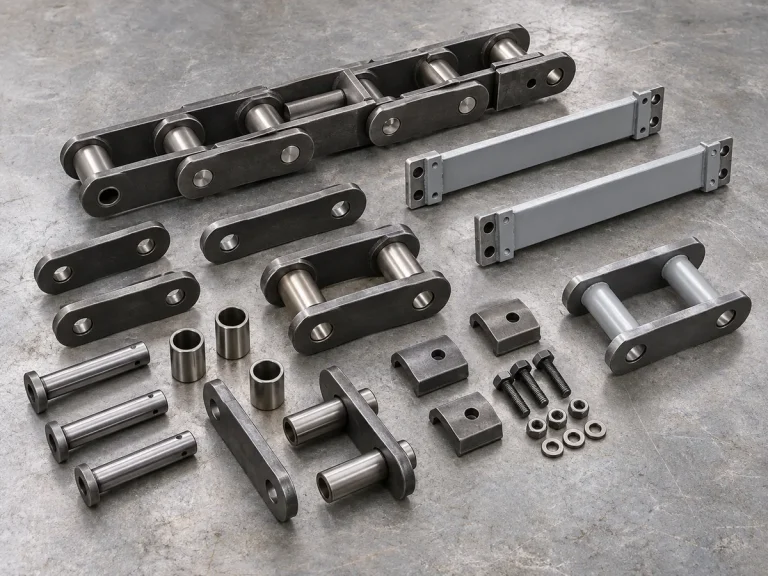
Bandingkan sambungan dalam dan luar, bushing, pin, pengikis atau detail sambungan sayap, serta fitur penahan atau pin yang diperpanjang yang khas.
PERBANDINGAN MODEL
Model-model tersebut memiliki jarak antar ulir nominal 3 1/2 inci, tetapi nilai metrik yang ditentukan, lebar pengikis, dan susunan komponennya berbeda. Tabel ini merupakan alat bantu identifikasi, bukan pernyataan tentang kemampuan saling tukar.
| Titik seleksi | K201B | K207B |
|---|---|---|
| Melempar | 3 1/2 inci (89 mm) | 3 1/2 inci (88,9 mm) |
| Panjang satuan rantai | 21 inci (534 mm) | 21 inci (533,4 mm) |
| Lebar pengikis | 44 2/5 inci (1127,5 mm) | 46 inci (1171,85 mm) |
| Struktur sekunder | Bagian Rantai, Mata Rantai Luar, Mata Rantai Dalam, Bagian Penerbangan | Bagian Rantai, Mata Rantai Luar, Mata Rantai Dalam, Mata Rantai Luar Pengikis, Bagian Sayap |
| Item-item khas dalam pohon komponen | Bushing Pencari, Pin Pegas | Pin Ekstensi, Pin T |
MENGAPA JANGKAUAN TEMBAK TERFOKUS MEMBANTU
Situs ini disusun berdasarkan sejumlah kecil konfigurasi pemutus arus pengumpan sehingga setiap model dapat memuat dimensi, struktur komponen, konteks aplikasi, dan panduan RFQ yang benar-benar dibutuhkan oleh tim pemeliharaan atau pengadaan.
K201B dan K207B mempertahankan dimensi dan identitas komponennya masing-masing, alih-alih digabungkan ke dalam tabel rantai generik.
Rantai pengganti yang tidak diketahui jenisnya ditinjau berdasarkan geometri terukur, foto, dan konteks peralatan.
Nilai teknis yang hilang menjadi pertanyaan konfirmasi, bukan lagi asumsi yang tidak didukung.
Pemilihan, jarak antar komponen, komponen, perawatan, tegangan, dan keausan dipisahkan ke dalam panduan yang lebih terfokus untuk tinjauan teknis yang lebih cepat.
REVIEW RANTAI CUSTOM & TAK TERIDENTIFIKASI
Rantai lapangan mungkin telah kehilangan penandaannya, telah diperbaiki, atau berbeda dari gambar standar. Dalam hal ini, permintaan tersebut harus diperlakukan sebagai tinjauan identifikasi atau konfigurasi khusus, bukan memaksakan rantai tersebut ke nama model terdekat.
Cantumkan ukuran pitch, panjang unit rantai berulang, lebar pengikis, jarak antar mata rantai, detail mata rantai dan sambungan, foto, dan sketsa terukur atau gambar historis. Jika persyaratan material, perlakuan panas, kekerasan, pengujian, penandaan, atau ketertelusuran dikendalikan oleh pelanggan, sertakan dalam spesifikasi pembelian. Persyaratan yang tidak diketahui harus tetap terbuka untuk konfirmasi.

PEMBUATAN & PEMERIKSAAN
Gambar proses manufaktur digunakan untuk menjelaskan jenis pengerjaan mesin, perakitan, dan pengendalian dimensi yang terlibat dalam produksi rantai berat. Persyaratan material, perlakuan panas, kekerasan, inspeksi, atau dokumentasi khusus pesanan harus dinyatakan pada gambar terkontrol atau spesifikasi pembelian jika berlaku.
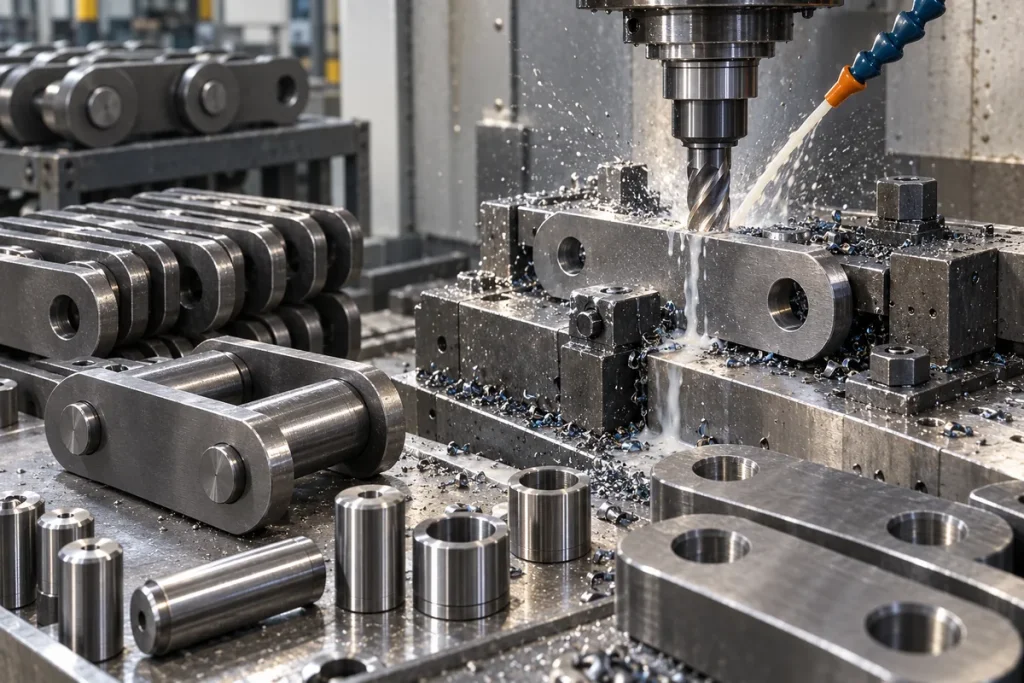
Pelat penghubung, pin, dan bushing memerlukan geometri yang terkontrol agar sambungan yang telah dirakit dapat diperiksa kesesuaiannya dengan konfigurasi rantai yang telah ditentukan.
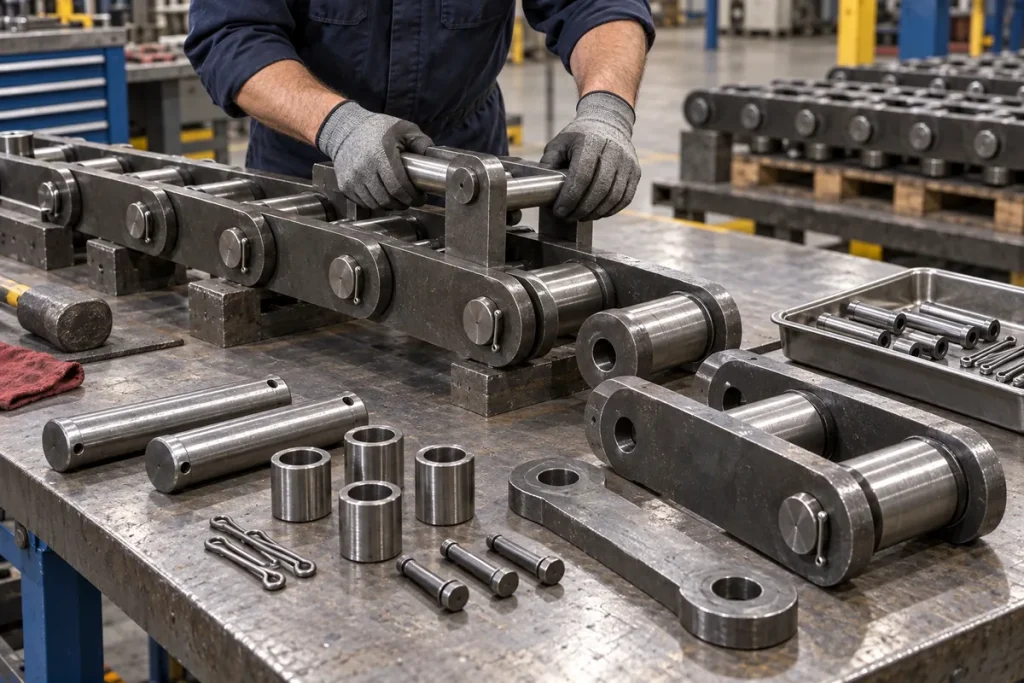
Bagian rantai, komponen sambungan, dan koneksi bilah atau pengikis harus dirakit sebagai satu konfigurasi yang terkoordinasi.

Jarak antar komponen, lebar, dan dimensi komponen terkait harus diperiksa dan dibandingkan dengan data pesanan yang telah disetujui, bukan hanya diasumsikan berdasarkan penampilan saja.
PERSIAPAN RFQ
Untuk permintaan K201B atau K207B yang sudah dikenal, kirimkan model, kuantitas, dan gambar atau referensi pembelian terkontrol sebelumnya jika tersedia. Untuk rantai pengganti yang tidak dikenal, sertakan foto keseluruhan dan detail, jarak antar mata rantai yang diukur, panjang unit rantai berulang, lebar pengikis, susunan mata rantai, detail mata rantai dan penahan yang terlihat, konteks mesin, dan tanda apa pun yang masih dapat dibaca.
Jangan menebak dimensi yang hilang atau menyalin nilai dari rantai lain. Tandai item yang tidak diketahui dengan jelas agar dapat diselesaikan selama peninjauan.
PERPUSTAKAAN TEKNIS
Artikel-artikel yang berfokus pada bidang tertentu mencakup pengukuran, catatan inspeksi, identifikasi komponen, pengamatan keausan, dan persiapan penggantian tanpa menduplikasi kata kunci utama halaman produk.
PANDUAN TEKNIS
Gunakan daftar periksa RFQ rantai pemutus pengumpan bawah tanah ini untuk mencatat konteks mesin, geometri rantai, foto, gambar, kondisi, kuantitas, dan lainnya.
Baca panduan →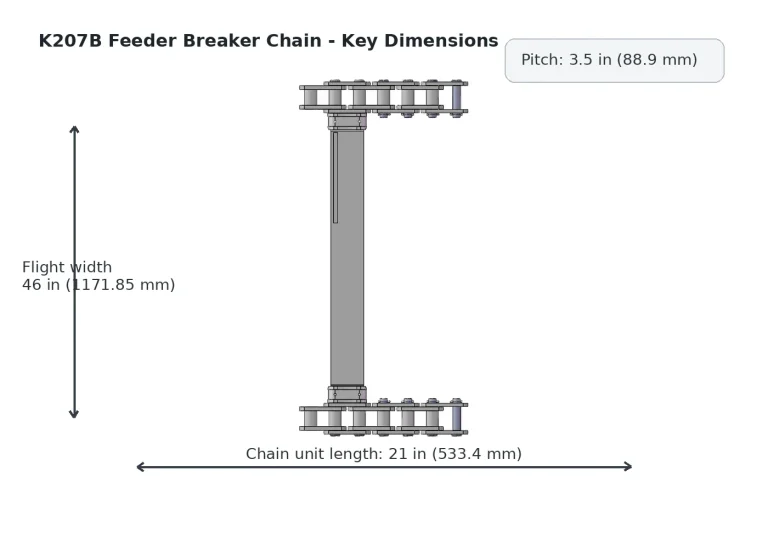
PANDUAN TEKNIS
Pisahkan pemutus pengumpan dari rantai pengikis penambang baut menggunakan konteks mesin, geometri berulang, detail alur, dimensi, tanda, dan.
Baca panduan →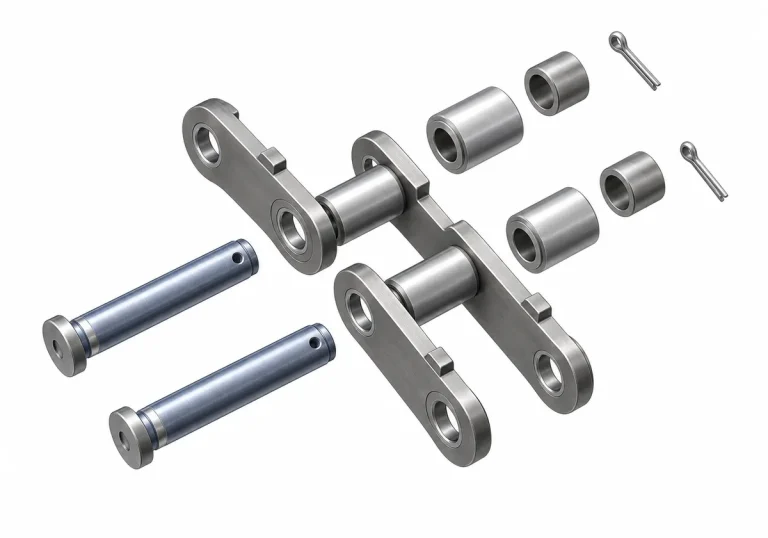
PANDUAN TEKNIS
Urutkan pertanyaan yang tidak jelas mengenai pemutus pengumpan vs rantai mobil pengangkut dengan menggunakan konteks peralatan, geometri rantai lengkap, bukti penerbangan, penandaan, dan gambar.
Baca panduan →
PANDUAN TEKNIS
Buat riwayat penyesuaian rantai pemutus pengumpan yang menghubungkan setiap perubahan dengan pengukuran, gejala, konteks pengoperasian, dan verifikasi pasca-penyesuaian.
Baca panduan →
PANDUAN TEKNIS
Koordinasikan penggantian rantai pemutus pengumpan dengan pemeriksaan sproket dengan mencatat kondisi gigi, bukti pengaitan, keselarasan, dan geometri rantai.
Baca panduan →
PANDUAN TEKNIS
Kondisi pin dan bushing rantai pemutus pengumpan dokumen beserta lokasi sambungan, foto berpasangan, pengamatan artikulasi, pengukuran, pola keausan, dan lain-lain.
Baca panduan →