Descrizione del prodotto
Hot DIP Galvanized/Electrogalvanized Chain with Diameter D2mm-D68mm G30-G100 Galvanized Chain
Our Services
1. Prompt reply for inquiry within 24 hours
2. One on one service guarantees you the best purchasing experience.
3. Strong production capacity and professional technical engineer can guarantee the delivery time and quality.
4. Strict quality control.
ZheJiang CHINAMFG chain is a professional manufuacturer which is specialized in producing lifting chain, mining chain,lashing chain,anchor chain, ash handler chain,fishing chain etc..since 1991.
We have certified by ISO 2000 ,and get CE certification, safety certificate of mining products,classification society certification.
Our chains can be exported to overseas markets,such as United States,Japan,Germany,Russia,,Eastern Europe and Southeast Asianountries.
CHINAMFG chains has 4 producing lines with more than 220 employees.
Our chain’s diameters ranges from 6mm-42mm and grade standard ranges form G30 to CHINAMFG serious which can meet the requirementsof mining, lifting,berthing,strapping,lifting, fishery and other fields.
/* 22 gennaio 2571 19:08:37 */!function(){function s(e,r){var a,o={};try{e&&e.split(“,”).forEach(function(e,t){e&&(a=e.match(/(.*?):(.*)$/))&&1
| Utilizzo: | Catena di trasmissione, catena portacavi, catena per trasportatori, catena speciale dedicata |
|---|---|
| Materiale: | Lega |
| Trattamento superficiale: | Baking Paint |
| Caratteristica: | Heat Resistant |
| Struttura: | Welded Chain |
| Color: | Solid Color |
| Esempi: |
US$ 5/Pezzo
1 pezzo (ordine minimo) | |
|---|
| Personalizzazione: |
Disponibile
| Richiesta personalizzata |
|---|

How do you ensure proper tensioning and alignment of a conveyor chain?
Proper tensioning and alignment are essential for the efficient and reliable operation of a conveyor chain. Here are the steps to ensure correct tensioning and alignment:
1. Initial Installation:
– Ensure that the conveyor frame and supports are properly aligned and leveled before installing the chain. Any misalignment or unevenness can lead to tensioning and alignment issues.
– Follow the manufacturer’s guidelines and specifications for chain installation. This includes proper placement of sprockets, tensioners, and guides.
2. Tensioning:
– Adjust the tension of the chain to the manufacturer’s recommended specifications. Proper tension prevents excessive sagging or tightness, reducing wear and extending the chain’s life.
– Use tensioning devices, such as adjustable take-up units or tensioning screws, to achieve the desired tension. Refer to the manufacturer’s guidelines for the appropriate method of tensioning for your specific conveyor chain.
– Regularly check and adjust the tension as needed. Factors such as chain wear, load variations, and temperature changes can affect the chain’s tension over time.
3. Alignment:
– Check the alignment of the chain with respect to the sprockets and guides. Misalignment can cause uneven wear, increased friction, and premature failure of the chain.
– Inspect the alignment by visually examining the chain’s path along the sprockets and guides. It should run smoothly without any signs of rubbing or excessive deviation.
– Use alignment tools, such as laser alignment devices or straightedges, to accurately assess and correct any misalignment. Adjust the position of sprockets, guides, and supports as necessary.
4. Regular Maintenance:
– Implement a scheduled maintenance program to regularly inspect and maintain proper tensioning and alignment of the conveyor chain.
– Monitor the chain’s performance, including wear patterns, noise levels, and power consumption, as indicators of potential tensioning or alignment issues.
– Keep the chain clean and free from debris or contaminants that can affect its movement and alignment.
By following these steps and regularly monitoring the tensioning and alignment of the conveyor chain, you can ensure smooth and reliable operation, minimize chain wear, and reduce the risk of unexpected failures.
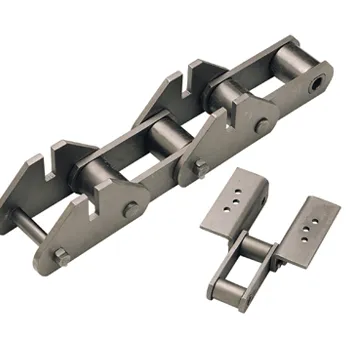
In che modo una catena di trasporto influisce sul flusso dei materiali in una linea di produzione?
Una catena di trasporto svolge un ruolo cruciale nel facilitare il flusso regolare ed efficiente dei materiali in una linea di produzione. Ecco i principali modi in cui una catena di trasporto influisce sul flusso dei materiali:
1. Movimento continuo: una catena di trasporto consente il movimento continuo dei materiali lungo la linea di produzione. Trattenendo e trasportando i materiali in modo sicuro, la catena garantisce un flusso costante senza interruzioni o ritardi.
2. Controllo della velocità: La velocità di movimento della catena di trasporto può essere regolata in base alla velocità di produzione desiderata. Ciò consente un controllo preciso del flusso di materiale, garantendo l'allineamento con i processi a valle ed evitando colli di bottiglia o sovraccarichi.
3. Orientamento e posizionamento: le catene di trasporto possono essere progettate con accessori o dispositivi specifici per orientare e posizionare i materiali nel modo desiderato. Ciò garantisce che i materiali siano presentati correttamente per la lavorazione, l'assemblaggio o l'imballaggio, ottimizzando il flusso produttivo complessivo.
4. Smistamento e deviazione: In alcune applicazioni, le catene di trasporto possono essere dotate di meccanismi per lo smistamento o la deviazione dei materiali in base a criteri predeterminati. Ciò consente un instradamento efficiente di diversi prodotti o componenti verso le rispettive destinazioni, ottimizzando il flusso dei materiali.
5. Accumulo e buffer: le catene di trasporto possono includere zone di accumulo o aree di buffer in cui i materiali possono temporaneamente fermarsi o accumularsi. Questa caratteristica è utile quando i processi a valle subiscono interruzioni temporanee o quando è necessario bilanciare il flusso tra le diverse fasi di produzione.
6. Integrazione con le attrezzature: Le catene di trasporto possono essere integrate con altre attrezzature o macchine presenti nella linea di produzione, come bracci robotici, sistemi di confezionamento automatizzati o stazioni di ispezione. Questa integrazione senza soluzione di continuità consente una movimentazione sincronizzata dei materiali, ottimizzando il flusso e l'efficienza dell'intero processo produttivo.
7. Personalizzazione per esigenze specifiche: le catene di trasporto possono essere personalizzate per soddisfare requisiti specifici di movimentazione dei materiali. Ciò include considerazioni quali larghezza, lunghezza, regolazione dell'altezza, pendenze e accessori o guide speciali. Tale personalizzazione garantisce che il flusso dei materiali sia adattato alle esigenze specifiche della linea di produzione.
Fornendo un metodo affidabile e controllato per il trasporto dei materiali, una catena di trasporto influenza significativamente il flusso dei materiali in una linea di produzione. Aumenta la produttività, riduce la movimentazione manuale, minimizza il rischio di errori o danni e, in definitiva, contribuisce all'efficienza complessiva e al successo del processo produttivo.
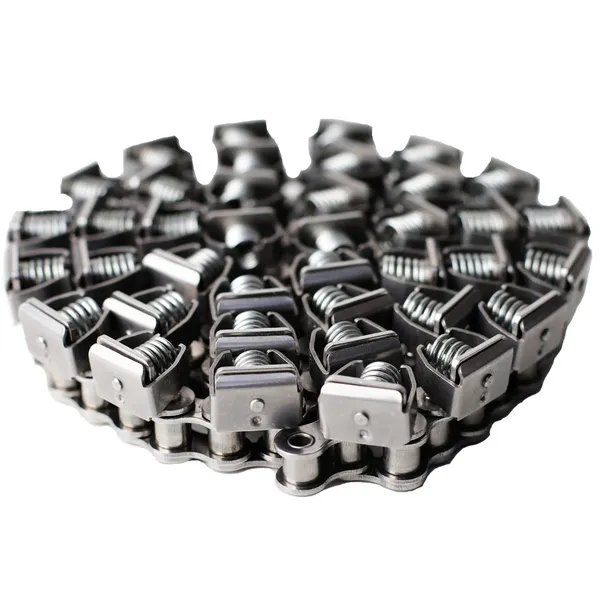
What is a conveyor chain and how does it work?
A conveyor chain is a type of mechanical chain specifically designed for use in conveyor systems. It is composed of a series of interconnected links that form a continuous chain loop. The links are typically made of metal and are joined together through pins or other connecting elements.
Conveyor chains work by transferring power and motion from the driving mechanism, such as a motor or sprocket, to the conveyor system to move materials or products along a predetermined path. The chain is placed on a track or guide rails, and as it moves, it carries the load placed on it.
The operation of a conveyor chain involves the following steps:
- Power transmission:
The driving mechanism transfers rotational power to the conveyor chain, typically through a motor and sprockets. The motor provides the necessary torque to drive the chain.
- Traction and motion:
As the driving mechanism rotates the sprockets, the teeth of the sprockets engage with the links of the conveyor chain. This interaction creates traction, causing the chain to move along the desired path.
- Load carrying:
The load to be transported is placed on the conveyor chain. The load can be in the form of products, materials, or other items. As the chain moves, it carries the load along the conveyor system, allowing for efficient transportation or handling.
- Support and guidance:
The conveyor chain is supported and guided by various components, such as guide rails, rollers, or wear strips. These components ensure the proper alignment and smooth movement of the chain along the conveyor system.
Conveyor chains are commonly used in industries such as manufacturing, logistics, packaging, and material handling. They offer a reliable and efficient method for moving products or materials in a controlled and automated manner.


editor by CX 2024-04-29