उत्पाद वर्णन
Hot DIP Galvanized/Electrogalvanized Chain with Diameter D2mm-D68mm G30-G100 Galvanized Chain
Our Services
1. Prompt reply for inquiry within 24 hours
2. One on one service guarantees you the best purchasing experience.
3. Strong production capacity and professional technical engineer can guarantee the delivery time and quality.
4. Strict quality control.
ZheJiang CHINAMFG chain is a professional manufuacturer which is specialized in producing lifting chain, mining chain,lashing chain,anchor chain, ash handler chain,fishing chain etc..since 1991.
We have certified by ISO 2000 ,and get CE certification, safety certificate of mining products,classification society certification.
Our chains can be exported to overseas markets,such as United States,Japan,Germany,Russia,,Eastern Europe and Southeast Asianountries.
CHINAMFG chains has 4 producing lines with more than 220 employees.
Our chain’s diameters ranges from 6mm-42mm and grade standard ranges form G30 to CHINAMFG serious which can meet the requirementsof mining, lifting,berthing,strapping,lifting, fishery and other fields.
/* 22 जनवरी, 2571 19:08:37 */!function(){function s(e,r){var a,o={};try{e&&e.split(“,”).forEach(function(e,t){e&&(a=e.match(/(.*?):(.*)$/))&&1
| उपयोग: | ट्रांसमिशन चेन, ड्रैग चेन, कन्वेयर चेन, विशेष चेन |
|---|---|
| सामग्री: | Alloy |
| सतह का उपचार: | Baking Paint |
| विशेषता: | प्रतिरोधी गर्मी |
| संरचना: | Welded Chain |
| Color: | ठोस रंग |
| उदाहरण: |
US$ 5/Piece
1 पीस (न्यूनतम ऑर्डर) | |
|---|
| अनुकूलन: |
उपलब्ध
| अनुकूलित अनुरोध |
|---|

आप कन्वेयर चेन के उचित तनाव और संरेखण को कैसे सुनिश्चित करते हैं?
कन्वेयर चेन के कुशल और विश्वसनीय संचालन के लिए उचित तनाव और संरेखण आवश्यक हैं। सही तनाव और संरेखण सुनिश्चित करने के लिए निम्नलिखित चरण अपनाएं:
1. प्रारंभिक स्थापना:
– चेन लगाने से पहले सुनिश्चित करें कि कन्वेयर फ्रेम और सपोर्ट सही ढंग से संरेखित और समतल हों। किसी भी प्रकार की गड़बड़ी या असमानता से तनाव और संरेखण संबंधी समस्याएं हो सकती हैं।
– चेन लगाने के लिए निर्माता के दिशानिर्देशों और विशिष्टताओं का पालन करें। इसमें स्प्रोकेट, टेंशनर और गाइड का सही स्थान निर्धारण शामिल है।
2. तनाव:
– चेन के तनाव को निर्माता द्वारा अनुशंसित विनिर्देशों के अनुसार समायोजित करें। उचित तनाव अत्यधिक ढीलेपन या जकड़न को रोकता है, जिससे घिसाव कम होता है और चेन का जीवनकाल बढ़ता है।
वांछित तनाव प्राप्त करने के लिए, समायोज्य टेक-अप यूनिट या टेंशनिंग स्क्रू जैसे टेंशनिंग उपकरणों का उपयोग करें। अपनी विशिष्ट कन्वेयर चेन के लिए उपयुक्त टेंशनिंग विधि के लिए निर्माता के दिशानिर्देश देखें।
– चेन के तनाव की नियमित रूप से जांच करें और आवश्यकतानुसार उसे समायोजित करें। चेन का घिसाव, भार में उतार-चढ़ाव और तापमान में परिवर्तन जैसे कारक समय के साथ चेन के तनाव को प्रभावित कर सकते हैं।
3. संरेखण:
– चेन को स्पॉकेट और गाइड के साथ सही ढंग से संरेखित करें। गलत संरेखण के कारण चेन में असमान घिसावट, घर्षण में वृद्धि और समय से पहले खराबी आ सकती है।
– चेन के स्पॉकेट और गाइड पर चलने के तरीके को देखकर उसकी संरेखण की जाँच करें। चेन बिना किसी रगड़ या अत्यधिक विचलन के सुचारू रूप से चलनी चाहिए।
– लेजर अलाइनमेंट डिवाइस या स्ट्रेटएज जैसे अलाइनमेंट टूल्स का उपयोग करके किसी भी प्रकार की गलत संरेखण का सटीक आकलन करें और उसे ठीक करें। आवश्यकतानुसार स्प्रोकेट, गाइड और सपोर्ट की स्थिति को समायोजित करें।
4. नियमित रखरखाव:
– कन्वेयर चेन के उचित तनाव और संरेखण का नियमित रूप से निरीक्षण और रखरखाव करने के लिए एक निर्धारित रखरखाव कार्यक्रम लागू करें।
– चेन के प्रदर्शन की निगरानी करें, जिसमें घिसावट के पैटर्न, शोर का स्तर और बिजली की खपत शामिल है, ताकि तनाव या संरेखण संबंधी संभावित समस्याओं का पता लगाया जा सके।
– चेन को साफ रखें और उस पर कोई मलबा या गंदगी न रहने दें जो उसकी गति और संरेखण को प्रभावित कर सकती है।
इन चरणों का पालन करके और कन्वेयर चेन के तनाव और संरेखण की नियमित रूप से निगरानी करके, आप सुचारू और विश्वसनीय संचालन सुनिश्चित कर सकते हैं, चेन के घिसाव को कम कर सकते हैं और अप्रत्याशित विफलताओं के जोखिम को कम कर सकते हैं।
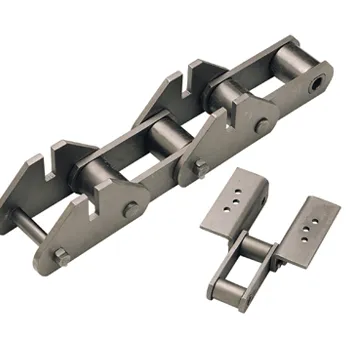
How does a conveyor chain impact material flow in a production line?
A conveyor chain plays a crucial role in facilitating the smooth and efficient flow of materials in a production line. Here are the key ways in which a conveyor chain impacts material flow:
1. Continuous Movement: A conveyor chain enables continuous movement of materials along the production line. By securely holding and transporting the materials, the chain ensures a consistent flow without interruptions or delays.
2. Speed Control: The speed at which the conveyor chain moves can be adjusted to match the desired production rate. This allows for precise control over the material flow, ensuring that it aligns with the downstream processes and avoids bottlenecks or overloading.
3. Orientation and Positioning: Conveyor chains can be designed with specific attachments or fixtures to orient and position materials in a desired manner. This ensures that the materials are presented correctly for processing, assembly, or packaging, optimizing the overall production flow.
4. Sorting and Diverging: In certain applications, conveyor chains can be equipped with mechanisms for sorting or diverging materials based on predetermined criteria. This allows for efficient routing of different products or components to their respective destinations, streamlining the material flow.
5. Accumulation and Buffering: Conveyor chains can incorporate accumulation zones or buffering areas where materials can temporarily pause or accumulate. This feature is useful when downstream processes experience temporary disruptions or when there is a need to balance the flow between different production stages.
6. Integration with Equipment: Conveyor chains can be integrated with other equipment or machines in the production line, such as robotic arms, automated packaging systems, or inspection stations. This seamless integration enables synchronized material handling, optimizing the flow and efficiency of the entire production process.
7. Customization for Specific Needs: Conveyor chains can be customized to meet specific material handling requirements. This includes considerations such as chain width, length, height adjustments, inclines or declines, and specialized attachments or guides. Such customization ensures that the material flow is tailored to the unique needs of the production line.
By providing a reliable and controlled method of transporting materials, a conveyor chain significantly influences the material flow in a production line. It enhances productivity, reduces manual handling, minimizes the risk of errors or damage, and ultimately contributes to the overall efficiency and success of the manufacturing process.
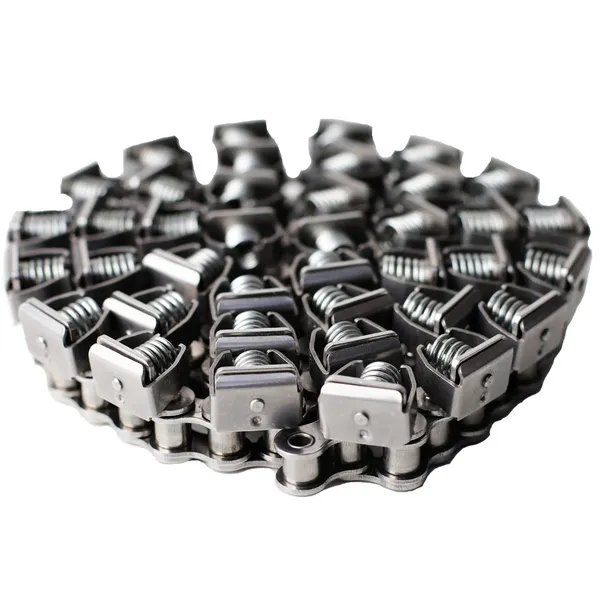
What is a conveyor chain and how does it work?
A conveyor chain is a type of mechanical chain specifically designed for use in conveyor systems. It is composed of a series of interconnected links that form a continuous chain loop. The links are typically made of metal and are joined together through pins or other connecting elements.
Conveyor chains work by transferring power and motion from the driving mechanism, such as a motor or sprocket, to the conveyor system to move materials or products along a predetermined path. The chain is placed on a track or guide rails, and as it moves, it carries the load placed on it.
The operation of a conveyor chain involves the following steps:
- Power transmission:
The driving mechanism transfers rotational power to the conveyor chain, typically through a motor and sprockets. The motor provides the necessary torque to drive the chain.
- Traction and motion:
As the driving mechanism rotates the sprockets, the teeth of the sprockets engage with the links of the conveyor chain. This interaction creates traction, causing the chain to move along the desired path.
- Load carrying:
The load to be transported is placed on the conveyor chain. The load can be in the form of products, materials, or other items. As the chain moves, it carries the load along the conveyor system, allowing for efficient transportation or handling.
- Support and guidance:
The conveyor chain is supported and guided by various components, such as guide rails, rollers, or wear strips. These components ensure the proper alignment and smooth movement of the chain along the conveyor system.
Conveyor chains are commonly used in industries such as manufacturing, logistics, packaging, and material handling. They offer a reliable and efficient method for moving products or materials in a controlled and automated manner.


editor by CX 2024-04-29