Product Description
DELE Hot Sale 8mm*24mm CHINAMFG Hoist Chain for Lifting
| size dxp(mm) | width | Approx Weight(kg/m) | Working LoadLimit(t) |
Test Load(KN) | Breaking Load min. FN |
|
| inside min.w1 | outside max. w3 | |||||
| 3×9 | 3.8 | 10.7 | 0.21 | 0.28 | 7.1 | 11.3 |
| 4×12 | 5 | 14.3 | 0.35 | 0.5 | 12.6 | 20.1 |
| 5×15 | 6.3 | 17.9 | 0.54 | 0.8 | 19.6 | 31.4 |
| 6×18 | 7.5 | 21 | 0.79 | 1.1 | 12.7 | 45.2 |
| 6.3×19 | 7.9 | 22.6 | 0.86 | 1.25 | 31.2 | 49.9 |
| 7×21 | 9 | 24.5 | 1.07 | 1.5 | 37 | 61.6 |
| 8×24 | 10 | 28 | 1.38 | 2 | 48 | 80.4 |
| 9×27 | 11.3 | 32.2 | 1.76 | 2.5 | 63.6 | 102 |
| 10×30 | 12.5 | 35 | 2.2 | 3.2 | 76 | 125 |
| 11.2×33.6 | 14 | 40.1 | 2.71 | 4 | 98.5 | 158 |
| 11×43 | 12.6 | 36.5 | 2.33 | 3.8 | 92 | 154 |
| 12×36 | 15 | 42 | 3.1 | 4.6 | 109 | 181 |
| 12.5×38 | 15.5 | 42.2 | 3.3 | 4.9 | 117 | 196 |
| 13×39 | 16.3 | 46 | 3.8 | 5 | 128 | 214 |
| 14×42 | 18 | 49 | 4.13 | 6.3 | 150 | 250 |
| 14×50 | 17 | 48 | 4 | 6.3 | 150 | 250 |
| 15×46 | 20 | 52 | 5.17 | 7 | 168 | 280 |
| 16×48 | 20 | 56 | 5.63 | 8 | 192 | 320 |
| 16×49 | 24.5 | 59.5 | 5.71 | 8 | 192 | 320 |
| 16×64 | 23.9 | 58.9 | 5.11 | 8 | 192 | 320 |
| 18×54 | 23 | 63 | 6.85 | 10 | 246 | 410 |
| 18×54 | 21 | 60 | 6.6 | 10 | 246 | 410 |
| 19×57 | 23.7 | 63.2 | 7.7 | 11.3 | 270 | 450 |
| 20×60 | 25 | 70 | 8.6 | 12.5 | 300 | 500 |
| 22×65 | 28 | 74.2 | 10.7 | 15.3 | 366 | 610 |
| 22×66 | 28 | 77 | 10.2 | 15.3 | 366 | 610 |
| 22×86 | 26 | 74 | 9.5 | 15.3 | 366 | 610 |
| 24×72 | 32 | 82 | 12.78 | 18 | 432 | 720 |
| 24×86 | 28 | 79 | 11.6 | 18 | 432 | 720 |
| 26×78 | 35 | 91 | 14.87 | 21.3 | 510 | 720 |
| 26×92 | 30 | 86 | 13.7 | 21.3 | 510 | 850 |
Payment
| Payment term | L/C | l/c amount above 40.000 usd,we can accept L/C at sight | |
| T/T |
EXW | 30% T/T in advance,paid the balance before shipment |
|
| FOB | |||
| CIF | 30% T/T in advance,paid the balance against copy of B/L |
||
| cfr(c&f) | |||
| paypal | amount lower than 4000usd |
||
| west | |||
| Delivery time | 15~35days after receiving payment for 1 container |
| We welcome use trade assurance,you`ll enjoy: 100% product quality protection 100% on-time shipment protection 100% payment protection for your covered amount |
/* January 22, 2571 19:08:37 */!function(){function s(e,r){var a,o={};try{e&&e.split(“,”).forEach(function(e,t){e&&(a=e.match(/(.*?):(.*)$/))&&1
| Usage: | Transmission Chain, Drag Chain, Conveyor Chain, Dedicated Special Chain, Load Chain |
|---|---|
| Material: | Stainless steel |
| Surface Treatment: | Electroplating |
| Feature: | Heat Resistant |
| Chain Size: | 8*24mm |
| Structure: | Welded Chain |
| Samples: |
US$ 5/Meter
1 Meter(Min.Order) | |
|---|
| Customization: |
Available
| Customized Request |
|---|
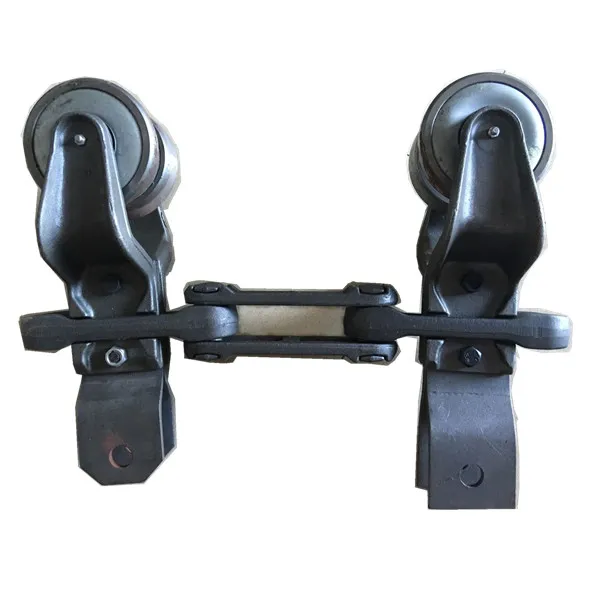
How do you calculate the required horsepower for a conveyor chain drive?
The calculation of required horsepower for a conveyor chain drive involves considering various factors related to the conveyor system and the specific application. Here is a step-by-step process:
1. Determine the Total Resistance:
– Calculate the total resistance that the conveyor chain needs to overcome during operation. This includes the resistance due to the load being conveyed, frictional losses, elevation changes, and any other resistances in the system.
2. Convert the Resistance to Equivalent Inertia:
– Convert the total resistance to an equivalent inertia by multiplying it by the square of the chain speed.
3. Calculate the Total Inertia:
– Determine the total inertia of the system by considering the inertia of all the rotating components, such as the conveyor chain, sprockets, and any other driven elements.
4. Determine the Required Torque:
– Calculate the required torque by multiplying the total inertia by the desired acceleration or deceleration rate.
5. Convert Torque to Horsepower:
– Convert the required torque to horsepower by dividing it by the motor speed (in RPM) and multiplying by a conversion factor.
6. Consider Safety Factors and Efficiency:
– Apply safety factors to the calculated horsepower to account for variations, contingencies, and future growth.
– Consider the efficiency of the drive system, including the motor, gearbox, and other transmission components, to ensure accurate power transmission.
It’s important to note that the above calculation method provides an estimate of the required horsepower. Consulting with conveyor system manufacturers, engineers, or industry-specific guidelines is recommended for precise calculations and to ensure the selected conveyor chain drive meets the application requirements.

How does a conveyor chain contribute to overall production efficiency?
A conveyor chain plays a crucial role in enhancing overall production efficiency in various industries. Here are the ways in which it contributes to efficiency:
1. Continuous Material Flow: A conveyor chain enables continuous and uninterrupted material flow from one point to another. It eliminates the need for manual handling or transportation of goods, reducing downtime and delays in production processes.
2. Increased Throughput: By automating material handling, a conveyor chain enables faster and more efficient movement of goods. It allows for higher throughput and production rates, maximizing the utilization of resources and reducing cycle times.
3. Improved Productivity: With a conveyor chain, employees can focus on value-added tasks rather than manual material handling. This leads to improved productivity as workers can concentrate on more skilled and critical operations.
4. Efficient Resource Allocation: A well-designed conveyor chain system optimizes the utilization of space, allowing for efficient layout and organization of production areas. It helps in streamlining workflow and minimizing wastage of resources such as floor space, manpower, and equipment.
5. Quality Control: Conveyor chains can be integrated with inspection stations or automated processes to ensure quality control at various stages of production. This helps in detecting and rectifying any defects or inconsistencies, reducing the chances of faulty products reaching the market.
6. Reduced Material Handling Costs: By eliminating or minimizing manual material handling, a conveyor chain reduces labor costs associated with transportation, lifting, and carrying of goods. It also minimizes the risk of injuries or accidents related to manual handling.
7. Flexibility and Adaptability: Conveyor chains can be customized to suit specific production requirements. They can be designed to accommodate different types of products, handle various load capacities, and adapt to changes in production demands. This flexibility allows for seamless integration with existing production systems and easy scalability.
8. Safety and Ergonomics: Conveyor chains incorporate safety features such as guards, emergency stop buttons, and interlocks to ensure worker safety. They also promote ergonomic practices by reducing physical strain on workers and minimizing the risk of musculoskeletal injuries.
Overall, a well-designed and properly maintained conveyor chain system enhances production efficiency by optimizing material flow, increasing throughput, improving productivity, reducing costs, ensuring quality control, and prioritizing worker safety.
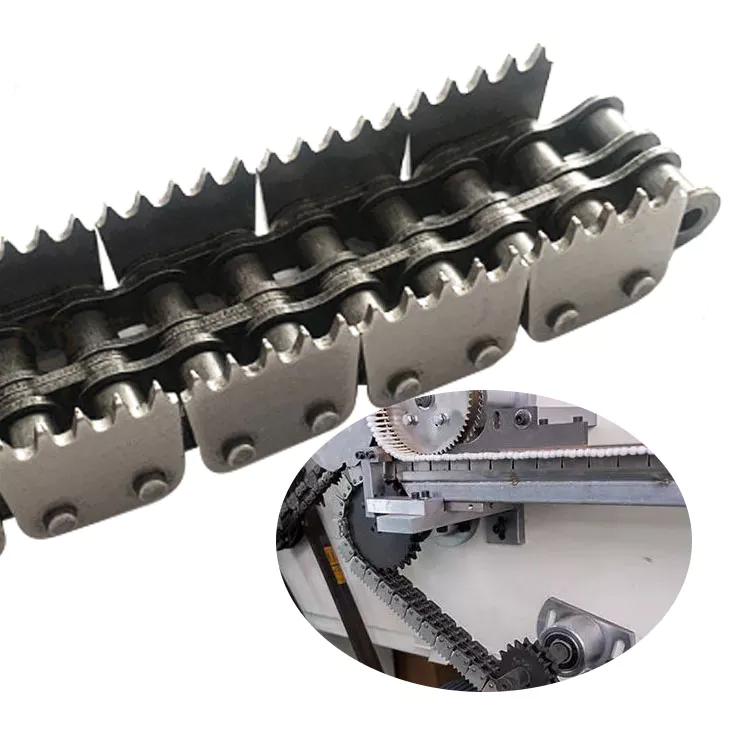
How do you properly tension a conveyor chain?
Properly tensioning a conveyor chain is crucial for its smooth operation and to prevent issues like chain slipping or excessive wear. Here are the steps to properly tension a conveyor chain:
- Identify the Tensioning Points: Determine the locations where the conveyor chain can be tensioned. These are typically at the ends of the chain or at specific tensioning devices.
- Loosen the Tensioning Devices: If there are tensioning devices in place, such as adjustable bolts or tensioning screws, loosen them to allow for adjustment.
- Apply Tension: Apply tension to the conveyor chain by either manually pulling the chain or using a tensioning tool. The amount of tension required depends on the chain type and the manufacturer’s recommendations.
- Check the Tension: Use a tension gauge or other suitable method to measure the tension of the conveyor chain. The tension should fall within the specified range provided by the chain manufacturer.
- Adjust the Tension: If the tension is too loose or too tight, make adjustments accordingly. Tighten or loosen the tensioning devices until the desired tension is achieved.
- Secure the Tensioning Devices: Once the proper tension is achieved, securely tighten the tensioning devices to hold the chain in place.
- Verify the Tension: After tensioning the chain, perform a visual inspection and run the conveyor to ensure the chain runs smoothly without excessive slack or tightness. Make any further adjustments if necessary.
It’s important to refer to the specific guidelines provided by the conveyor chain manufacturer for proper tensioning instructions, as the exact method may vary depending on the chain type and design. Regularly check the tension of the conveyor chain and make adjustments as needed to maintain optimal performance.


editor by CX 2024-03-26