Underground feeder breaker chain selection starts with the machine and material-handling context. The chain is part of a conveyor system that moves material through the feeder breaker, so pitch, width, repeating chain-unit geometry, scraper/flight arrangement, sprocket engagement, and the machine’s own tensioning system must be considered together. K Series product information covers underground feeder breaker use and identifies K201B and K207B as feeder breaker scraper chain models.
Machine and Process Context

A feeder breaker receives bulk material, meters or conveys it through the machine, and combines conveying with breaking or size reduction. The chain conveyor carries material using flight or scraper elements that move with the chain. The exact machine geometry, chain path, loading pattern, and interface with sprockets and adjustment hardware vary by equipment design, so this page avoids making brand-specific compatibility or setting claims.
For chain selection, identify where the existing chain sits in the machine and how the flight assembly is arranged. Photograph the chain from the side and above, then record the pitch, repeating unit length, scraper width, and visible joint details. If a drawing exists, it should take priority over visual similarity to another chain.
The K Series product information also identifies coal-washing service. That supports a broader material-handling context, but it does not mean every K Series chain or feeder breaker chain is automatically suitable for every coal-processing machine. Application confirmation remains configuration-specific.
Duty Conditions to Define
A useful application enquiry describes the conditions rather than relying on a generic label such as “heavy duty.” Include the material handled, the presence of fines or build-up, whether the material is wet or dry, any known impact or shock conditions, the chain arrangement, scraper/flight geometry, and how the existing chain is maintained and adjusted.
Underground mining conditions can make inspection access limited and can expose chain components to abrasive contamination. These facts make documentation important. If a chain has developed uneven wear, damaged flights, or abnormal engagement, photographs of the affected area should be paired with photographs of an intact section so the original configuration is still clear.
Do not transfer tension settings, lubrication practices, safety instructions, or discard limits from an unrelated feeder breaker. Those values should come from the equipment manufacturer, site maintenance procedure, or approved chain specification.
Feeder Breaker Chain Options


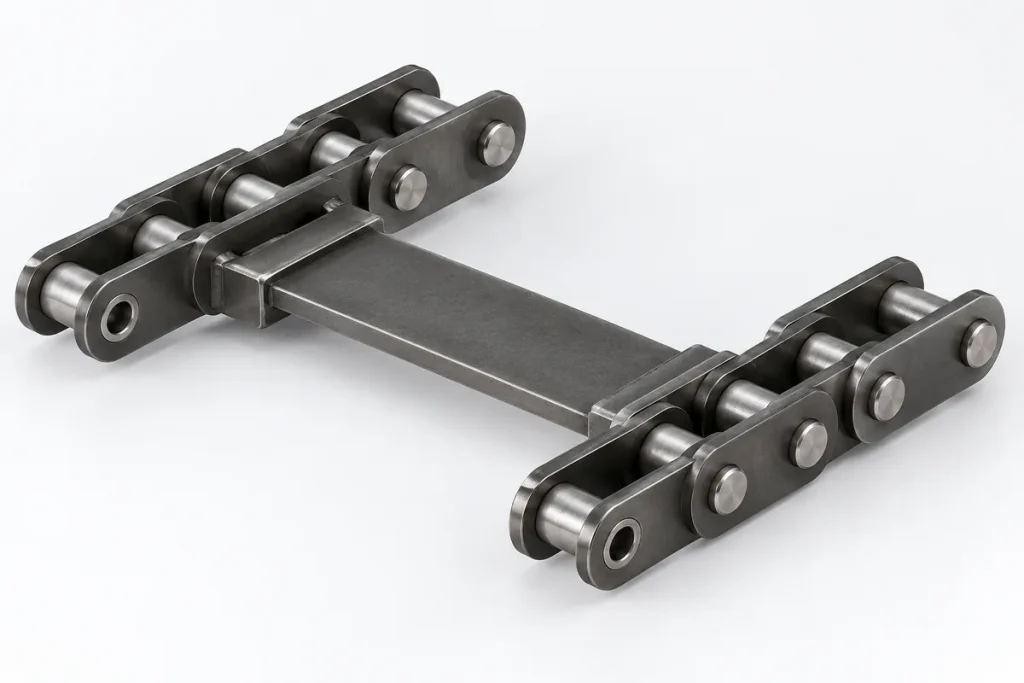
The current feeder breaker scraper chain range includes:
| Model | Poziom | Długość jednostki łańcucha | Szerokość skrobaka |
|---|---|---|---|
| K201B | 3 1/2 cala (89 mm) | 21 cali (534 mm) | 44 2/5 cala (1127,5 mm) |
| K207B | 3 1/2 cala (88,9 mm) | 21 cali (533,4 mm) | 46 cali (1171,85 mm) |
The comparison is for identification, not automatic substitution. The two models have different documented component structures. If the measured chain does not correspond with one of them, treat it as a separate configuration and provide a drawing or measured sample information.
Integration and Measurement Checks

Before confirming a chain, review the following points:
- Pitch: use clear pin-centre references and record the measurement method.
- Chain unit length: identify the repeating flight/chain arrangement rather than measuring a random short section.
- Scraper width: record the full width that controls fit through the conveying path.
- Chain and flight structure: photograph inner/outer links, flight section, scraper head/plate, pins, bushes, and special attachment features.
- Sprocket/interface observations: document visible engagement and any signs that the existing chain is not tracking normally. Do not infer a sprocket specification from appearance alone.
- Drawing information: include the machine or chain drawing whenever available.
These checks help distinguish a genuine model match from a chain that happens to share a similar pitch.
Maintenance Implications
Underground feeder breaker chain maintenance should be planned around safe access, repeatable inspection points, and machine-specific procedures. Good records are often more valuable than an isolated measurement. Photograph the same joint or span over time where practical, record the machine condition when the observation was made, and note any adjustment or component replacement that could affect later comparisons.
Inspection should include the chain links and joints, flight/scraper components, visible retention features, chain alignment, and the surrounding sprocket/guide path. Material build-up should be cleared only under the approved maintenance procedure, because it can hide wear or damage and can also affect chain tracking.
If tension adjustment cannot restore the machine’s normal engagement or tracking, investigate chain and sprocket condition rather than continuing to adjust without diagnosis.
Maintenance Guide Wear and Replacement Planning
RFQ Preparation
For an application-specific quotation, send:
- equipment type and application description;
- existing chain model if known;
- pitch, chain unit length, and scraper width;
- flight/scraper arrangement and spacing information;
- photographs of the chain, joints, flights, and installed path;
- drawing or measured sketch if available;
- handled material and relevant operating context;
- quantity;
- any customer-controlled requirements for material, treatment, inspection, testing, documentation, or marking.
If a specification is unknown, mark it as unknown. It is safer to review a missing requirement than to fill it with an assumed value from another machine.
Send Application Details
Application Questions That Change the Review
The most useful application questions are the ones that can change the chain definition or the way the replacement is inspected. Ask whether the chain is a known model or an unidentified assembly, whether the feeder breaker has been modified, whether the current chain is paired or otherwise arranged in a specific machine layout, and whether the flight geometry is original or has been repaired. Record the conveyed material and any recurring build-up, impact, tracking, or access issue that the maintenance team has observed.
These questions do not create a substitute design calculation. They tell the engineering reviewer which evidence needs closer attention. For example, recurring side contact makes photographs of the chain path and flight alignment more useful; an unknown repair history makes the component structure and drawing comparison more important; a planned shutdown creates an opportunity to obtain reliable measurements before the old chain is discarded.
Building an Application Record
A practical application record can be kept with the maintenance or sourcing file. Include the machine identification used by the site, chain model if known, date of inspection, photographs, pitch, unit length, scraper width, flight spacing, adjustment position if recorded by the approved procedure, and links to the relevant drawing or purchase reference. Note whether the dimensions are nominal drawing values or field measurements.
When several measurements are taken over time, preserve the original entries rather than replacing them with only the latest value. A chronological record helps the team see whether a difference comes from a different measurement method, a repaired component, or progressive change in the chain condition. It also gives a replacement supplier a more complete technical picture without requiring unsupported assumptions about the machine.
Application Evidence Checklist Before a Shutdown Ends
An underground feeder breaker shutdown may be the best opportunity to capture chain information that is difficult to access during normal operation. Before the machine is returned to service, confirm that the maintenance record contains enough evidence for both condition review and future sourcing. Photograph the complete accessible chain path, an intact repeating chain/flight unit, the chain-to-flight connection, representative joints, and the chain seated on the sprocket where this can be done under the site’s approved isolation procedure.
Record measurements with the same care. Note pitch reference points, repeating unit length, scraper or flight width, flight spacing where relevant, and any component markings. Keep the measurement method with the value so that another person can reproduce the check later. A bare number without its endpoints can create unnecessary uncertainty when the next replacement review begins.
If a drawing or historical purchase record is available, attach it to the same application record but do not overwrite field observations when the two disagree. A documented discrepancy is useful engineering information. An unexplained correction is not.
Separate Machine Data from Chain Identification Data
The feeder breaker application record should distinguish two groups of information. Machine and process data describes where the chain works: equipment identification, conveyed material, duty pattern, access constraints, chain path, recurring build-up or impact observations, and any site-controlled maintenance requirements. Chain identification data describes the assembly being sourced: model if known, pitch, repeating unit length, scraper width, flight arrangement, joint/component details, drawings, and photographs.
Keeping the two groups separate improves replacement reviews. A machine description alone does not prove the chain model, while a chain dimension alone does not explain the operating context. Combining both gives the reviewer a better basis for confirming a standard model or defining a custom requirement without claiming unsupported compatibility.
Preserve Evidence After Removal
If the existing chain will be scrapped after replacement, identify a representative intact section before disposal. Mark the section so the original orientation and flight relationship are clear, photograph it, and retain it when site procedures allow. A damaged or stretched section can still be useful for condition history, but it should not become the only dimensional reference when a less-deformed section is available.
For a paired arrangement, keep evidence from both chain paths rather than assuming one side represents the other. Record any visible asymmetry, different repair history, or unequal adjustment condition. These observations can help the later engineering review decide what must be measured or confirmed before the next chain is specified.