Product Description
| Model NO. | 06C/08A/10A/12A/16A/20A/24A/28A/32A/40A/06B/08B/10B/12B/16B/20B/24B/28B/32B/40B-1/2/3 Heavy duty |
| Chain Model | Roller Chains |
| Structure (for Chain) | Roller Chain |
| Specification | GB/T, DIN, ANSI, ISO, BS, JIS. |
| Origin | HangZhou, ZheJiang |
| Color | Solid Color |
| Chain Color | Customized |
Our company
Wolff Chain Co. is 1 of the professional chain manufacturers in China. We focus on reseaching, manufacturing and trading of the chain drive with famous brands — “DOVON” and “DECHO”. We supply OEM services for many famous enterprises such as SUZUKI, XIHU (WEST LAKE) DIS., FAW, AGCO, JUMING as well.
Wolff mainly producing the Transmission chains,Conveyor chains,Dragging Chains,Silent chains,Leaf chains,Roller chains,Special chain and many other series of chain products. Our technicians a have improved the chains quality to the world-level. High quality material selection, powerful and precise heat-treatment technology and excellent assembly methods ensure Wolff chains meet the tough and strict requirements for machines and vehicles.
All of our products completely conform to the international standard such as ISO\DIN\ANSI\BS\JIS, etc. Wolff has been successfully certified by ISO9001 Quality Management System,SGS inspection and BV inspection. Wolff chains can be widely applied to many industries including automobile, motorcycle, forklift, wood processing machine, constructure machine, packing machine, food machine,tobacco machine and agricultural equipments. Wolff chains are popular in America,South America,Europe,Middle East, South East Asia and Africa markets.
Our workshop
Our certification
Welcome to our exhibition
FAQ
Q1. What is your terms of packing?
A: Generally, we pack our goods in single color box. If you have special request about packing, pls negotiate with us in advance, we can pack the goods as your request.
Q2. What is your terms of payment?
A: T/T 30% as deposit, and 70% before delivery. We’ll show you the photos of the products and packages
before you pay the balance. Other payments terms, pls negotiate with us in advance, we can discuss.
Q3. What is your terms of delivery?
A: EXW, FOB, CFR, CIF.
Q4. How about your delivery time?
A: Generally, it will take 25 to 30 days after receiving your advance payment. The specific delivery time depends
on the items and the quantity of your order.
Q5. Can you produce according to the samples?
A: Yes, we can produce by your samples or technical drawings. We can build the molds and fixtures.
Q6. What is your sample policy?
A: We can supply the sample if we have ready parts in stock, but the customers have to pay the sample cost and
the courier cost.We welcome sample order.
Q7. Do you test all your goods before delivery?
A: Yes, we have 100% test before delivery
Q8: How do you make our business long-term and good relationship?
1. We keep good quality and competitive price to ensure our customers benefit ;
2. We respect every customer as our friend and we sincerely do business and make friends with them,
no matter where they come from.
| Standard or Nonstandard: | Standard |
|---|---|
| Application: | Textile Machinery, Garment Machinery, Conveyer Equipment, Packaging Machinery, Food Machinery, Marine, Mining Equipment |
| Surface Treatment: | Oil Blooming |
| Structure: | Roller Chain |
| Material: | Carbon Steel |
| Type: | Short Pitch Chain |
| Samples: |
US$ 0/Piece
1 Piece(Min.Order) | |
|---|
| Customization: |
Available
| Customized Request |
|---|
Can a conveyor chain be used in automotive assembly lines?
Yes, a conveyor chain can be effectively used in automotive assembly lines. Here are the reasons why:
1. Efficient Material Handling:
– Conveyor chains provide a reliable and efficient means of transporting automotive components and parts along the assembly line. They can handle heavy loads and withstand the demanding requirements of automotive manufacturing.
2. Versatility:
– Conveyor chains offer versatility in terms of design and configuration. They can be customized to accommodate various assembly processes, such as body welding, painting, assembly, and final inspection.
3. Precise Positioning:
– Conveyor chains allow precise positioning and synchronization of automotive components, ensuring accurate assembly and alignment during the production process. This helps maintain consistent quality and reduces errors.
4. Automation Integration:
– Conveyor chains can be easily integrated with automation systems in automotive assembly lines. They can work in conjunction with robotic arms, vision systems, and other automated equipment to optimize the production process and improve efficiency.
5. Assembly Line Flexibility:
– Conveyor chains provide flexibility in terms of line configuration and layout. They can be designed to accommodate different assembly line layouts, including straight sections, curves, inclines, and declines, to meet the specific requirements of automotive assembly processes.
6. Space Optimization:
– Conveyor chains help optimize space utilization in automotive assembly plants. They can be designed to navigate around existing equipment and infrastructure, making efficient use of available floor space.
7. Safety:
– Conveyor chains are designed with safety features to protect operators and prevent accidents. Emergency stop controls, guarding, and interlocking mechanisms ensure the safe operation of the assembly line.
8. Increased Production Speed:
– By using conveyor chains, automotive assembly lines can achieve higher production speeds, allowing for faster manufacturing cycles and increased output.
Overall, conveyor chains play a crucial role in enhancing the efficiency, productivity, and safety of automotive assembly lines, contributing to the smooth and streamlined production of vehicles.

How does a conveyor chain contribute to overall production efficiency?
A conveyor chain plays a crucial role in enhancing overall production efficiency in various industries. Here are the ways in which it contributes to efficiency:
1. Continuous Material Flow: A conveyor chain enables continuous and uninterrupted material flow from one point to another. It eliminates the need for manual handling or transportation of goods, reducing downtime and delays in production processes.
2. Increased Throughput: By automating material handling, a conveyor chain enables faster and more efficient movement of goods. It allows for higher throughput and production rates, maximizing the utilization of resources and reducing cycle times.
3. Improved Productivity: With a conveyor chain, employees can focus on value-added tasks rather than manual material handling. This leads to improved productivity as workers can concentrate on more skilled and critical operations.
4. Efficient Resource Allocation: A well-designed conveyor chain system optimizes the utilization of space, allowing for efficient layout and organization of production areas. It helps in streamlining workflow and minimizing wastage of resources such as floor space, manpower, and equipment.
5. Quality Control: Conveyor chains can be integrated with inspection stations or automated processes to ensure quality control at various stages of production. This helps in detecting and rectifying any defects or inconsistencies, reducing the chances of faulty products reaching the market.
6. Reduced Material Handling Costs: By eliminating or minimizing manual material handling, a conveyor chain reduces labor costs associated with transportation, lifting, and carrying of goods. It also minimizes the risk of injuries or accidents related to manual handling.
7. Flexibility and Adaptability: Conveyor chains can be customized to suit specific production requirements. They can be designed to accommodate different types of products, handle various load capacities, and adapt to changes in production demands. This flexibility allows for seamless integration with existing production systems and easy scalability.
8. Safety and Ergonomics: Conveyor chains incorporate safety features such as guards, emergency stop buttons, and interlocks to ensure worker safety. They also promote ergonomic practices by reducing physical strain on workers and minimizing the risk of musculoskeletal injuries.
Overall, a well-designed and properly maintained conveyor chain system enhances production efficiency by optimizing material flow, increasing throughput, improving productivity, reducing costs, ensuring quality control, and prioritizing worker safety.
How does a conveyor chain compare to other types of conveyor systems?
Conveyor chains are one of the common types of conveyor systems used in various industries. They offer specific advantages and characteristics that differentiate them from other types of conveyor systems.
1. Versatility: Conveyor chains are highly versatile and can be used for a wide range of applications, including horizontal, inclined, and vertical conveying. They can handle various types of materials, from bulk solids to individual items.
2. High Load Capacity: Conveyor chains are known for their high load-carrying capacity. They are designed to handle heavy loads and can be used in applications where other conveyor systems may not be suitable.
3. Durability: Conveyor chains are built to withstand harsh operating conditions and heavy-duty use. They are made from strong and durable materials, such as steel or alloy, that can withstand abrasion, impact, and wear.
4. Flexibility: Conveyor chains offer flexibility in terms of layout and design. They can be configured to accommodate complex conveyor paths, curves, and multiple discharge points, allowing for efficient material flow and system customization.
5. Cost-Effective: Conveyor chains often provide a cost-effective solution for material handling compared to other conveyor systems. They have a relatively low initial cost, require less maintenance, and have a longer service life.
However, it’s important to note that conveyor chains may not be suitable for every application. Other types of conveyor systems, such as belt conveyors, screw conveyors, or pneumatic conveyors, may offer specific advantages depending on the application requirements, material characteristics, or environmental factors.
Ultimately, the selection of the appropriate conveyor system depends on factors such as load capacity, material properties, layout constraints, cost considerations, and specific application needs.


editor by CX 2023-08-23
China wholesaler KH5 stock silent chain Silent Tooth chain and gear inverted silent tooth drive chains suppiy bulk roller chain
Common or Nonstandard: Regular
Type: Gear chain for transmission
Substance: manganese steel
Tensile Toughness: 48.1
Product identify: Toothed silent transmission chain
Software: Gear accessories
Function: Specific, rapidly and silent.
Packaging Details: regular export packing
Port: ZheJiang QingDao
silent chain
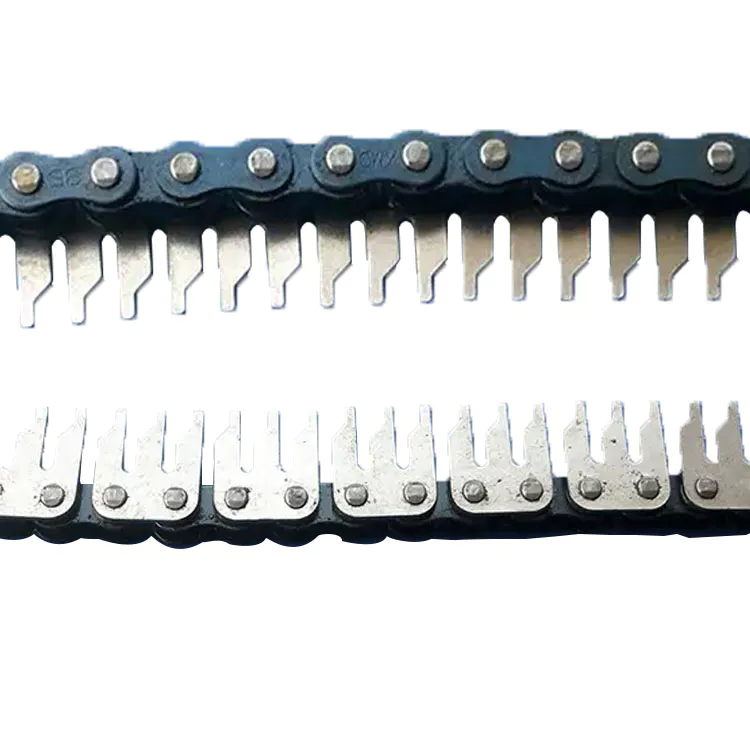
Toothed conveyor chain systemic edge: variable, multifunctional, reliable, sturdy Unlimited software options, whether big or modest, heavy or gentle, round or square, silent chains can be exact, reliable, exact, risk-free, expense-successful transportation of them
| SPEC | PITCH | amount slice |
| KH5 | 19.05mm | 37 slice |
chain is best for applications where large loads (fifty to 6 Fax:5532182
Cell:-
Pin chain conveyor
The choice between roller chains and friction drives depends on the usage environment. Roller chains are more resistant to dirty environments and are more suitable for conveying bulk products. The pivot chain is designed to handle highly bulk products. Ideally, the center-to-center distance between the two axles should be thirty to fifty times the chain pitch. The size of the sprocket will depend on the usage environment, which will also determine the fatigue strength and resistance of the chain.
Roller chains are more resistant to dirty environments
There are some key differences between drive chains and roller chains. The most notable difference is in the materials. Drive chains are generally more durable than roller chains. However, both chains are prone to dirty environments. While solution chains are sometimes used for heavy-duty tasks, roller chains are often used in dirtier environments. In fact, drive chains are often used when the job is very dirty and the chain has to slide on the rails.
The new lubricant used on the roller chain attracts dirt and other debris to the surface of the chain and prevents lubricant from entering the load-carrying parts of the chain, such as hinge plates, bushings, and rollers. When dust is drawn into these components, lubricants, and dirt form an abrasive paste that accelerates wear.
Lube-free roller chains keep chains clean longer. This makes it easier to specify and install in areas with strict hygiene requirements. CZPT lube-free roller chains meet NSF-H1 lubrication standards. However, lubricated roller chains are still suitable for areas where food contact is unlikely.
Stainless steel roller chains are particularly resistant to acids, alkalis, and low-temperature environments. Since stainless steel is softer than carbon steel, lubricants are not as effective at preventing dirt from entering the chain. Stainless steel roller chains have a higher strength rating than standard chains, but are not as strong as chains made from carbon steel. If you are using a roller chain in a very dirty environment, you should use a stainless steel chain.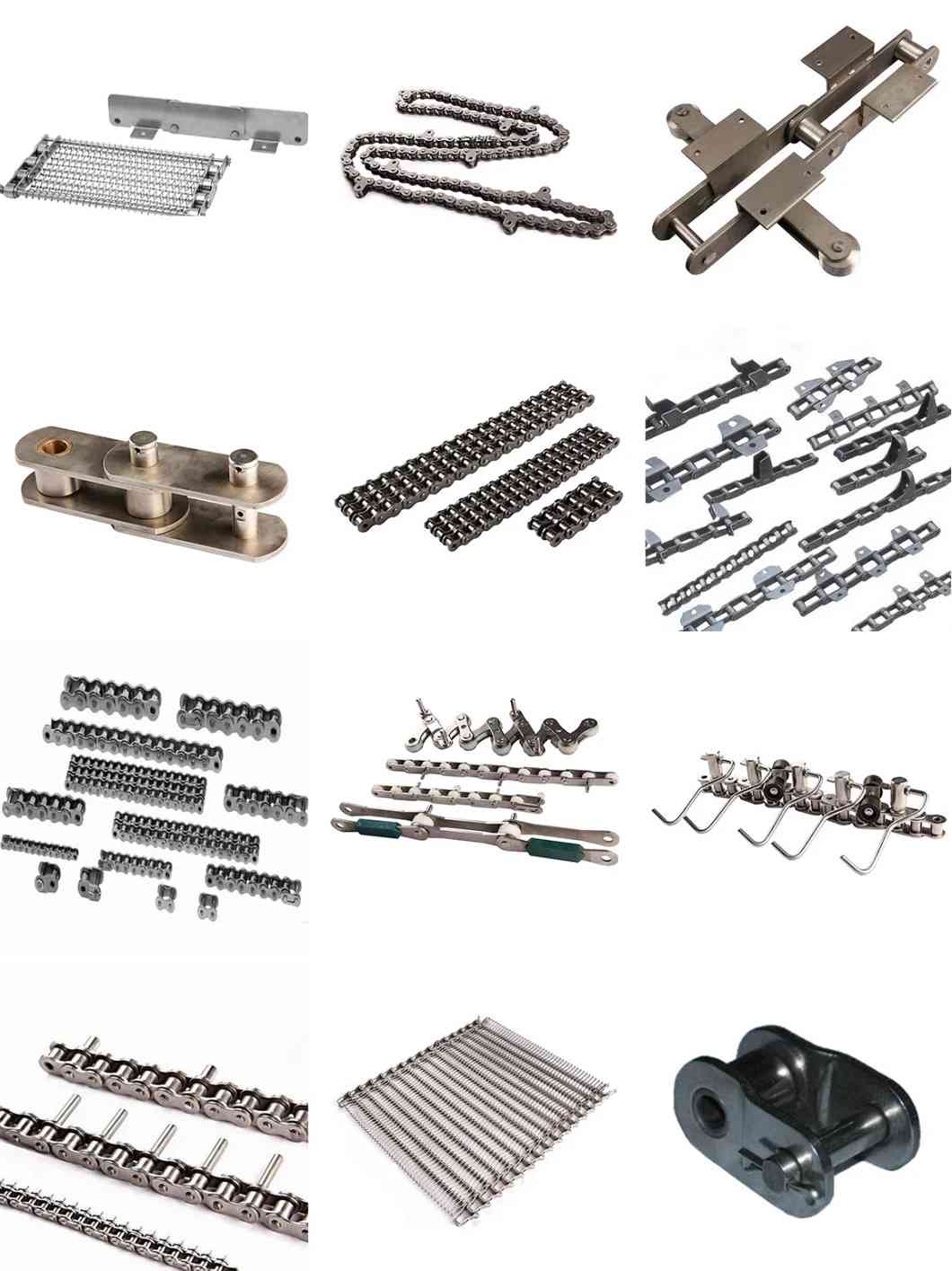
A stud chain is more efficient than a friction drive
The present invention relates to a light-duty double-ended chain that is more efficient than conventional chains. Stud chains are made by die-forging bar steel into roughly the-shaped links. This method avoids loss of shear strength due to bending and also minimizes the welded portion. The double-headed chain is light in weight and has strong resistance to fatigue damage.
This chain type has a stud-style design. Stud-shaped design provides greater tensile strength and prevents tangling. Each stud is formed by die forging and is usually shaped like an e or th. However, it is not necessary for each stud to have a uniform cross-sectional shape. Different cross-sectional shapes can be used depending on the application.
Stud chains are more efficient than friction drives because the studs in the chain are integrated. Stud links resist large breaks. Its applications are in conveyor chains and fisheries. Wear tested on boat chains made of SBC material. In the process, bolt chains were found to be more efficient than friction drives. Its applications are rapidly expanding.
Double-ended chains are more efficient for high-load applications. It features studs throughout its internal width to prevent kinking. Chains of this type are commonly used for heavy lifting machinery. Other types of chains are roller chains, power transmission chains, and bushing roller chains. These types of chains are also widely used in motorcycle, bicycle and transportation applications. In addition to being more efficient, stud chains also have fewer wear problems than friction drive chains.
A study on the difference between wear percentage and friction time showed that stud chains are more efficient than friction drives. The friction strips were measured at the beginning of the test. Take it off after 6 hours, 10080 times, and take pictures with the same diameter. As a boundary value, the diameter of the friction strip is smaller than that of a conventional chain. This shows that the present invention has better wear resistance than friction drives.
Shaft chains designed for conveying bulk products
Pivot chains are versatile conveyors used in many applications. Low back type, small backrest distance, rear opening design to prevent the product from sticking to the joints and causing stiffness. Stainless steel and carbon bushing pin chains do not have pre-rotating rollers. In contrast, bucket elevators do not use pivot chains.
CZPT pin chains provide unmatched performance in agricultural and industrial machinery. They are constructed from a single cast barrel and are connected by hardened steel pins. CZPT’s steel pivot chains are strong enough to withstand the corrosive environments of agricultural and industrial applications. The steel pins in the CZPT Pintle Chain are hardened and riveted to ensure long-term durability and optimum performance.
Lifeguard chains feature patented interlocking side links that reduce gaps between adjacent side panels. They can withstand a variety of applications and will never break under pressure. These chains are available in 1/2” and 1” pitch configurations. CZPT combines both types of pin chains to achieve the best of both worlds. CZPT features dual pin chains and pin joints to increase chain durability and reduce maintenance hassles.
CZPT’s engineering team can custom design pivot chains for your specific application. Designed for specific speed, friction, temperature and wear requirements, these chains are ideal for a variety of applications. Headquartered in Milwaukee, Wisconsin, the company operates on two strategic platforms: Food and Beverage and Industrial Applications. The products of these companies are used in food, energy and manufacturing.
editor by czh