Ürün Açıklaması
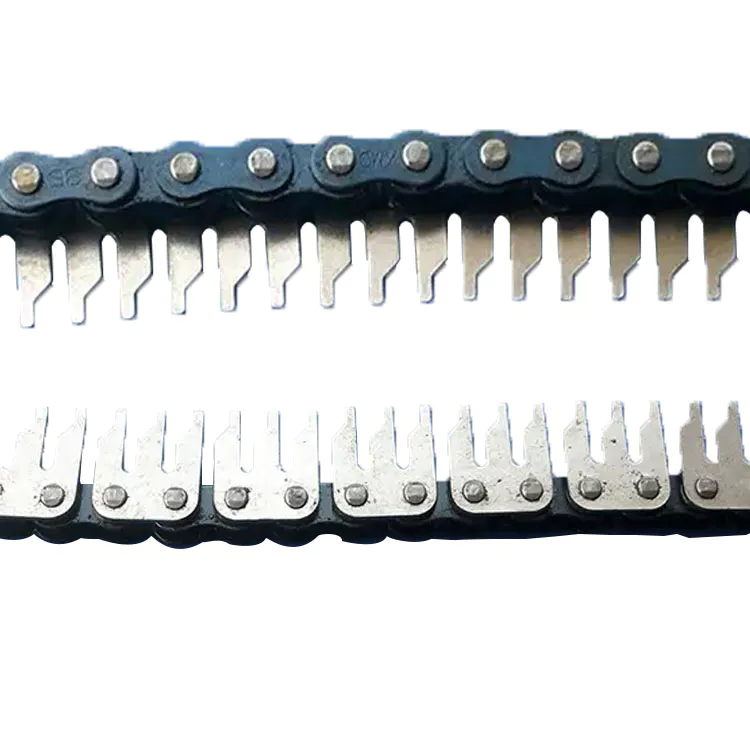
ForgedScraper conveyor chain
P152F51/45/45A/45C/47/45D/45E/45F, P2000F29/29A, P101.6F20, RO6205MF3, MR56, MR80, MR224, MR315, FVR40/63/90/112
Forged chain , trolleys,carriers used on overhead conveyor production line.
Main products are Forge chain and trolley, welded link chain, Standard and non-standard stainless steel and carbon steel roller chain, Leaf chain, standard and non-standard conveyor chain, Scraper conveyor chain, Cranked link chain, double plus chain, double pitch transmission chain, plastic chain, sprockets and Other accessories.
Main products are Forge chain and trolley, welded link chain, Standard and non-standard stainless steel and carbon steel roller chain, Leaf chain, standard and non-standard conveyor chain, Scraper conveyor chain, Cranked link chain, double plus chain, double pitch transmission chain, plastic chain, sprockets and Other accessories.
The products can be combined to find the best possible solution for even the most demanding applications. Special solutions can also be developed for customers’ individual requirements.
Drop Forged Rivetless Chain, Drop Forged Chains, drop forged link,forged scraper chains.
1.Scraper chains P142,P142V,P142H,P200,P102,P250,P260
2.Detachable chain 51,52,55,57,62,74,78
3.Relevant overhead trolley&carriages&spare parts
4.as per your drawings or samples
| Drop forged detachable chains | X348,X458,X678,X698,F100,F160,P80,P100,P200 |
| CatterPilar Chains for | X348,X458,X678,X698 |
| Malzeme: | Alloy |
|---|---|
| Yapı: | Combined Chain |
| Yüzey İşlemi: | Parlatma |
| Zincir Boyutu: | 1/2"*3/32" |
| Özellik: | Isıya Dayanıklı |
| Process: | Dövme |
| Örnekler: |
US$ 1/Piece
1 Adet (Minimum Sipariş) | |
|---|
| Özelleştirme: |
Mevcut
| Özelleştirilmiş Talep |
|---|

How do you ensure proper tensioning and alignment of a conveyor chain?
Proper tensioning and alignment are essential for the efficient and reliable operation of a conveyor chain. Here are the steps to ensure correct tensioning and alignment:
1. Initial Installation:
– Ensure that the conveyor frame and supports are properly aligned and leveled before installing the chain. Any misalignment or unevenness can lead to tensioning and alignment issues.
– Follow the manufacturer’s guidelines and specifications for chain installation. This includes proper placement of sprockets, tensioners, and guides.
2. Tensioning:
– Adjust the tension of the chain to the manufacturer’s recommended specifications. Proper tension prevents excessive sagging or tightness, reducing wear and extending the chain’s life.
– Use tensioning devices, such as adjustable take-up units or tensioning screws, to achieve the desired tension. Refer to the manufacturer’s guidelines for the appropriate method of tensioning for your specific conveyor chain.
– Regularly check and adjust the tension as needed. Factors such as chain wear, load variations, and temperature changes can affect the chain’s tension over time.
3. Alignment:
– Check the alignment of the chain with respect to the sprockets and guides. Misalignment can cause uneven wear, increased friction, and premature failure of the chain.
– Inspect the alignment by visually examining the chain’s path along the sprockets and guides. It should run smoothly without any signs of rubbing or excessive deviation.
– Use alignment tools, such as laser alignment devices or straightedges, to accurately assess and correct any misalignment. Adjust the position of sprockets, guides, and supports as necessary.
4. Regular Maintenance:
– Implement a scheduled maintenance program to regularly inspect and maintain proper tensioning and alignment of the conveyor chain.
– Monitor the chain’s performance, including wear patterns, noise levels, and power consumption, as indicators of potential tensioning or alignment issues.
– Keep the chain clean and free from debris or contaminants that can affect its movement and alignment.
By following these steps and regularly monitoring the tensioning and alignment of the conveyor chain, you can ensure smooth and reliable operation, minimize chain wear, and reduce the risk of unexpected failures.
Plastik konveyör zinciri kullanmanın avantajları nelerdir?
Plastik konveyör zincirleri, geleneksel metal zincirlere göre çeşitli avantajlar sunmaktadır. İşte başlıca avantajlardan bazıları:
1. Korozyon Direnci: Plastik zincirler korozyona karşı oldukça dayanıklıdır, bu da onları nemli veya aşındırıcı ortamlardaki uygulamalar için ideal kılar. Neme veya kimyasallara maruz kaldıklarında paslanmaz veya bozulmazlar.
2. Hafiflik: Plastik zincirler, metal zincirlere göre önemli ölçüde daha hafiftir, bu da onları taşımayı ve monte etmeyi kolaylaştırır. Hafif yapıları, konveyör sisteminin toplam ağırlığını azaltır ve çalışma sırasında enerji tasarrufu sağlayabilir.
3. Düşük Gürültü Seviyesinde Çalışma: Plastik zincirler, metal zincirlere kıyasla daha az gürültü üretir ve bu da daha sessiz bir çalışma ortamı sağlar. Bu durum, gıda işleme veya paketleme gibi gürültü azaltmanın önemli olduğu sektörlerde özellikle faydalı olabilir.
4. Sürtünme ve Aşınmanın Azaltılması: Plastik zincirler, sürtünmeyi ve aşınmayı azaltan kendiliğinden yağlama özelliğine sahiptir. Bu da daha düşük bakım gereksinimleri ve daha uzun zincir ömrü sağlar. Plastik zincirlerin pürüzsüz yüzeyi ayrıca taşıma sırasında ürün hasarı riskini de en aza indirir.
5. Esneklik ve Modülerlik: Plastik zincirler, belirli konveyör sistemi gereksinimlerine uyacak şekilde kolayca özelleştirilebilir ve tasarlanabilir. Uzunluk, genişlik ve konfigürasyon açısından esneklik sunarlar. Ek olarak, plastik zincirler genellikle modülerdir; bu da hasarlı veya aşınmış bölümlerin tüm zinciri değiştirmeden kolayca değiştirilmesine olanak tanır.
6. Maliyet Etkinliği: Plastik konveyör zincirleri genellikle metal zincirlere kıyasla daha maliyet etkindir. Üretim maliyetleri genellikle daha düşüktür ve minimum bakım gereksinimiyle daha uzun bir kullanım ömrü sunarak toplam maliyetleri düşürürler.
7. Kimyasal Direnç: Plastik zincirler, çok çeşitli kimyasallara karşı dirençlidir ve bu da onları agresif maddelere maruz kalmanın endişe kaynağı olduğu uygulamalar için uygun hale getirir. Yağlar, asitler, alkaliler ve çeşitli temizlik maddeleriyle temasa dayanabilirler.
Genel olarak, plastik konveyör zincirlerinin kullanımının avantajları arasında korozyon direnci, hafif tasarım, düşük gürültü seviyesi, azaltılmış sürtünme ve aşınma, esneklik, maliyet etkinliği ve kimyasal direnç yer almaktadır. Bu avantajlar, plastik zincirleri gıda işleme, ambalajlama, ilaç ve lojistik dahil olmak üzere çeşitli sektörlerde popüler bir tercih haline getirmektedir.

What are the advantages of using a conveyor chain in material handling?
Conveyor chains offer numerous advantages in material handling applications, making them a preferred choice in various industries. Here are some of the key advantages:
- Efficient Transportation: Conveyor chains provide a continuous and reliable means of transporting materials, ensuring a smooth flow throughout the production or distribution process. They can handle both light and heavy loads, enabling efficient movement of items of different sizes and weights.
- Increased Productivity: By automating the material handling process, conveyor chains help increase productivity and operational efficiency. They eliminate the need for manual handling and reduce human effort, allowing employees to focus on other tasks, resulting in higher throughput and reduced labor costs.
- Flexibility and Customization: Conveyor chains can be designed and configured to meet specific material handling requirements. They are available in various lengths, widths, and configurations, allowing for customization based on the layout and space constraints of the facility. Additionally, different types of conveyor chains can be selected to handle specific materials or accommodate special handling needs.
- Improved Safety: Conveyor chains enhance workplace safety by reducing the risk of manual lifting and carrying heavy loads. They provide a controlled and controlled movement of materials, minimizing the chances of accidents and injuries. Additionally, safety features such as emergency stop buttons, guardrails, and sensors can be incorporated into the conveyor system to further enhance safety.
- Space Optimization: Conveyor chains utilize vertical and horizontal space efficiently, making them ideal for facilities with limited floor space. They can be designed to navigate corners, inclines, and declines, allowing for optimized layout and maximizing the use of available space.
- Versatility: Conveyor chains are versatile and can handle a wide range of materials, including bulk items, packaged goods, fragile items, and irregularly shaped objects. They can accommodate different types of conveyance methods such as flat, inclined, or spiral conveyors, providing flexibility in material handling processes.
- Improved Inventory Control: Conveyor chains enable better inventory control by facilitating the smooth movement and tracking of materials. They can be integrated with barcode scanners, RFID technology, or other tracking systems to monitor the flow of goods and provide real-time information on inventory levels.
- Reduced Material Damage: Conveyor chains help minimize material damage during handling and transportation. They provide a stable and controlled movement, reducing the risk of items falling or getting damaged due to manual handling or rough transportation methods.
The advantages of using a conveyor chain in material handling include improved efficiency, productivity, safety, space utilization, and inventory control, leading to cost savings and enhanced overall operational performance.


editor by CX 2023-09-12