Product Description
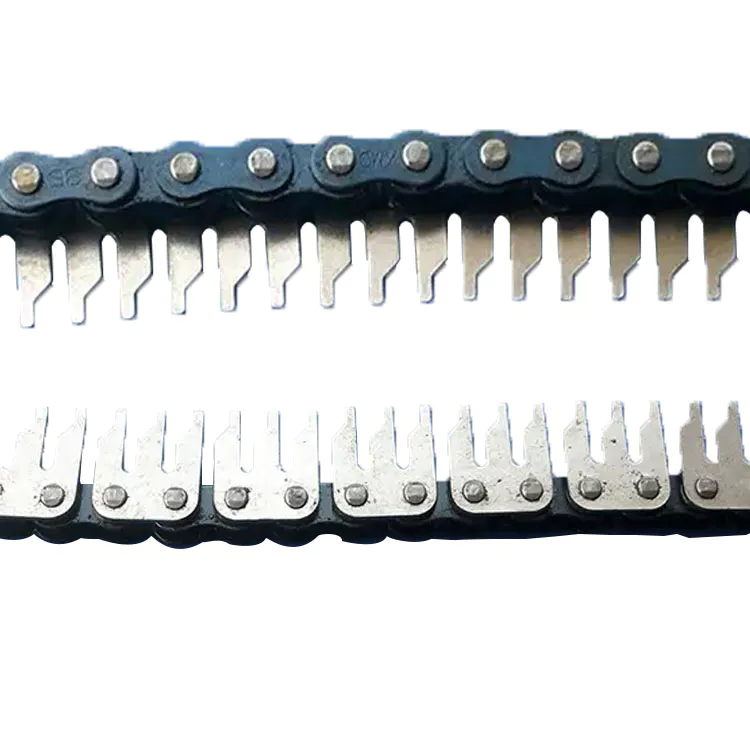
ForgedScraper conveyor chain
P152F51/45/45A/45C/47/45D/45E/45F, P2000F29/29A, P101.6F20, RO6205MF3, MR56, MR80, MR224, MR315, FVR40/63/90/112
Forged chain , trolleys,carriers used on overhead conveyor production line.
Main products are Forge chain and trolley, welded link chain, Standard and non-standard stainless steel and carbon steel roller chain, Leaf chain, standard and non-standard conveyor chain, Scraper conveyor chain, Cranked link chain, double plus chain, double pitch transmission chain, plastic chain, sprockets and Other accessories.
Main products are Forge chain and trolley, welded link chain, Standard and non-standard stainless steel and carbon steel roller chain, Leaf chain, standard and non-standard conveyor chain, Scraper conveyor chain, Cranked link chain, double plus chain, double pitch transmission chain, plastic chain, sprockets and Other accessories.
The products can be combined to find the best possible solution for even the most demanding applications. Special solutions can also be developed for customers’ individual requirements.
Drop Forged Rivetless Chain, Drop Forged Chains, drop forged link,forged scraper chains.
1.Scraper chains P142,P142V,P142H,P200,P102,P250,P260
2.Detachable chain 51,52,55,57,62,74,78
3.Relevant overhead trolley&carriages&spare parts
4.as per your drawings or samples
| Drop forged detachable chains | X348,X458,X678,X698,F100,F160,P80,P100,P200 |
| CatterPilar Chains for | X348,X458,X678,X698 |
| Material: | Alloy |
|---|---|
| Structure: | Combined Chain |
| Surface Treatment: | Polishing |
| Chain Size: | 1/2"*3/32" |
| Feature: | Heat Resistant |
| Process: | Forging |
| Samples: |
US$ 1/Piece
1 Piece(Min.Order) | |
|---|
| Customization: |
Available
| Customized Request |
|---|

How do you ensure proper tensioning and alignment of a conveyor chain?
Proper tensioning and alignment are essential for the efficient and reliable operation of a conveyor chain. Here are the steps to ensure correct tensioning and alignment:
1. Initial Installation:
– Ensure that the conveyor frame and supports are properly aligned and leveled before installing the chain. Any misalignment or unevenness can lead to tensioning and alignment issues.
– Follow the manufacturer’s guidelines and specifications for chain installation. This includes proper placement of sprockets, tensioners, and guides.
2. Tensioning:
– Adjust the tension of the chain to the manufacturer’s recommended specifications. Proper tension prevents excessive sagging or tightness, reducing wear and extending the chain’s life.
– Use tensioning devices, such as adjustable take-up units or tensioning screws, to achieve the desired tension. Refer to the manufacturer’s guidelines for the appropriate method of tensioning for your specific conveyor chain.
– Regularly check and adjust the tension as needed. Factors such as chain wear, load variations, and temperature changes can affect the chain’s tension over time.
3. Alignment:
– Check the alignment of the chain with respect to the sprockets and guides. Misalignment can cause uneven wear, increased friction, and premature failure of the chain.
– Inspect the alignment by visually examining the chain’s path along the sprockets and guides. It should run smoothly without any signs of rubbing or excessive deviation.
– Use alignment tools, such as laser alignment devices or straightedges, to accurately assess and correct any misalignment. Adjust the position of sprockets, guides, and supports as necessary.
4. Regular Maintenance:
– Implement a scheduled maintenance program to regularly inspect and maintain proper tensioning and alignment of the conveyor chain.
– Monitor the chain’s performance, including wear patterns, noise levels, and power consumption, as indicators of potential tensioning or alignment issues.
– Keep the chain clean and free from debris or contaminants that can affect its movement and alignment.
By following these steps and regularly monitoring the tensioning and alignment of the conveyor chain, you can ensure smooth and reliable operation, minimize chain wear, and reduce the risk of unexpected failures.
What are the advantages of using a plastic conveyor chain?
Plastic conveyor chains offer several advantages over traditional metal chains. Here are some of the key advantages:
1. Corrosion Resistance: Plastic chains are highly resistant to corrosion, making them ideal for applications in humid or corrosive environments. They do not rust or deteriorate when exposed to moisture or chemicals.
2. Lightweight: Plastic chains are significantly lighter than metal chains, making them easier to handle and install. Their lightweight nature reduces the overall weight of the conveyor system and can result in energy savings during operation.
3. Low Noise Operation: Plastic chains generate less noise compared to metal chains, leading to a quieter working environment. This can be particularly beneficial in industries where noise reduction is important, such as food processing or packaging.
4. Reduced Friction and Wear: Plastic chains have self-lubricating properties, which reduce friction and wear. This results in lower maintenance requirements and longer chain life. The smooth surface of plastic chains also minimizes the risk of product damage during transportation.
5. Flexibility and Modularity: Plastic chains can be easily customized and designed to fit specific conveyor system requirements. They offer flexibility in terms of length, width, and configuration. Additionally, plastic chains are often modular, allowing for easy replacement of damaged or worn-out sections without replacing the entire chain.
6. Cost-Effective: Plastic conveyor chains are generally more cost-effective compared to metal chains. They are often less expensive to manufacture and offer a longer lifespan with minimal maintenance requirements, resulting in lower overall costs.
7. Chemical Resistance: Plastic chains are resistant to a wide range of chemicals, making them suitable for applications where exposure to aggressive substances is a concern. They can withstand contact with oils, acids, alkalis, and various cleaning agents.
Overall, the advantages of using a plastic conveyor chain include corrosion resistance, lightweight design, low noise operation, reduced friction and wear, flexibility, cost-effectiveness, and chemical resistance. These benefits make plastic chains a popular choice in various industries, including food processing, packaging, pharmaceuticals, and logistics.

What are the advantages of using a conveyor chain in material handling?
Conveyor chains offer numerous advantages in material handling applications, making them a preferred choice in various industries. Here are some of the key advantages:
- Efficient Transportation: Conveyor chains provide a continuous and reliable means of transporting materials, ensuring a smooth flow throughout the production or distribution process. They can handle both light and heavy loads, enabling efficient movement of items of different sizes and weights.
- Increased Productivity: By automating the material handling process, conveyor chains help increase productivity and operational efficiency. They eliminate the need for manual handling and reduce human effort, allowing employees to focus on other tasks, resulting in higher throughput and reduced labor costs.
- Flexibility and Customization: Conveyor chains can be designed and configured to meet specific material handling requirements. They are available in various lengths, widths, and configurations, allowing for customization based on the layout and space constraints of the facility. Additionally, different types of conveyor chains can be selected to handle specific materials or accommodate special handling needs.
- Improved Safety: Conveyor chains enhance workplace safety by reducing the risk of manual lifting and carrying heavy loads. They provide a controlled and controlled movement of materials, minimizing the chances of accidents and injuries. Additionally, safety features such as emergency stop buttons, guardrails, and sensors can be incorporated into the conveyor system to further enhance safety.
- Space Optimization: Conveyor chains utilize vertical and horizontal space efficiently, making them ideal for facilities with limited floor space. They can be designed to navigate corners, inclines, and declines, allowing for optimized layout and maximizing the use of available space.
- Versatility: Conveyor chains are versatile and can handle a wide range of materials, including bulk items, packaged goods, fragile items, and irregularly shaped objects. They can accommodate different types of conveyance methods such as flat, inclined, or spiral conveyors, providing flexibility in material handling processes.
- Improved Inventory Control: Conveyor chains enable better inventory control by facilitating the smooth movement and tracking of materials. They can be integrated with barcode scanners, RFID technology, or other tracking systems to monitor the flow of goods and provide real-time information on inventory levels.
- Reduced Material Damage: Conveyor chains help minimize material damage during handling and transportation. They provide a stable and controlled movement, reducing the risk of items falling or getting damaged due to manual handling or rough transportation methods.
The advantages of using a conveyor chain in material handling include improved efficiency, productivity, safety, space utilization, and inventory control, leading to cost savings and enhanced overall operational performance.


editor by CX 2023-09-12