Deskripsi Produk
ISO Steel 08B 10B 12B 16B Conveyor Chain for Transmission
Chain sprocket is profiled wheel with teeth that meshes with a chain, track or other perforated or indented material.
Sprockets are used in bicycles, motorcycles, cars, tanks, and other machinery.
We professionally produce different kinds of transmission sprockets, such as:
| Type | standard sprockets, standard sprockets, special sprockets, platewheel sprocket, finish bore sprocket, with bearing |
| Bahan | steel, stainless steel, 40CrMn |
| Perawatan Permukaan | Blacking, zinc-plated, hardeing teeth and so on |
| Ukuran | ISO, ANISI |
| Bore | Taper bushed bore, pilot bore, bearing bore |
All our products are produced strictly according to ISO9001 and exported to more than 50 countries.
Sprockets Feature as fiollow:
1. Material: C45, Stainless steel 304, A3 etc.
2. High precision is available as per your request.
3. Sprocket processing: Forging, cast iron, Machining(shaping, hobbing etc.)
4. Good quality with most competitive price.
5. Surface treatments such as high-frequency quenching and hardened teeth can be 40-50 HRC.
6. The special rubber can be fixed on the teeth bottom to reduce the noise and wear.
7. Standard and non-standard sprockets
Main Products:
1. Timing Belt Pulley (Synchronous Pulley), Timing Bar, Clamping Plate;
2. Forging, Casting, Stampling Part;
3. V Belt Pulley and Taper Lock Bush; Sprocket, Idler and Plate Wheel;Spur Gear, Bevel Gear, Rack;
4. Shaft Locking Device: could be alternative for Ringfeder, Sati, Chiaravalli, Tollok, etc.;
5. Shaft Coupling:including Miniature couplings, Curved tooth coupling, Chain coupling, HRC coupling, Normex coupling, Type coupling, GE Coupling, torque limiter, Universal Joint;
6. Shaft Collars: including Setscrew Type, Single Split and Double Splits;
7. Gear & Rack: Spur gear/rack, bevel gear, helical gear/rack
8. Other customized Machining Parts according to drawings (OEM).
More Advantages:
1. More competitive prices,
2. Shorter delivery date: 35 days.
3. We are the professional manufacturer in the field of Power Trans. Parts,specially for Timing Pulleys.
4. Produce standard and non-standard
5. Strict QC Management:ISO9001:2008,our engineer,Mr.Wang has specialized in the prodcution for over 20 years.
Packaging & Shipping:
All the products can be packed in cartons,or,you can choose the pallet packing.
MADE IN CHINA can be pressed on wooden cases.Land,air,sea transportation are available.UPS,DHL,TNT,
FedEx and EMS are all supported.
Company:
ZheJiang MIGHTY MACHINERY Co.Ltd., a subsidiary company of ZheJiang Machinery Imp.&Exp. Corp(SCMIEC),which is a wholly stated-owned enterprise established in1980,specialized in producing precision mechanical power transmission products. After years of hard work,Mighty become the holding company of 3 manufacturing factories and also the 1 of the largest enterprise supply power transmission parts in western China.
Mighty’s products are mainly exported to Europe,America and Middle East market. With the top-ranking management,professional technical support and abundant export experience,Mighty has established lasting and stable business partnership with many world famous companies and has got good reputation from world wide customers in international sales.
Factory View:
FAQ:
1. MOQ
A: Generally, 1 pc for standard parts; contact for nonstandard parts.
2. Delivery Time
A: In stock: within 5 working days. Out of stock: depends on your order quantity.
3. How To Select
A: part number or drawing, catalogue. If no, you can send us your sample, so we can make the drawing and sample accordingly.
4: What is the Warranty for your products?
A:Normally our warranty is 1 year.
Contacts:
/* 22 Januari 2571 19:08:37 */!function(){function s(e,r){var a,o={};try{e&&e.split(“,”).forEach(function(e,t){e&&(a=e.match(/(.*?):(.*)$/))&&1
| Standar atau Nonstandar: | Standar |
|---|---|
| Aplikasi: | Conveyer Equipment, Motorcycle, Agricultural Machinery |
| Perlakuan Permukaan: | Peledakan dengan tembakan |
| Struktur: | Rantai Rol |
| Bahan: | 40mn |
| Jenis: | Rantai Jarak Pendek |
| Contoh: |
US$ 0.5/Piece
1 Buah (Minimum Pemesanan) | |
|---|
| Kustomisasi: |
Tersedia
| Permintaan Khusus |
|---|
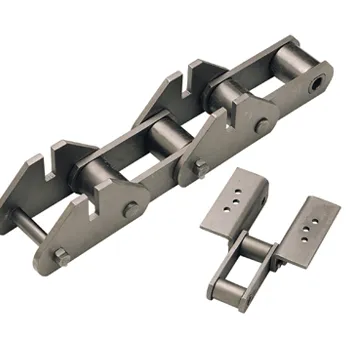
Can a conveyor chain be used in overhead conveyor systems?
Yes, a conveyor chain can be used in overhead conveyor systems. Overhead conveyor systems are designed to move materials, products, or components along an elevated path, typically in manufacturing or distribution facilities.
Conveyor chains used in overhead conveyor systems are specially designed to handle the weight and load requirements of the application. They are typically made from durable materials such as steel or stainless steel to ensure strength and longevity.
Here are some key considerations when using a conveyor chain in overhead conveyor systems:
1. Load Capacity:
– Ensure that the conveyor chain has sufficient load capacity to handle the weight of the conveyed items. The load capacity should be determined based on the maximum anticipated load and any potential dynamic forces.
2. Chain Type and Design:
– Select a conveyor chain that is suitable for overhead applications, such as an overhead conveyor chain or an inverted tooth chain. These chains are specifically designed to handle the unique requirements of overhead conveyance.
3. Lubrication:
– Proper lubrication is crucial for the smooth operation of the conveyor chain in an overhead system. Consider using lubricants that are suitable for overhead applications and ensure regular lubrication to minimize friction and wear.
4. Safety Measures:
– Implement appropriate safety measures to prevent accidents and ensure worker safety. This may include installing safety guards, emergency stop systems, and implementing regular maintenance and inspection routines.
It is important to consult with conveyor system manufacturers or experts who specialize in overhead conveyor systems to ensure the conveyor chain is selected and installed correctly for the specific application requirements.
Bagaimana cara memilih pelumas yang tepat untuk rantai konveyor?
Memilih pelumas yang tepat sangat penting untuk menjaga kinerja dan umur pakai rantai konveyor. Berikut adalah faktor-faktor utama yang perlu dipertimbangkan saat memilih pelumas:
1. Jenis dan Material Rantai: Rantai konveyor yang berbeda mungkin memiliki persyaratan pelumasan khusus berdasarkan bahan konstruksi dan desainnya. Konsultasikan rekomendasi atau spesifikasi pabrikan untuk menentukan kompatibilitas pelumas.
2. Kondisi Operasi: Pertimbangkan lingkungan operasi, seperti suhu, kelembapan, dan keberadaan kontaminan. Untuk aplikasi suhu tinggi, pilih pelumas dengan toleransi suhu yang lebih tinggi. Di lingkungan basah atau berdebu, pilih pelumas yang menawarkan ketahanan yang sangat baik terhadap pencucian air dan memberikan perlindungan efektif terhadap kontaminan.
3. Beban dan Kecepatan: Evaluasi kapasitas beban dan kecepatan rantai konveyor. Beban dan kecepatan yang lebih tinggi mungkin memerlukan pelumas dengan kekuatan lapisan film yang lebih baik dan sifat anti-aus untuk mengurangi gesekan dan mencegah keausan dini.
4. Metode Pelumasan: Tentukan metode pelumasan yang akan digunakan untuk rantai konveyor. Pelumas dapat diaplikasikan melalui sistem tetes, sikat, nosel semprot, atau sistem pelumasan otomatis. Pertimbangkan viskositas dan konsistensi pelumas untuk memastikan aplikasi dan distribusi yang tepat.
5. Persyaratan Kelas Pangan: Dalam pengolahan makanan atau aplikasi farmasi, di mana kontak langsung dengan produk mungkin terjadi, sangat penting untuk menggunakan pelumas kelas pangan yang memenuhi peraturan industri dan persyaratan untuk keselamatan dan kebersihan.
6. Jadwal Perawatan: Pertimbangkan interval perawatan yang diinginkan dan daya tahan pelumas. Beberapa pelumas mungkin memerlukan pengaplikasian ulang yang lebih sering, sementara yang lain memberikan pelumasan yang lebih tahan lama.
7. Kompatibilitas dengan Material Lain: Perhatikan kompatibilitas pelumas dengan material lain dalam sistem konveyor, seperti segel, gasket, dan cat. Pastikan pelumas tidak menimbulkan efek buruk pada komponen-komponen tersebut.
Disarankan untuk berkonsultasi dengan produsen pelumas atau pakar industri untuk memilih pelumas yang paling sesuai untuk aplikasi rantai konveyor spesifik Anda. Mereka dapat memberikan panduan berdasarkan keahlian dan pengetahuan mereka tentang formulasi pelumas dan karakteristik kinerja.
What are the industry standards and regulations for conveyor chains?
In the field of conveyor chains, there are several industry standards and regulations that help ensure safety, performance, and quality. Some of the commonly recognized standards include:
1. ISO 1977:2013 – Conveyor chains, attachments, and sprockets: This International Organization for Standardization (ISO) standard specifies the requirements and dimensions for various types of conveyor chains, attachments, and sprockets used in general industrial applications.
2. ANSI/ASME B29.1 – Precision Power Transmission Roller Chains, Attachments, and Sprockets: This American National Standard Institute (ANSI) standard provides guidelines for the design, dimensions, and performance of roller chains, attachments, and sprockets used in power transmission systems, including conveyor chains.
3. CEMA – Conveyor Equipment Manufacturers Association: CEMA publishes various standards and technical documents related to conveyor systems, including conveyor chains. These standards cover topics such as safety, design, installation, maintenance, and operation of conveyor equipment.
4. OSHA – Occupational Safety and Health Administration: OSHA is a regulatory agency in the United States that sets and enforces safety standards for workplaces. They have specific regulations related to conveyor systems, including requirements for guarding, maintenance, and employee safety.
5. Local and National Building Codes: Depending on the location and application, there may be specific building codes or regulations that dictate the design, installation, and operation of conveyor chains. These codes ensure compliance with safety and structural requirements.
It’s important for conveyor chain manufacturers, system integrators, and end-users to adhere to these industry standards and regulations to ensure the safe and reliable operation of conveyor systems. Compliance with these standards helps to maintain worker safety, promote system performance, and ensure compatibility and interchangeability of conveyor chain components.


editor by CX 2024-04-25