Product Description
Stud / Studless anchor chain with enlarge link ship anchor chain
Material: Steel bar :CM390,CM490,CM690
1, Variety: Grade1, grade 2,grade 3 stud link anchor chain; studless anchor chain; buoy chain,D-type anchor shackle; Hatch-cover chain,lifting chain,kiln chain and others; DIN Standard chain; Special chain as per your requirments and their accessories.
2,Relevant Certificates: ABS, BV, CCS, DNV, KR, LR, GL, NK and RINA etc.
3.Advantage of Stud link chain:
Originally studs were added to the chain to stiffen the links preventing them from severely deforming when overloaded. They have the added advantage in that they prevent the chain from knotting up when twisted, thus avoiding problems when chain is retrieved with a windlass.
| Produtos | Common chains | Accessory |
| Details | All kinds of grades of marine stud and studless flash welded chains with diameter from 2mm to 122mm | All specification of Kenter shackles, Joint shackles, Anchor shackles, Swivels, Buoy shackles and Swivel shackles |
| Surface Treatments | Zinc Plated(Galvanized), Painting, Polish, Black | ||
| Material | Stainless steel 304 or 316, 20Mn2, 20MnSi ,Alloy |
||
| Standard | EUROPEAN TYPE,JIS TYPE, US. TYPE, DIN TYPE | ||
| Size | All kinds of type or according to customer’s design | ||
| Heat treated | drop forged, tempered and quenched | ||
Factory workshop:
Package:
| GRADE U1,U2,U3 BLACK COATED STUD LINK ANCHOR CHAIN | |||||||
| Dia. | Proof load(KN) | Breaking load(KN) | Weight | ||||
| MM | AM1 | AM2 | AM3 | AM1 | AM2 | AM3 | kg/27.5m |
| 17.5 | 89 | 127 | 179 | 127 | 179 | 256 | 194 |
| 19 | 105 | 150 | 211 | 150 | 211 | 301 | 236 |
| 20.5 | 123 | 175 | 244 | 175 | 244 | 349 | 269 |
| 22 | 140 | 200 | 280 | 200 | 280 | 401 | 322 |
| 24 | 167 | 237 | 332 | 237 | 332 | 476 | 370 |
| 26 | 194 | 278 | 389 | 278 | 389 | 556 | 431 |
| 28 | 225 | 321 | 449 | 321 | 449 | 642 | 496 |
| 30 | 257 | 368 | 514 | 368 | 514 | 735 | 564 |
| 32 | 291 | 417 | 583 | 417 | 583 | 833 | 635 |
| 34 | 328 | 468 | 655 | 468 | 655 | 937 | 712 |
| 36 | 366 | 523 | 732 | 523 | 732 | 1050 | 800 |
| 38 | 406 | 581 | 812 | 581 | 812 | 1160 | 887 |
| 40 | 448 | 640 | 896 | 640 | 896 | 1280 | 1032 |
| 42 | 492 | 703 | 981 | 703 | 981 | 1400 | 1084 |
| 44 | 538 | 769 | 1080 | 769 | 1080 | 1540 | 1197 |
| 46 | 585 | 837 | 1170 | 837 | 1170 | 1680 | 1310 |
| 48 | 635 | 908 | 1270 | 908 | 1270 | 1810 | 1438 |
| 50 | 686 | 981 | 1370 | 981 | 1370 | 1960 | 1546 |
| 52 | 739 | 1060 | 1480 | 1060 | 1480 | 2110 | 1661 |
| 54 | 794 | 1140 | 1590 | 1140 | 1590 | 2270 | 1791 |
| 56 | 851 | 1220 | 1710 | 1220 | 1710 | 2430 | 1926 |
| 58 | 909 | 1290 | 1810 | 1290 | 1810 | 2600 | 2086 |
| 60 | 969 | 1380 | 1940 | 1380 | 1940 | 2770 | 2249 |
| 62 | 1030 | 1470 | 2060 | 1470 | 2060 | 2940 | 2361 |
| 64 | 1100 | 1560 | 2190 | 1560 | 2190 | 3130 | 2516 |
| 66 | 1160 | 1660 | 2310 | 1660 | 2310 | 3300 | 2676 |
| 68 | 1230 | 1750 | 2450 | 1750 | 2450 | 3500 | 2885 |
| 70 | 1290 | 1840 | 2580 | 1840 | 2580 | 3690 | 3571 |
| 73 | 1390 | 1990 | 2790 | 1990 | 2790 | 3990 | 3274 |
| 76 | 1500 | 2150 | 3571 | 2150 | 3571 | 4300 | 3548 |
| 78 | 1580 | 2260 | 3160 | 2260 | 3160 | 4500 | 3737 |
| 81 | 1690 | 2410 | 3380 | 2410 | 3380 | 4820 | 4030 |
| 84 | 1800 | 2580 | 3610 | 2580 | 3610 | 5160 | 4334 |
| 87 | 1920 | 2750 | 3850 | 2750 | 3850 | 5500 | 4650 |
| 90 | 2050 | 2920 | 4090 | 2920 | 4090 | 5840 | 4976 |
| 92 | 2130 | 3040 | 4260 | 3040 | 4260 | 6080 | 5199 |
| 95 | 2260 | 3230 | 4510 | 3230 | 4510 | 6440 | 5544 |
| 97 | 2340 | 3340 | 4680 | 3340 | 4680 | 6690 | 5780 |
| 100 | 2470 | 3530 | 4940 | 3530 | 4940 | 7060 | 6143 |
| 102 | 2560 | 3660 | 5120 | 3660 | 5120 | 7320 | 6398 |
| 105 | 2700 | 3850 | 5390 | 3850 | 5390 | 7700 | 6773 |
| 107 | 2790 | 3980 | 5570 | 3980 | 5570 | 7960 | 7033 |
| 111 | 2970 | 4250 | 5940 | 4250 | 5940 | 8480 | 7569 |
| 114 | 3110 | 4440 | 6230 | 4440 | 6230 | 8890 | 7983 |
| 117 | 3260 | 4650 | 6510 | 4650 | 6510 | 9300 | 8409 |
| 120 | 3400 | 4850 | 6810 | 4850 | 6810 | 9720 | 8863 |
| 122 | 3500 | 5000 | 7000 | 5000 | 7000 | 9990 | 9143 |
| 124 | 3600 | 5140 | 7200 | 5140 | 7200 | 15710 | 9598 |
| 127 | 3750 | 5350 | 7490 | 5350 | 7490 | 1571 | 9908 |
| 130 | 3900 | 5570 | 7800 | 5570 | 7800 | 11140 | 10382 |
| Material: | Steel |
|---|---|
| Design: | Anchor Chain |
| Weight (Kg): | 200kg-2t |
| Surface Treatment: | Polished/Blackened/Galvanized |
| Type: | Stud/Studless Link Anchor Chain |
| Diameter: | 12.5-200mm or as Per Your Request |
| Customization: |
Available
| Customized Request |
|---|
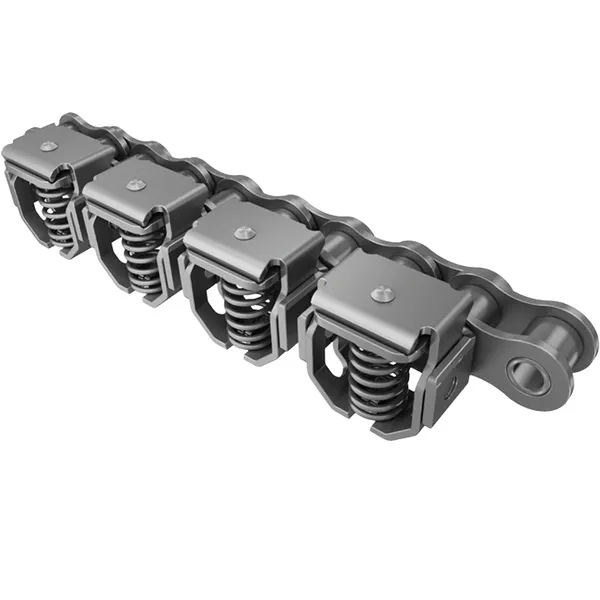
What are the benefits of using a self-lubricating conveyor chain?
Self-lubricating conveyor chains offer several advantages over traditional lubricated chains. Here are some key benefits:
1. Reduced Maintenance: Self-lubricating chains eliminate the need for regular lubrication, reducing the time and effort required for maintenance. This is particularly beneficial in applications where access to the chain is difficult or time-consuming.
2. Cost Savings: By eliminating the need for external lubrication, self-lubricating chains can help reduce lubrication costs over the lifetime of the chain. This includes the cost of lubricants, as well as the labor and equipment required for lubrication maintenance.
3. Clean and Environmentally Friendly: Self-lubricating chains do not require external lubricants, resulting in a cleaner working environment. There is no risk of lubricant spills or contamination of the surrounding area, making them ideal for applications that require strict cleanliness standards, such as food processing or pharmaceutical industries.
4. Extended Chain Life: Self-lubricating chains are designed with built-in lubrication systems that provide a continuous and controlled supply of lubricant to the chain components. This helps reduce friction, wear, and heat generation, resulting in longer chain life and improved performance.
5. Improved Reliability: With consistent and reliable lubrication, self-lubricating chains maintain optimal performance and minimize the risk of chain failure or breakdown. They are less susceptible to premature wear, elongation, and corrosion, ensuring a more reliable and efficient conveyor system.
It’s important to note that the specific benefits of self-lubricating chains may vary depending on the manufacturer and the design of the chain. It’s recommended to consult with the chain manufacturer or an industry expert to understand the suitability and advantages of self-lubricating chains for a particular application.
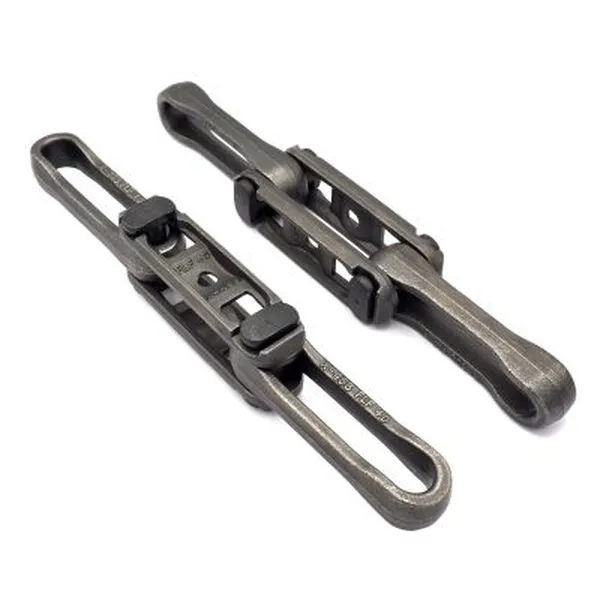
What are the safety measures for working with heavy-duty conveyor chains?
Working with heavy-duty conveyor chains requires strict adherence to safety measures to protect the workers and maintain a safe working environment. Here are some important safety measures to consider:
1. Proper Training: All personnel involved in working with conveyor chains should receive comprehensive training on the safe operation and maintenance of the equipment. This includes understanding the potential hazards, safety procedures, and proper use of personal protective equipment (PPE).
2. Equipment Inspection: Regular inspection of the conveyor chain and associated components is crucial to identify any signs of wear, damage, or malfunction. This includes checking for loose fasteners, worn sprockets, misalignment, and any other potential hazards. Any issues should be addressed promptly to prevent accidents.
3. Lockout/Tagout: Before performing any maintenance or repair tasks on the conveyor chain, proper lockout/tagout procedures must be followed. This ensures that the equipment is de-energized and isolated from any power source to prevent accidental startup or movement.
4. Personal Protective Equipment (PPE): Workers should wear appropriate PPE, including safety glasses, gloves, steel-toed boots, and hearing protection. The specific PPE requirements may vary depending on the nature of the work and the potential hazards involved.
5. Safe Work Practices: Workers should follow safe work practices, such as avoiding loose clothing or jewelry that can get caught in the chain, keeping hands and clothing clear of moving parts, and using proper lifting techniques when handling heavy loads.
6. Emergency Stop Systems: Conveyor systems should be equipped with emergency stop buttons or pull cords that allow workers to quickly stop the chain in case of an emergency or hazardous situation.
7. Regular Maintenance: Scheduled maintenance and lubrication of the conveyor chain should be performed according to the manufacturer’s recommendations. This helps to ensure optimal performance and minimize the risk of unexpected failures.
8. Clear Warning Signs and Labels: Proper signage, warning labels, and safety instructions should be clearly displayed near the conveyor chain system to remind workers of potential hazards and safe operating procedures.
9. Regular Safety Training and Communication: Ongoing safety training and communication among the workforce are vital to reinforce safe practices and raise awareness of any changes or updates to safety protocols.
By implementing these safety measures and fostering a safety-conscious culture, the risks associated with working with heavy-duty conveyor chains can be minimized, ensuring the well-being of the workers and the efficient operation of the equipment.
How to select the right conveyor chain for your conveyor system?
Selecting the right conveyor chain for your conveyor system is crucial to ensure optimal performance and longevity. Here are the steps to follow when choosing a conveyor chain:
- Identify your application requirements: Determine the specific requirements of your conveyor system, including the type of material being conveyed, the speed of operation, the load capacity, the environmental conditions, and any special considerations.
- Consider the chain type: Based on your application requirements, consider the different types of conveyor chains available, such as roller chains, double pitch chains, hollow pin chains, apron chains, or plastic chains. Evaluate their features and benefits to determine which type is most suitable for your needs.
- Assess the chain material: Conveyor chains are typically made from various materials such as steel, stainless steel, or plastic. Consider factors such as corrosion resistance, temperature resistance, wear resistance, and food-grade requirements when selecting the chain material.
- Determine the chain pitch: The chain pitch refers to the distance between the centers of adjacent pins. Choose the appropriate pitch size based on your conveyor system’s design, load requirements, and speed. Smaller pitch sizes provide smoother operation at higher speeds, while larger pitch sizes offer better resistance against wear and fatigue.
- Evaluate the chain strength: Consider the required tensile strength and fatigue resistance of the chain to ensure it can withstand the anticipated load and operating conditions. Factors such as chain construction, material quality, and heat treatment play a role in determining the chain’s strength.
- Consider additional features: Depending on your application, you may need additional features such as attachments, guides, or specialized coatings on the chain. Assess if any of these features are necessary to meet your specific requirements.
- Consult with experts: If you’re uncertain about the selection process or have unique application needs, it’s advisable to consult with conveyor chain manufacturers or industry experts who can provide guidance and recommendations based on their expertise.
By following these steps and carefully considering your application requirements, you can select the right conveyor chain that ensures efficient and reliable operation of your conveyor system.


editor by CX 2023-08-30