Mô tả giải pháp
Simple Info
|
ANSI NO: |
41-2R |
DIN/ISO NO: |
085-two |
|
Pitch (mm): |
twelve.7000 |
Roller Diameter(mm): |
seven.77 |
|
Interior Plate Width (mm): |
6.twenty five |
Typical Tensile Strength: |
sixteen.9KN |
|
Pin Diameter(mm): |
3.58 |
Plate Thickness (mm): |
one.30 |
|
Chain Dimension: |
5F, 10F, 5Meters |
Weight / Meter (kgs/m): |
.41 |
|
Nguồn gốc: |
HangZhou China |
HS Code: |
7315119000 |
1. Delivering 10 sequence more than 8000 types of chains,Heavy duty engineering chains, oil subject chains, heavy duty port crane chains, metallurgy conveyor chains, extremely-higher rigidity escalator chains, mining chains, and so on, and personalized answers.
two. Far more than eighty% of our roller chain are exported to all above the globe, We are serving consumers of prime 5 of entire world well-known manufacturers , and a lot more than ninety% of our turnover are from the cooperation with the companies in the planet.
three. Getting superior on the internet inspection for computerized assembly traces.
four. Possessing country amount Business Technology Heart, we value no considerably less than 13% of our annual turnover investment decision in R&D every yr.
5. Getting our personal Standardization Management Committee in our business, and participated in the formulation and modification of the roller chain standards of the People’s Republic of China.
SMCC roller chain is 1 of the most widely utilised and welcome goods in the industry. Its ongoing innovative advancement is ideal to be the solutions for numerous situations, common roller chains, motorcycle driving chain, O-ring motorcycle chain, high power roller chain, conveyor chains, agricultural driving chain, galvanized chain, nickel-plated chain, lubrication-free of charge chain and oilfield chain and so on
Our CZPT chain was made by equipment processing from raw components to completed merchandise and a full established of good quality screening products. Mechanical processing tools incorporate grinding devices, large speed punching equipment, milling devices, large velocity automatic rolling and assembling machine. Heat treatment was processed by steady mesh belt conveyor furnace, mesh belt conveyor annealing furnace, innovative central control method of heat treatment, rotary CZPT for chain part heat therapy, which ensure the steadiness and regularity of the important function of chain components.
We are the greatest suppliers of Chinese biggest palletizing robot enterprises. These items are tough high quality with cost-effective charges, substitute of Japan chains, ZheJiang chains exported to Europe, The us, Asia and other countries and regions.
Workshop Display
ROLLER CHAIN
Roller chain or bush roller chain is the sort of chain travel most generally utilized for transmission of mechanical power on numerous types of domestic, industrial and agricultural machinery, which includes conveyors, wire- and tube-drawing equipment, printing presses, autos, motorcycles, and bicycles. It is made up of a series of short cylindrical rollers held jointly by facet back links. It is driven by a toothed wheel known as a sprocket. It is a simple, reliable, and successful means of power transmission.
Development OF THE CHAIN
Two diverse sizes of roller chain, exhibiting design.
There are 2 sorts of back links alternating in the bush roller chain. The 1st sort is internal hyperlinks, getting 2 interior plates held collectively by 2 sleeves or bushings upon which rotate 2 rollers. Inner back links alternate with the 2nd sort, the outer back links, consisting of 2 outer plates held jointly by pins passing via the bushings of the inner backlinks. The “bushingless” roller chain is equivalent in procedure though not in building as an alternative of independent bushings or sleeves keeping the interior plates collectively, the plate has a tube stamped into it protruding from the hole which serves the identical goal. This has the advantage of eliminating 1 phase in assembly of the chain.
The roller chain design and style reduces friction when compared to simpler patterns, resulting in increased performance and much less wear. The first electrical power transmission chain kinds lacked rollers and bushings, with equally the inner and outer plates held by pins which straight contacted the sprocket teeth however this configuration exhibited really quick use of both the sprocket tooth, and the plates exactly where they pivoted on the pins. This issue was partially solved by the advancement of bushed chains, with the pins holding the outer plates passing through bushings or sleeves connecting the interior plates. This distributed the dress in in excess of a greater area even so the tooth of the sprockets still wore far more quickly than is attractive, from the sliding friction towards the bushings. The addition of rollers surrounding the bushing sleeves of the chain and supplied rolling speak to with the teeth of the sprockets ensuing in outstanding resistance to wear of the two sprockets and chain as nicely. There is even really minimal friction, as long as the chain is adequately lubricated. Constant, thoroughly clean, lubrication of roller chains is of primary significance for effective procedure as well as appropriate tensioning.
LUBRICATION
Numerous driving chains (for example, in manufacturing unit products, or driving a camshaft within an interior combustion engine) function in thoroughly clean environments, and as a result the donning surfaces (that is, the pins and bushings) are secure from precipitation and airborne grit, numerous even in a sealed surroundings such as an oil bath. Some roller chains are created to have o-rings developed into the area between the outside url plate and the inside roller link plates. Chain companies commenced to include this feature in 1971 right after the software was invented by Joseph Montano while functioning for Whitney Chain of Hartford, Connecticut. O-rings have been integrated as a way to increase lubrication to the hyperlinks of electricity transmission chains, a service that is vitally critical to extending their doing work daily life. These rubber fixtures kind a barrier that holds factory utilized lubricating grease within the pin and bushing dress in places. More, the rubber o-rings avoid grime and other contaminants from coming into inside of the chain linkages, the place this kind of particles would in any other case lead to important dress in.[quotation necessary]
There are also a lot of chains that have to work in dirty problems, and for size or operational motives are not able to be sealed. Illustrations consist of chains on farm gear, bicycles, and chain saws. These chains will essentially have relatively substantial costs of use, especially when the operators are ready to take more friction, significantly less efficiency, more sounds and a lot more regular alternative as they neglect lubrication and adjustment.
Several oil-primarily based lubricants draw in filth and other particles, eventually forming an CZPT paste that will compound wear on chains. This dilemma can be circumvented by use of a “dry” PTFE spray, which kinds a solid film soon after application and repels each particles and moisture.
VARIANTS Design
Structure of a roller chain: 1. Outer plate, 2. Interior plate, 3. Pin, 4. Bushing, 5. Roller
If the chain is not currently being used for a high put on software (for instance if it is just transmitting movement from a hand-operated lever to a control shaft on a machine, or a sliding doorway on an oven), then 1 of the less complicated kinds of chain might still be utilized. Conversely, the place added energy but the easy generate of a smaller pitch is essential, the chain could be “siamesed” alternatively of just 2 rows of plates on the outer sides of the chain, there might be 3 (“duplex”), 4 (“triplex”), or a lot more rows of plates managing parallel, with bushings and rollers in between each adjacent pair, and the very same quantity of rows of enamel working in parallel on the sprockets to match. Timing chains on automotive engines, for case in point, typically have multiple rows of plates named strands.
Roller chain is made in numerous sizes, the most typical American Nationwide Expectations Institute (ANSI) standards currently being forty, fifty, sixty, and eighty. The very first digit(s) point out the pitch of the chain in eighths of an inch, with the last digit being 0 for normal chain, 1 for light-weight chain, and 5 for bushed chain with no rollers. Therefore, a chain with fifty percent-inch pitch would be a #forty although a #a hundred and sixty sprocket would have teeth spaced 2 inches apart, and many others. Metric pitches are expressed in sixteenths of an inch thus a metric #8 chain (08B-1) would be equal to an ANSI #forty. Most roller chain is manufactured from plain carbon or alloy metal, but stainless steel is utilized in food processing equipment or other locations the place lubrication is a problem, and nylon or brass are occasionally observed for the exact same purpose.
Roller chain is ordinarily hooked up using a master link (also identified as a connecting link), which typically has 1 pin held by a horseshoe clip rather than friction match, enabling it to be inserted or eliminated with basic resources. Chain with a removable website link or pin is also known as cottered chain, which enables the duration of the chain to be adjusted. Fifty percent links (also acknowledged as offsets) are available and are employed to boost the size of the chain by a single roller. Riveted roller chain has the learn link (also recognized as a connecting link) “riveted” or mashed on the finishes. These pins are created to be durable and are not removable.
USE
An example of 2 ‘ghost’ sprockets tensioning a triplex roller chain method
Roller chains are used in reduced- to mid-speed drives at close to 600 to 800 ft for each moment nonetheless, at increased speeds, close to 2,000 to 3,000 feet for each moment, V-belts are usually utilised because of to put on and noise concerns.
A bicycle chain is a form of roller chain. Bicycle chains may have a master link, or may possibly demand a chain tool for removing and set up. A similar but bigger and hence much better chain is utilised on most bikes even though it is sometimes changed by either a toothed belt or a shaft push, which offer reduced sounds stage and fewer servicing requirements.
The great vast majority of auto engines use roller chains to travel the camshaft(s). Extremely large performance engines frequently use equipment generate, and beginning in the early 1960s toothed belts had been utilized by some makers.
Chains are also employed in forklifts utilizing hydraulic rams as a pulley to raise and decrease the carriage nevertheless, these chains are not deemed roller chains, but are labeled as elevate or leaf chains.
Chainsaw slicing chains superficially resemble roller chains but are more intently associated to leaf chains. They are pushed by projecting push backlinks which also serve to identify the chain CZPT the bar.
Sea Harrier FA.2 ZA195 front (cold) vector thrust nozzle – the nozzle is rotated by a chain drive from an air motor
A probably unusual use of a pair of motorcycle chains is in the Harrier Bounce Jet, the place a chain generate from an air motor is employed to rotate the movable motor nozzles, making it possible for them to be pointed downwards for hovering flight, or to the rear for regular ahead flight, a system identified as Thrust vectoring.
Wear
The impact of wear on a roller chain is to improve the pitch (spacing of the links), causing the chain to grow lengthier. Note that this is owing to wear at the pivoting pins and bushes, not from actual stretching of the metal (as does happen to some versatile steel elements this sort of as the hand-brake cable of a motor automobile).
With contemporary chains it is uncommon for a chain (other than that of a bicycle) to wear right up until it breaks, since a worn chain leads to the quick onset of use on the enamel of the sprockets, with greatest failure currently being the decline of all the tooth on the sprocket. The sprockets (in particular the more compact of the two) experience a grinding motion that puts a characteristic hook condition into the pushed experience of the teeth. (This effect is made even worse by a chain improperly tensioned, but is unavoidable no make a difference what treatment is taken). The worn tooth (and chain) no longer provides easy transmission of electricity and this may turn out to be obvious from the sound, the vibration or (in car engines employing a timing chain) the variation in ignition timing noticed with a timing mild. The two sprockets and chain ought to be replaced in these circumstances, given that a new chain on worn sprockets will not very last extended. Nonetheless, in much less extreme cases it could be achievable to preserve the more substantial of the 2 sprockets, considering that it is always the scaled-down 1 that suffers the most put on. Only in very light-weight-weight applications this sort of as a bicycle, or in intense cases of improper tension, will the chain usually bounce off the sprockets.
The lengthening because of to put on of a chain is calculated by the adhering to formulation:
M = the length of a number of back links calculated
S = the quantity of back links measured
P = Pitch
In sector, it is usual to monitor the motion of the chain tensioner (regardless of whether handbook or computerized) or the specific duration of a drive chain (a single rule of thumb is to substitute a roller chain which has elongated 3% on an adjustable push or 1.5% on a fixed-heart generate). A simpler technique, particularly suited for the cycle or motorbike user, is to endeavor to pull the chain absent from the bigger of the 2 sprockets, whilst making certain the chain is taut. Any substantial movement (e.g. producing it attainable to see via a gap) probably indicates a chain worn up to and outside of the limit. Sprocket hurt will consequence if the difficulty is ignored. Sprocket dress in cancels this influence, and may mask chain put on.
CHAIN Strength
The most frequent measure of roller chain’s energy is tensile toughness. Tensile power represents how significantly load a chain can stand up to underneath a one-time load ahead of breaking. Just as critical as tensile strength is a chain’s tiredness energy. The critical variables in a chain’s tiredness energy is the quality of metal employed to manufacture the chain, the warmth treatment method of the chain factors, the high quality of the pitch hole fabrication of the linkplates, and the sort of shot plus the depth of shot peen protection on the linkplates. Other factors can include the thickness of the linkplates and the design and style (contour) of the linkplates. The rule of thumb for roller chain running on a continuous travel is for the chain load to not exceed a mere 1/6 or 1/9 of the chain’s tensile strength, relying on the kind of learn hyperlinks employed (push-in shape vs. slip-in shape)[quotation needed]. Roller chains operating on a continuous generate over and above these thresholds can and typically do fail prematurely by way of linkplate tiredness failure.
The standard minimal final energy of the ANSI 29.1 steel chain is 12,five hundred x (pitch, in inches)2. X-ring and O-Ring chains tremendously reduce dress in by indicates of inner lubricants, growing chain existence. The inner lubrication is inserted by indicates of a vacuum when riveting the chain jointly.
CHAIN STHangZhouRDS
Standards corporations (this sort of as ANSI and ISO) maintain standards for style, proportions, and interchangeability of transmission chains. For case in point, the following Table displays information from ANSI standard B29.1-2011 (Precision Electrical power Transmission Roller Chains, Attachments, and Sprockets) created by the American Society of Mechanical Engineers (ASME). See the references[8][9][ten] for additional information.
ASME/ANSI B29.1-2011 Roller Chain Regular SizesSizePitchMaximum Roller DiameterMinimum Greatest Tensile StrengthMeasuring Load25
| ASME/ANSI B29.1-2011 Roller Chain Common Measurements | ||||
| Dimension | Pitch | Highest Roller Diameter | Least Supreme Tensile Power | Measuring Load |
|---|---|---|---|---|
| 25 | .250 in (6.35 mm) | .one hundred thirty in (3.thirty mm) | 780 lb (350 kg) | 18 lb (8.2 kg) |
| 35 | .375 in (9.53 mm) | .two hundred in (5.08 mm) | one,760 lb (800 kg) | eighteen lb (8.2 kg) |
| forty one | .five hundred in (twelve.70 mm) | .306 in (7.seventy seven mm) | 1,five hundred lb (680 kg) | 18 lb (8.2 kg) |
| 40 | .500 in (12.70 mm) | .312 in (7.ninety two mm) | 3,125 lb (1,417 kg) | 31 lb (14 kg) |
| fifty | .625 in (15.88 mm) | .400 in (10.16 mm) | 4,880 lb (2,210 kg) | 49 lb (22 kg) |
| sixty | .750 in (19.05 mm) | .469 in (eleven.ninety one mm) | 7,030 lb (3,one hundred ninety kg) | 70 lb (32 kg) |
| 80 | 1.000 in (25.40 mm) | .625 in (15.88 mm) | 12,500 lb (5,700 kg) | 125 lb (fifty seven kg) |
| 100 | 1.250 in (31.75 mm) | .750 in (19.05 mm) | 19,531 lb (8,859 kg) | 195 lb (88 kg) |
| 120 | one.500 in (38.10 mm) | .875 in (22.23 mm) | 28,one hundred twenty five lb (twelve,757 kg) | 281 lb (127 kg) |
| one hundred forty | 1.750 in (44.forty five mm) | 1.000 in (25.40 mm) | 38,280 lb (seventeen,360 kg) | 383 lb (174 kg) |
| a hundred and sixty | 2.000 in (fifty.eighty mm) | one.one hundred twenty five in (28.fifty eight mm) | 50,000 lb (23,000 kg) | five hundred lb (230 kg) |
| one hundred eighty | 2.250 in (fifty seven.15 mm) | 1.460 in (37.08 mm) | sixty three,280 lb (28,seven hundred kg) | 633 lb (287 kg) |
| two hundred | two.500 in (sixty three.fifty mm) | 1.562 in (39.sixty seven mm) | 78,a hundred seventy five lb (35,460 kg) | 781 lb (354 kg) |
| 240 | three.000 in (seventy six.20 mm) | 1.875 in (forty seven.63 mm) | 112,500 lb (fifty one,000 kg) | 1,000 lb (450 kg |
For mnemonic reasons, below is an additional presentation of key proportions from the very same standard, expressed in fractions of an inch (which was part of the thinking driving the choice of desired figures in the ANSI normal):
| Pitch (inches) | Pitch expressed in eighths |
ANSI regular chain number |
Width (inches) |
|---|---|---|---|
| one⁄bốn | two⁄tám | two5 | one⁄8 |
| 3⁄tám | 3⁄8 | banăm | ba⁄mười sáu |
| 1⁄two | 4⁄8 | 4one | 1⁄bốn |
| one⁄two | 4⁄tám | 4 | 5⁄16 |
| 5⁄8 | 5⁄8 | 5 | 3⁄8 |
| 3⁄bốn | 6⁄tám | sáu | one⁄two |
| one | tám⁄8 | tám | năm⁄8 |
Notes:
1. The pitch is the distance between roller centers. The width is the length in between the link plates (i.e. somewhat much more than the roller width to allow for clearance).
2. The correct-hand digit of the normal denotes 0 = normal chain, 1 = lightweight chain, 5 = rollerless bushing chain.
three. The still left-hand digit denotes the variety of eighths of an inch that make up the pitch.
4. An “H” pursuing the common quantity denotes heavyweight chain. A hyphenated number adhering to the standard number denotes double-strand (2), triple-strand (3), and so on. Therefore 60H-3 denotes number sixty heavyweight triple-strand chain.
A standard bicycle chain (for derailleur gears) makes use of narrow 1⁄2-inch-pitch chain. The width of the chain is variable, and does not have an effect on the load ability. The a lot more sprockets at the rear wheel (historically 3-6, these days 7-twelve sprockets), the narrower the chain. Chains are offered according to the quantity of speeds they are designed to operate with, for case in point, “10 pace chain”. Hub equipment or single pace bicycles use 1/2″ x 1/8″ chains, the place 1/8″ refers to the greatest thickness of a sprocket that can be employed with the chain.
Usually chains with parallel shaped back links have an even number of back links, with every single slender website link followed by a broad one particular. Chains built up with a uniform kind of link, slender at 1 and wide at the other conclude, can be created with an odd amount of backlinks, which can be an gain to adapt to a special chainwheel-length on the other facet such a chain tends to be not so powerful.
Roller chains made using ISO normal are often known as as isochains.
WHY Select US
one. Reputable High quality Assurance Program
2. Chopping-Edge Pc-Controlled CNC Equipment
3. Bespoke Answers from Highly Seasoned Professionals
4. Customization and OEM Obtainable for Distinct Software
5. Substantial Inventory of Spare Components and Accessories
six. Nicely-Designed Globally Advertising and marketing Community
7. Successful Right after-Sale Provider Technique
The 219 sets of innovative automatic manufacturing gear offer assures for large product good quality. The 167 engineers and experts with senior specialist titles can design and develop merchandise to fulfill the specific needs of consumers, and OEM customizations are also obtainable with us. Our audio global services network can provide customers with timely right after-sales technical services.
We are not just a maker and provider, but also an market expert. We perform pro-actively with you to supply skilled tips and merchandise suggestions in buy to stop up with a most cost powerful product offered for your certain software. The customers we serve globally range from conclude users to distributors and OEMs. Our OEM replacements can be substituted anywhere needed and suitable for equally repair and new assemblies.
|
US $1-30 / Foot | |
10 Feet (Số lượng đặt hàng tối thiểu) |
###
| Tiêu chuẩn hay không tiêu chuẩn: | Tiêu chuẩn |
|---|---|
| Ứng dụng: | Máy móc dệt may, máy móc may mặc, thiết bị băng tải, máy móc đóng gói, xe điện, xe máy, máy móc chế biến thực phẩm, hàng hải, thiết bị khai thác mỏ, máy móc nông nghiệp, ô tô |
| Xử lý bề mặt: | Polishing |
| Kết cấu: | Xích con lăn |
| Vật liệu: | Hợp kim |
| Kiểu: | Bush Chain |
###
| Mẫu: |
US$ 30/Meter
1 Meter(Min.Order) |
|---|
###
| Tùy chỉnh: |
Có sẵn
|
|---|
###
|
ANSI NO: |
41-2R |
DIN/ISO NO: |
085-2 |
|
Pitch (mm): |
12.7000 |
Roller Diameter(mm): |
7.77 |
|
Inner Plate Width (mm): |
6.25 |
Average Tensile Strength: |
16.9KN |
|
Pin Diameter(mm): |
3.58 |
Plate Thickness (mm): |
1.30 |
|
Kích thước dây chuyền: |
5F, 10F, 5Meters |
Weight / Meter (kgs/m): |
0.41 |
|
Nguồn gốc: |
Qingdao China |
HS Code: |
7315119000 |
###
| ASME/ANSI B29.1-2011 Roller Chain Standard Sizes | ||||
| Kích cỡ | Pitch | Maximum Roller Diameter | Minimum Ultimate Tensile Strength | Measuring Load |
|---|---|---|---|---|
| 25 | 0.250 in (6.35 mm) | 0.130 in (3.30 mm) | 780 lb (350 kg) | 18 lb (8.2 kg) |
| 35 | 0.375 in (9.53 mm) | 0.200 in (5.08 mm) | 1,760 lb (800 kg) | 18 lb (8.2 kg) |
| 41 | 0.500 in (12.70 mm) | 0.306 in (7.77 mm) | 1,500 lb (680 kg) | 18 lb (8.2 kg) |
| 40 | 0.500 in (12.70 mm) | 0.312 in (7.92 mm) | 3,125 lb (1,417 kg) | 31 lb (14 kg) |
| 50 | 0.625 in (15.88 mm) | 0.400 in (10.16 mm) | 4,880 lb (2,210 kg) | 49 lb (22 kg) |
| 60 | 0.750 in (19.05 mm) | 0.469 in (11.91 mm) | 7,030 lb (3,190 kg) | 70 lb (32 kg) |
| 80 | 1.000 in (25.40 mm) | 0.625 in (15.88 mm) | 12,500 lb (5,700 kg) | 125 lb (57 kg) |
| 100 | 1.250 in (31.75 mm) | 0.750 in (19.05 mm) | 19,531 lb (8,859 kg) | 195 lb (88 kg) |
| 120 | 1.500 in (38.10 mm) | 0.875 in (22.23 mm) | 28,125 lb (12,757 kg) | 281 lb (127 kg) |
| 140 | 1.750 in (44.45 mm) | 1.000 in (25.40 mm) | 38,280 lb (17,360 kg) | 383 lb (174 kg) |
| 160 | 2.000 in (50.80 mm) | 1.125 in (28.58 mm) | 50,000 lb (23,000 kg) | 500 lb (230 kg) |
| 180 | 2.250 in (57.15 mm) | 1.460 in (37.08 mm) | 63,280 lb (28,700 kg) | 633 lb (287 kg) |
| 200 | 2.500 in (63.50 mm) | 1.562 in (39.67 mm) | 78,175 lb (35,460 kg) | 781 lb (354 kg) |
| 240 | 3.000 in (76.20 mm) | 1.875 in (47.63 mm) | 112,500 lb (51,000 kg) | 1,000 lb (450 kg |
###
| Pitch (inches) | Pitch expressed in eighths |
ANSI standard chain number |
Width (inches) |
|---|---|---|---|
| 1⁄4 | 2⁄8 | 25 | 1⁄8 |
| 3⁄8 | 3⁄8 | 35 | 3⁄16 |
| 1⁄2 | 4⁄8 | 41 | 1⁄4 |
| 1⁄2 | 4⁄8 | 40 | 5⁄16 |
| 5⁄8 | 5⁄8 | 50 | 3⁄8 |
| 3⁄4 | 6⁄8 | 60 | 1⁄2 |
| 1 | 8⁄8 | 80 | 5⁄8 |
###
|
US $1-30 / Foot | |
10 Feet (Số lượng đặt hàng tối thiểu) |
###
| Tiêu chuẩn hay không tiêu chuẩn: | Tiêu chuẩn |
|---|---|
| Ứng dụng: | Máy móc dệt may, máy móc may mặc, thiết bị băng tải, máy móc đóng gói, xe điện, xe máy, máy móc chế biến thực phẩm, hàng hải, thiết bị khai thác mỏ, máy móc nông nghiệp, ô tô |
| Xử lý bề mặt: | Polishing |
| Kết cấu: | Xích con lăn |
| Vật liệu: | Hợp kim |
| Kiểu: | Bush Chain |
###
| Mẫu: |
US$ 30/Meter
1 Meter(Min.Order) |
|---|
###
| Tùy chỉnh: |
Có sẵn
|
|---|
###
|
ANSI NO: |
41-2R |
DIN/ISO NO: |
085-2 |
|
Pitch (mm): |
12.7000 |
Roller Diameter(mm): |
7.77 |
|
Inner Plate Width (mm): |
6.25 |
Average Tensile Strength: |
16.9KN |
|
Pin Diameter(mm): |
3.58 |
Plate Thickness (mm): |
1.30 |
|
Kích thước dây chuyền: |
5F, 10F, 5Meters |
Weight / Meter (kgs/m): |
0.41 |
|
Nguồn gốc: |
Qingdao China |
HS Code: |
7315119000 |
###
| ASME/ANSI B29.1-2011 Roller Chain Standard Sizes | ||||
| Kích cỡ | Pitch | Maximum Roller Diameter | Minimum Ultimate Tensile Strength | Measuring Load |
|---|---|---|---|---|
| 25 | 0.250 in (6.35 mm) | 0.130 in (3.30 mm) | 780 lb (350 kg) | 18 lb (8.2 kg) |
| 35 | 0.375 in (9.53 mm) | 0.200 in (5.08 mm) | 1,760 lb (800 kg) | 18 lb (8.2 kg) |
| 41 | 0.500 in (12.70 mm) | 0.306 in (7.77 mm) | 1,500 lb (680 kg) | 18 lb (8.2 kg) |
| 40 | 0.500 in (12.70 mm) | 0.312 in (7.92 mm) | 3,125 lb (1,417 kg) | 31 lb (14 kg) |
| 50 | 0.625 in (15.88 mm) | 0.400 in (10.16 mm) | 4,880 lb (2,210 kg) | 49 lb (22 kg) |
| 60 | 0.750 in (19.05 mm) | 0.469 in (11.91 mm) | 7,030 lb (3,190 kg) | 70 lb (32 kg) |
| 80 | 1.000 in (25.40 mm) | 0.625 in (15.88 mm) | 12,500 lb (5,700 kg) | 125 lb (57 kg) |
| 100 | 1.250 in (31.75 mm) | 0.750 in (19.05 mm) | 19,531 lb (8,859 kg) | 195 lb (88 kg) |
| 120 | 1.500 in (38.10 mm) | 0.875 in (22.23 mm) | 28,125 lb (12,757 kg) | 281 lb (127 kg) |
| 140 | 1.750 in (44.45 mm) | 1.000 in (25.40 mm) | 38,280 lb (17,360 kg) | 383 lb (174 kg) |
| 160 | 2.000 in (50.80 mm) | 1.125 in (28.58 mm) | 50,000 lb (23,000 kg) | 500 lb (230 kg) |
| 180 | 2.250 in (57.15 mm) | 1.460 in (37.08 mm) | 63,280 lb (28,700 kg) | 633 lb (287 kg) |
| 200 | 2.500 in (63.50 mm) | 1.562 in (39.67 mm) | 78,175 lb (35,460 kg) | 781 lb (354 kg) |
| 240 | 3.000 in (76.20 mm) | 1.875 in (47.63 mm) | 112,500 lb (51,000 kg) | 1,000 lb (450 kg |
###
| Pitch (inches) | Pitch expressed in eighths |
ANSI standard chain number |
Width (inches) |
|---|---|---|---|
| 1⁄4 | 2⁄8 | 25 | 1⁄8 |
| 3⁄8 | 3⁄8 | 35 | 3⁄16 |
| 1⁄2 | 4⁄8 | 41 | 1⁄4 |
| 1⁄2 | 4⁄8 | 40 | 5⁄16 |
| 5⁄8 | 5⁄8 | 50 | 3⁄8 |
| 3⁄4 | 6⁄8 | 60 | 1⁄2 |
| 1 | 8⁄8 | 80 | 5⁄8 |
###
Các loại xích truyền động khác nhau
Xích truyền động là một bộ phận quan trọng của nhiều loại máy móc khác nhau. Trong bài viết này, chúng ta sẽ đề cập đến nhiều loại xích khác nhau, từ xích mắt vuông đến xích thép đặc biệt. Từ đó, chúng ta sẽ thảo luận về các loại xích khác nhau, chẳng hạn như xích đôi và xích lá. Hãy cùng xem xét kỹ hơn từng loại. Khi bạn đã biết loại xích mình cần, bạn có thể đưa ra quyết định mua hàng. Nếu bạn không chắc chắn nên bắt đầu từ đâu, hãy đọc tiếp để tìm hiểu thêm về các loại xích này, những điều cần lưu ý khi lựa chọn và cách chọn loại xích phù hợp cho ứng dụng cụ thể của bạn.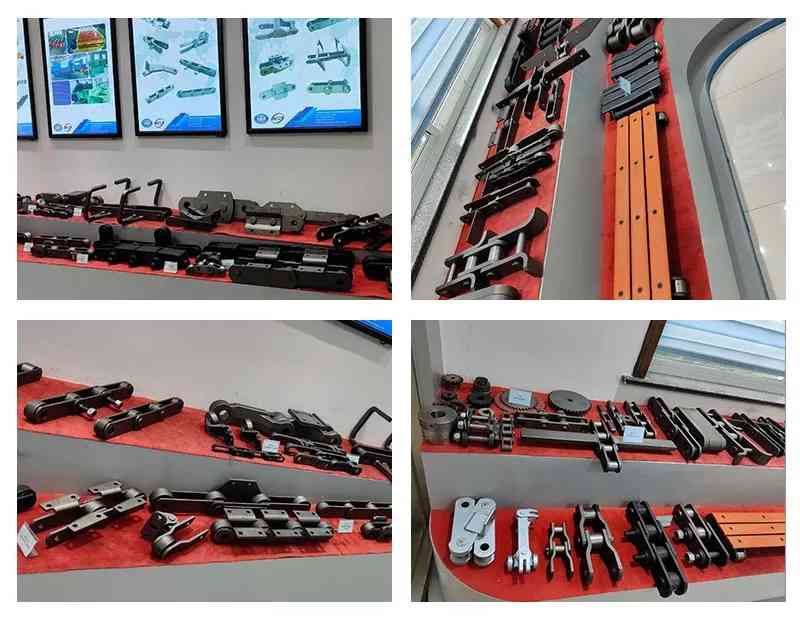
Xích thép kỹ thuật
Xích thép kỹ thuật được sử dụng rộng rãi trong băng tải, thang máy gầu, mắt xích căng, xích truyền động, v.v., và có đặc điểm là độ bền cao, ma sát thấp và khả năng chống va đập tốt. Các mẫu xích ban đầu được phát triển cho các ứng dụng vận chuyển khó khăn. Ban đầu chúng được làm từ các bộ phận hoàn toàn bằng thép với các con lăn có mặt bích làm bằng gang. Sau đó, kích thước, độ bền và khoảng cách giữa các mắt xích được tăng lên để đáp ứng các yêu cầu tải nặng của ngành công nghiệp.
Ngày nay, các loại xích này được sử dụng rộng rãi trong nhiều ứng dụng, bao gồm cả các hoạt động khoan dầu khắc nghiệt và xe nâng hàng. Chúng có độ bền tuyệt vời và khả năng truyền tải điện năng cao, đồng thời có nhiều loại vật liệu khác nhau. Chúng cũng lý tưởng cho các môi trường khắc nghiệt như khoan dầu. Cấu trúc thép cường độ cao giúp chúng có thể chịu được các điều kiện hoạt động khắc nghiệt. Độ bền là một đặc điểm thiết yếu của bất kỳ loại xích nào, và CZPT Chains cung cấp đầy đủ các loại xích thép được thiết kế để đáp ứng chính xác các thông số kỹ thuật của bạn.
Xích truyền động làm bằng thép kỹ thuật bao gồm nhiều thành phần: các mắt xích, khớp nối và bánh răng. Điều này cho phép chúng chịu được tải trọng nặng với độ giãn tối thiểu. Nhờ lợi thế cơ học bên trong, xích quay quanh các bánh răng với hiệu suất gần như 100%. Ngoài ra, xích được làm bằng thép đặc biệt có thể chịu được các điều kiện nhất định. Chúng có nhiều loại hợp kim và mác thép khác nhau. Nếu bạn có bất kỳ câu hỏi nào, vui lòng liên hệ với chúng tôi.
Sự mài mòn của con lăn trên xích là một vấn đề lớn đối với xích băng tải và xích truyền động. Trong những trường hợp này, các con lăn của xích dễ bị mài mòn hơn so với các bạc lót, vì vậy việc bôi trơn là rất cần thiết. Nhiều loại xích được thiết kế để hoạt động với rất ít hoặc không cần bôi trơn. Cuối cùng, việc lựa chọn vật liệu là một yếu tố quan trọng trong thiết kế xích băng tải bằng thép kỹ thuật. Những yếu tố này sẽ giúp đảm bảo rằng xích luôn ở trong tình trạng tốt.
Xích băng tải mắt vuông
Có hai loại xích băng tải cơ bản. Loại thứ nhất là xích vuông, thường được sử dụng trong cần cẩu và máy nâng. Loại này có giá thành sản xuất thấp nhưng dễ bị quá tải hơn. Loại thứ hai là xích sử dụng khớp móc hoặc các mắt xích có thể tháo rời. Chúng được sử dụng để truyền tải điện năng trong thời gian ngắn và có tác dụng bôi trơn. Thông thường, chúng được làm bằng gang dẻo nhưng có thể đắt hơn.
Một loại xích khác là xích thép có thể tháo rời. Đối với tải trọng vừa phải, đây là một lựa chọn dễ lắp đặt. Đầu đóng của tai xích phải hướng về phía đĩa xích. Điều rất quan trọng là phải giữ cho xích thẳng hàng với đĩa xích. Cần điều chỉnh xích cho phù hợp với tải trọng trước khi lắp đặt. Việc bôi trơn xích thường xuyên rất quan trọng để kéo dài tuổi thọ của nó.
Xích thép có nhiều lựa chọn hơn về vật liệu và phương pháp xử lý nhiệt. Loại xích này cũng chính xác hơn so với các loại xích khác. Xích thép có bạc lót rẻ hơn nhưng cần bôi trơn thường xuyên hơn. Xích con lăn thép thường được sử dụng cho các băng tải dài hoặc tải trọng cao. Tuy nhiên, yêu cầu ma sát thấp hơn đòi hỏi xích có độ bền thấp hơn. Điều này có nghĩa là xích có mắt xích vuông là lựa chọn tốt hơn cho các băng tải nhỏ hơn. Nhưng kiểu xích này cũng có nhược điểm.
Xích con lăn có bạc lót được làm bằng thép và là một lựa chọn tuyệt vời cho các ứng dụng quy mô nhỏ. Các chốt hoạt động êm ái và ngăn ngừa hư hại răng xích. Xích con lăn có bạc lót cũng được sử dụng ở một mức độ nhất định làm xích băng tải. Tuy nhiên, ưu điểm chính của xích con lăn có bạc lót là nó hoàn toàn không gây tiếng ồn. Xích con lăn có bạc lót được làm bằng thép hợp kim và phù hợp cho các ứng dụng tốc độ rất thấp.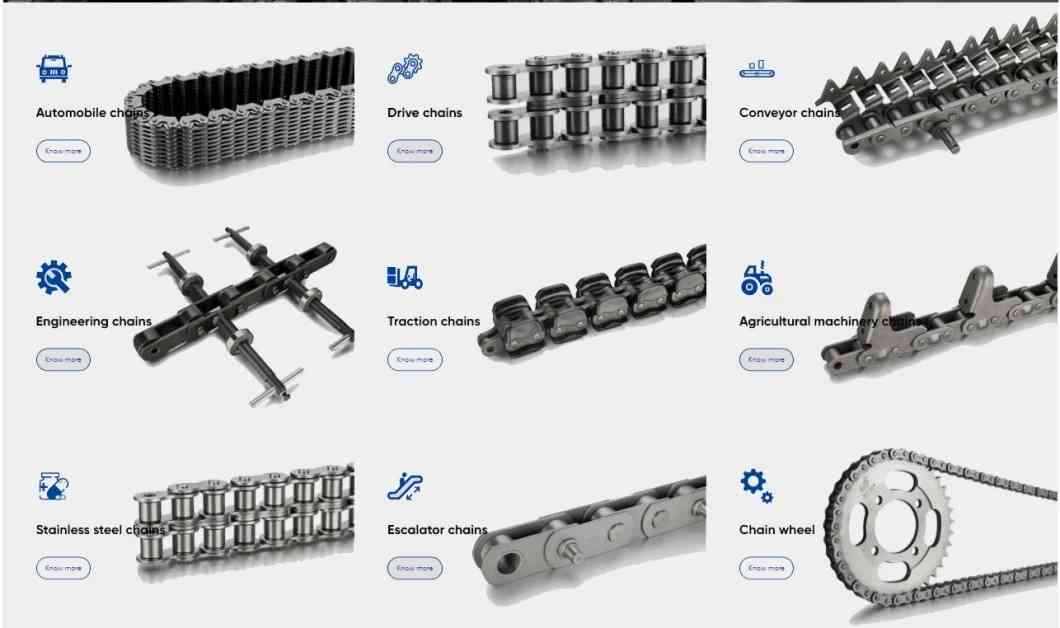
chuỗi kép
Xích con lăn hai sợi, còn được gọi là xích đôi, bao gồm hai hàng mắt xích đơn. Nó có độ bền va đập cao, trọng lượng nhẹ và kích thước nhỏ gọn. Xích con lăn hai sợi được sản xuất bằng công nghệ CZPT, sử dụng các con lăn đặc để cải thiện khả năng quay của răng đĩa và giảm tải trọng va đập. Trong quá trình sản xuất, kim loại được xử lý nhiệt để tăng cường độ bền và giảm ăn mòn.
Xích đơn được thiết kế cho một đĩa xích duy nhất, trong khi xích đôi bao gồm hai xích giống hệt nhau được nối song song. Xích đôi bền hơn xích đơn vì hai con lăn chứa ổ bi, chốt và các bộ phận khác. Xích truyền động đơn có thể chịu tải trọng cao, trong khi xích truyền động kép được thiết kế cho các ứng dụng tải trọng trung bình.
chuỗi lá
Xích lá được sử dụng trong các thiết bị chuyển động tịnh tiến như xe nâng. Chúng cũng được sử dụng trong máy công cụ cho xích đối trọng. Xích lá có nhiều chiều dài khác nhau, thường có đầu cái hoặc đầu đực. Xích lá có thể được sản xuất với bước răng chẵn hoặc lẻ và lý tưởng cho việc nâng và cân bằng. Bài viết này sẽ giới thiệu một số ứng dụng chính của xích lá trong hệ thống truyền động. Ngoài ra, chúng ta sẽ thảo luận về cách chúng được chế tạo và cách chúng hoạt động trong các ứng dụng thực tế.
Hầu hết các xích truyền động hiện nay được làm từ xích lá. Loại xích này được thiết kế để tăng cường độ bền của xích. Tuy nhiên, chúng lại rẻ hơn các loại xích khác. Bạn cũng có thể mua các loại xích lá chuyên dụng cho các ứng dụng cụ thể. CZPT Chain cũng cung cấp các loại xích lá tùy chỉnh theo nhu cầu riêng của bạn. Xích lá thường được sử dụng trong xe nâng, thiết bị xử lý vật liệu và các ứng dụng nâng hạ. Chúng thường được làm từ các thành phần chất lượng cao. Xích lá BL1688 có 8 x 8 mắt xích và được bán theo hộp 10 feet hoặc cuộn từ 25 đến 100 feet. Xích lá có thể được cắt theo yêu cầu.
Khi lựa chọn xích lá cho một ứng dụng cụ thể, cần xem xét độ bền kéo tối thiểu của xích. Độ bền đứt tối thiểu phải đủ cao để bảo vệ người lao động hoặc máy móc, đồng thời phải tuân thủ quy định pháp luật đối với loại máy móc đó. Hầu hết các nhà sản xuất đều công bố yêu cầu về độ bền tối thiểu này. Để chế tạo xích lá bền nhất, các kỹ sư thiết kế phải xem xét tiêu chuẩn ISO4347 khi lựa chọn loại xích lá phù hợp. Các nhà sản xuất xích lá thường vượt quá tiêu chuẩn quốc tế khoảng 20%.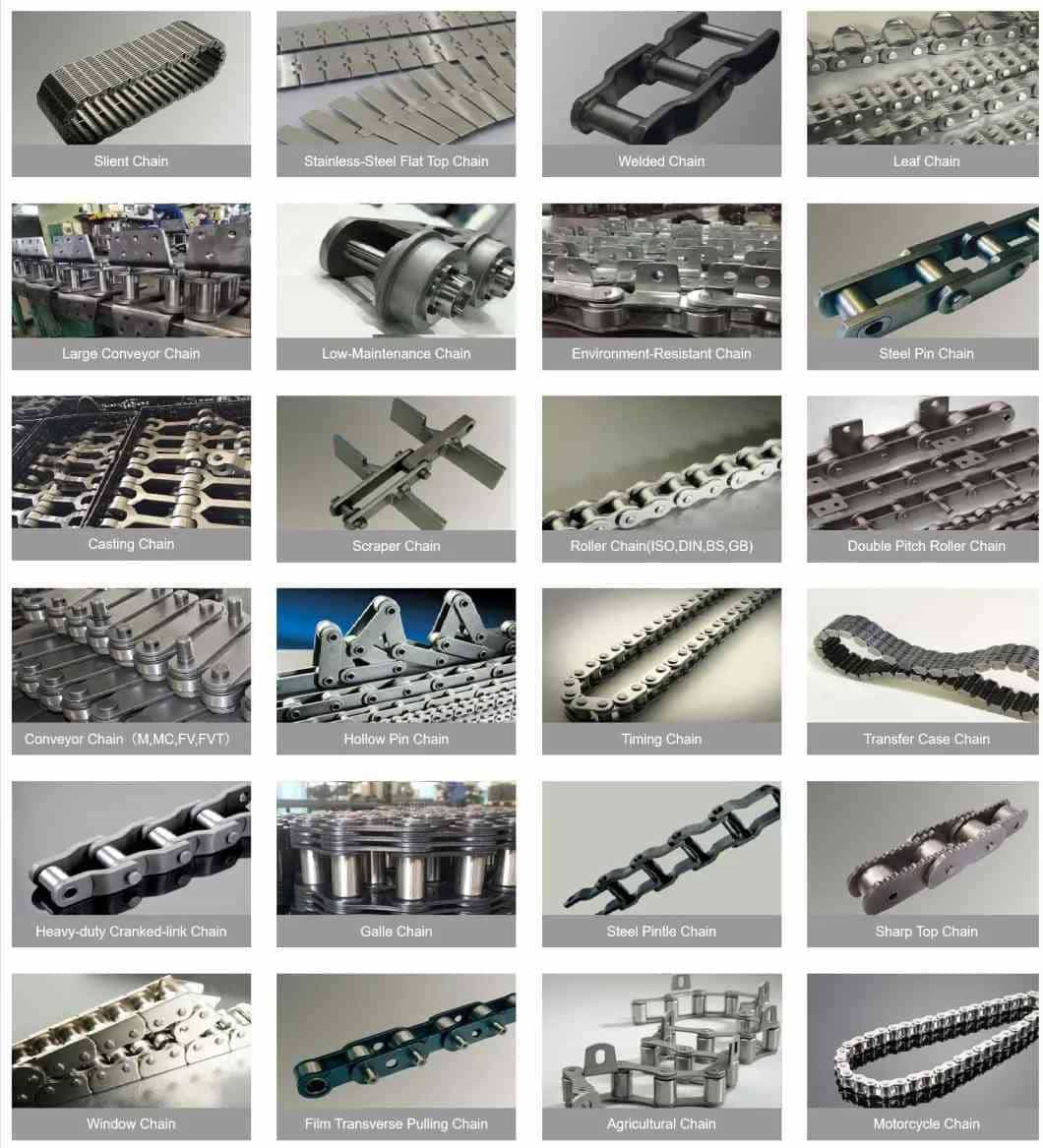
xích con lăn
Xích con lăn được làm từ nhiều loại vật liệu khác nhau. Một số vật liệu phổ biến bao gồm thép và thép không gỉ. Vật liệu phù hợp nhất phụ thuộc vào chi phí, điều kiện môi trường và thiết kế truyền động công suất. Các nhà sản xuất xích có thể tối ưu hóa vật liệu cho mục đích sử dụng. Tùy thuộc vào kích thước, khoảng cách và các kỹ thuật chế tạo đặc biệt, nó có thể được làm nhẹ hơn hoặc nặng hơn. Đây là một lợi thế cho các ứng dụng trong môi trường nhạy cảm với tiếng ồn. Dưới đây là một số ví dụ về các ứng dụng phổ biến của xích con lăn.
Sự mài mòn của các bộ phận trong xích con lăn là một phần không thể tránh khỏi trong quá trình hoạt động của nó. Mức độ giãn dài phụ thuộc vào các yếu tố như bôi trơn, tải trọng và tần suất khớp nối giữa chốt và bạc lót. Việc sản xuất các bộ phận chịu mài mòn quan trọng đòi hỏi sự chú ý cẩn thận đến từng chi tiết. Nguyên liệu thô, quy trình sản xuất và lắp ráp đúng cách là rất quan trọng đối với hiệu suất và tuổi thọ của sản phẩm. Nếu các bộ phận này không đạt chất lượng cao, chúng sẽ không bền như mong muốn của xích.
Ngành công nghiệp khuyến nghị đo độ giãn dài do mài mòn của xích con lăn để xác định thời điểm cần thay thế. Phải sử dụng các quy trình an toàn thích hợp để đo độ căng của xích. Độ căng tối đa của xích phải được đo bằng cách áp dụng tải trọng đo được quy định bởi ANSI. Một xích con lăn được đo đúng cách sẽ an toàn khi sử dụng. Đối với xe máy, xích thường lớn hơn và chắc chắn hơn. Thông thường, dây đai răng được thay thế bằng trục truyền động vì chúng ít gây tiếng ồn hơn và cần ít bảo dưỡng hơn.
Độ bền kéo là phương pháp đo phổ biến nhất đối với xích con lăn. Phép đo này thể hiện lượng tải trọng mà xích có thể chịu được trước khi bị đứt. Độ bền mỏi là một thước đo khác về độ bền. Độ bền mỏi đo lường thời gian mà xích con lăn có thể chịu được việc sử dụng lâu dài trước khi bị hỏng. Hai phép đo này có mối liên hệ chặt chẽ và có thể giống nhau hoặc khác nhau. Ngoài độ bền kéo, độ bền mỏi là một yếu tố hữu ích cần xem xét khi mua xích.


editor by czh 2022-12-07