Feeder breaker chain wear develops across joints, links, flight/scraper components, and the chain/sprocket interface. A reliable replacement decision should combine visual condition, repeatable measurements, machine-specific limits, and service history. This guide explains where to look and what to document without inventing a universal discard threshold.
Where Wear Appears
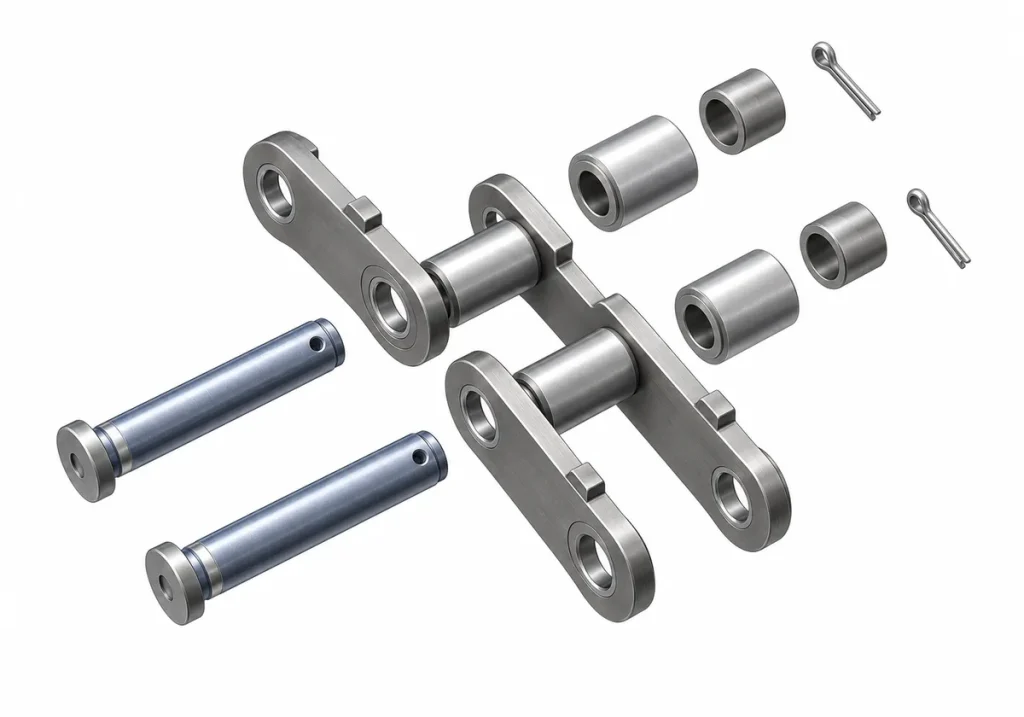
Jointed chain wear is commonly observed around pin/bush relationships and the connected plates or links. In a feeder breaker, the flight and scraper assembly also sees contact with conveyed material and the surrounding conveyor path. Wear can therefore appear as joint clearance, plate or link damage, scraper/flight deformation, attachment wear, missing retention features, or abnormal contact marks.
Inspect multiple representative locations. A single damaged area may reflect a local event, while a repeating pattern across the chain can point to a broader condition that deserves engineering review.
Elongation Concept
As articulated joints wear, the cumulative centre-to-centre distance across a span can increase. This is often described as chain elongation or pitch extension. The important point is that the measurement method must be repeatable: record the number of pitches, reference points, chain condition, and the machine state in which the measurement was taken.
This page does not publish a percentage at which every feeder breaker chain must be discarded. The acceptable limit depends on the chain and machine specification, sprocket geometry, adjustment system, and approved maintenance criteria.
Flight and Scraper Wear
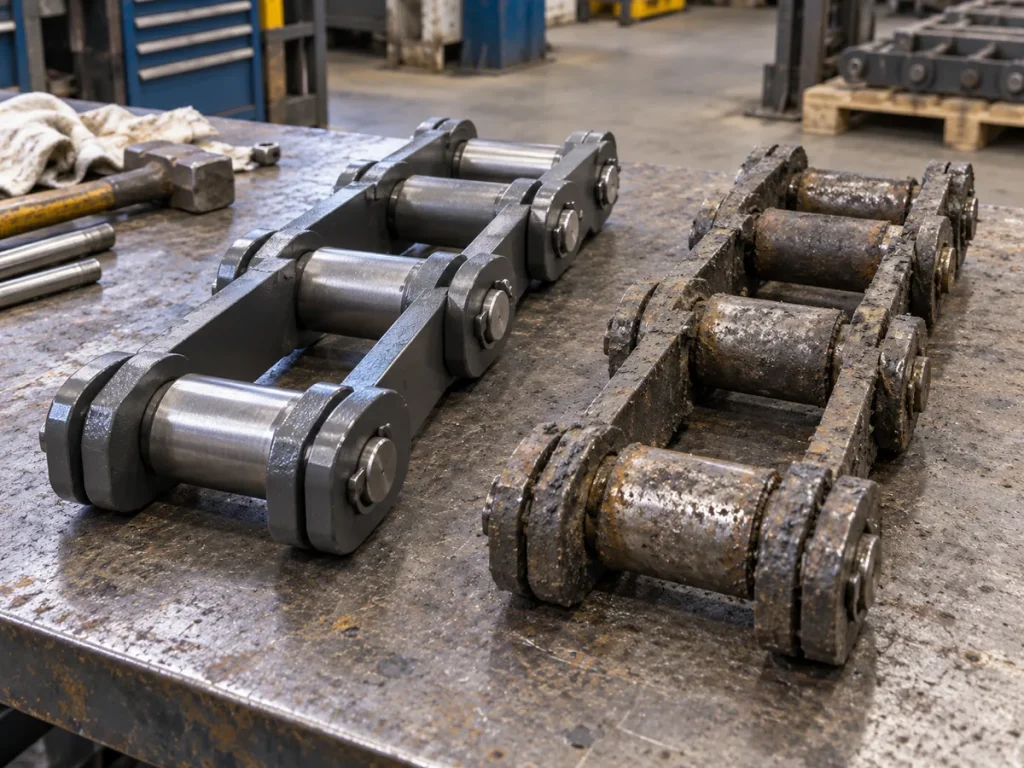


Flights and scraper components should be checked for bending, cracking or damage indications, uneven contact, looseness, loss of original geometry, and wear that changes the effective width or material-moving profile. The K201B and K207B structures identify separate scraper-head and scraper-plate components, which can be useful when describing where damage is located.
If a scraper is heavily worn, use an intact neighbouring flight for dimensional reference where possible. Do not reconstruct the original width by guesswork.
Sprocket Interaction

A worn chain and sprocket influence each other’s engagement. When replacement planning begins, photograph visible sprocket teeth and chain seating where the machine can be inspected safely. Look for inconsistent seating, unusual tooth contact, side contact, or a chain that appears to climb or track abnormally.
Those observations are diagnostic evidence, not automatic replacement rules. The machine-specific criteria should determine whether a sprocket can remain in service with a new chain.
Measurement and Documentation
A useful wear record includes:
- dated photographs from consistent reference locations;
- pitch/span measurements with the number of pitches recorded;
- scraper width and any change in flight geometry;
- adjustment or take-up position history where available;
- notes on damaged or replaced components;
- photographs of chain/sprocket engagement;
- model or component markings;
- machine events that may have affected the chain.
Keep the raw data. If a measurement looks unusual, repeat it and record both the first reading and the verification instead of rewriting history.
Replacement RFQ Trigger
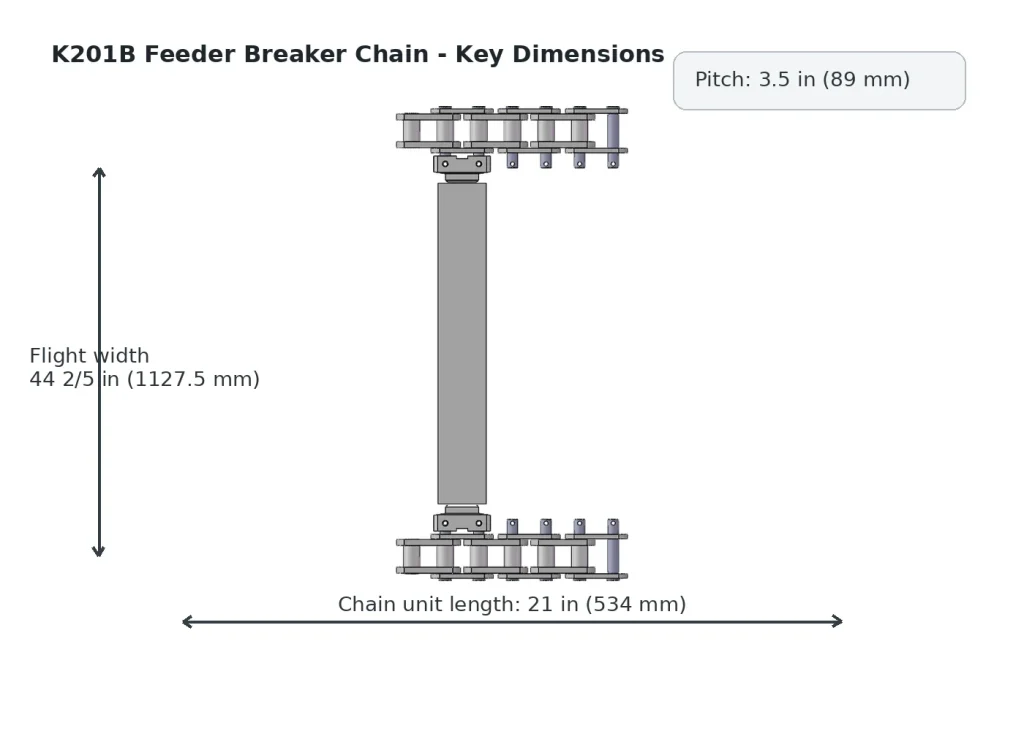
Start replacement preparation when the chain condition, adjustment history, planned shutdown, or sourcing lead time makes it prudent to identify the replacement before failure. The goal is to capture the chain geometry while the normal configuration is still visible.
For K201B and K207B, compare pitch, unit length, scraper width, and component structure. For an unidentified chain, prepare a measured drawing or sketch and send the application context. Do not force the chain into the nearest model if the evidence does not match.
คำถามที่พบบ่อย
What is the maximum feeder breaker chain elongation?
This site does not publish a universal percentage. Use the approved chain or machine specification for the actual equipment.
Is visible slack proof that the chain is worn out?
No. Slack can be related to adjustment, wear, machine geometry, or other conditions. Inspect the complete system and use the machine-specific procedure.
Should a new chain always use a new sprocket?
Evaluate chain and sprocket condition together, but the decision should follow the machine and component criteria rather than a universal rule.
What information is needed before ordering a replacement?
Model if known, pitch, chain unit length, scraper width, flight/scraper configuration, photographs, drawing or measured sketch, application context, and quantity.
Can a worn chain still be used to identify the model?
Yes, if the model markings and structural features remain visible and the measured condition is recorded accurately. Compare it with drawings and multiple dimensions rather than a single worn pitch value.
Building a Wear Trend Instead of a One-Time Opinion
A single inspection shows condition at one moment. A wear trend shows how that condition changes. Use the same measurement method and reference locations where practical, and keep the dated observations together. If the method changes, record the change so the readings are not compared as though they were identical.
A trend can include multi-pitch span measurements, scraper width checks, photographs of selected joints and flights, take-up position records from the approved machine procedure, and notes about repairs or unusual events. The purpose is not to calculate a universal remaining life from the website. It is to support a machine-specific maintenance decision with better evidence.
Interpreting Joint Wear Carefully
Pin and bush wear can accumulate into a measurable increase across multiple pitches, but the visible condition of one joint may not represent the whole chain. Compare several locations and both strands where the machine uses paired chains. If one area is significantly different, record it as a local condition rather than averaging it away.
Do not infer a model-specific hardness or material deficiency from appearance alone. Material and treatment claims require technical information. A worn joint can show that a condition exists; it does not prove the manufacturing cause.
Plate and Link Observations
Inspect outer and inner link areas for visible deformation, abnormal side contact, damage around joint or attachment locations, and inconsistent replacement components. K201B and K207B use different documented component structures, so link observations can also help verify whether the chain identity is correct.
If a repair has introduced a component that looks different from the rest of the chain, photograph it and note where it occurs. The replacement review needs to distinguish the original repeating configuration from a local service repair.
Flight Wear and Effective Geometry
A worn or bent scraper can change the effective width and contact pattern of the flight assembly. That matters both for maintenance and for chain identification. Measure an intact flight where possible and preserve photographs showing the damaged and intact geometry side by side.
If multiple flights show similar one-sided wear, record the pattern and the chain-path location. That evidence can support an alignment or guide-contact investigation without pretending that the wear pattern alone proves a specific root cause.
Sprocket Evidence for the Replacement File
When safe access is available, include photographs of visible sprocket teeth and chain seating. Capture the approach and departure area rather than only a close-up of one tooth. Note whether the chain seems to sit consistently, whether side contact is visible, and whether the same condition appears on both sides of a paired system.
The replacement file should preserve this evidence even if the sprocket decision is made later by the equipment-maintenance team. A new chain quotation should not erase the condition of the system in which the old chain operated.
Separating Wear Criteria from Sourcing Criteria
Wear criteria answer, “Can this chain remain in service under the approved maintenance rules?” Sourcing criteria answer, “What chain configuration is required as the replacement?” They are related but not identical. A chain can be clearly identified even when it is not yet at its discard criterion, and a badly worn chain can be difficult to identify unless the geometry is documented early.
For that reason, sourcing preparation should begin before failure. Record the nominal/drawing data and current field condition while the chain is still recognisable.
Wear Review Checklist
- machine/site isolation completed under the approved procedure;
- representative joints inspected on the relevant chain paths;
- flight/scraper geometry documented;
- pitch/span measurements recorded with method and reference points;
- chain/sprocket engagement photographed where accessible;
- adjustment/repair history attached;
- model and component markings captured;
- drawing or historical purchase reference collected;
- discrepancies listed rather than silently reconciled;
- replacement RFQ prepared when the maintenance plan or shutdown schedule requires it.
When the Chain Identity Is Uncertain
If wear has removed markings or distorted key features, use multiple evidence sources. An intact retained section, old drawing, previous inspection photos, purchase records, sprocket/flight geometry, and measured chain sections can together establish the configuration. Do not select the nearest K201B or K207B model purely because one dimension looks similar.
An uncertain identity should remain explicit in the RFQ until the engineering review confirms the replacement drawing.
Document Wear Patterns, Not Just a Single Worn Dimension
Wear is often easier to understand as a pattern across the assembly than as one number. When a joint, plate, pin, bush or flight looks abnormal, identify its position and compare it with nearby components. Record whether the condition appears on one chain path or both, on one side of a component or symmetrically, and whether it is associated with visible build-up, impact marks, repair work or unusual chain/sprocket engagement.
Use photographs that preserve context. An extreme close-up can show surface condition, but an additional wider image should show where the part sits in the chain. If a dimension is measured, keep the endpoints and method with the value. This prevents a future reviewer from mistaking a wear measurement for an original design dimension.
Chain Joint, Flight and Sprocket Evidence Should Stay Separate
A replacement review should distinguish at least three evidence groups. Chain-joint evidence covers links, pins, bushes and related joint features. Flight/scraper evidence covers width, spacing, attachment geometry, scraper head/plate condition and any repair. Sprocket evidence records the visible engagement context and condition required by the machine’s maintenance procedure.
Keeping these groups separate is useful because a problem seen at one interface does not automatically define the condition of every other component. For example, abnormal engagement may require both chain and sprocket review; a damaged flight may be local; and a worn joint may affect the interpretation of measured pitch. The site-specific maintenance criteria determine the action.
Trend Measurements Over Time
If the maintenance plan uses repeated measurements, record them in a consistent format with dates and reference points. Do not discard an earlier result simply because a newer value exists. A sequence can show how quickly a condition changes and whether an intervention altered the trend.
The record should also note changes that make two readings less comparable: a repaired section, a new measurement location, a different method, replacement of a sprocket or guide, or cleaning that exposed a previously hidden surface. A trend is useful only when the context is preserved.
This website does not publish a universal maximum elongation or wear percentage for every feeder breaker. Use the machine manufacturer, approved drawing, chain specification or site maintenance criteria for the actual limit. Where those limits are unavailable, the correct next step is to obtain the controlling requirement rather than invent one.
Replacement Timing and Procurement Planning
Procurement planning can start before the maintenance team reaches the final replacement decision. When the chain shows a developing trend, identify the model or prepare a measured replacement package, locate the current drawing, confirm the required quantity, and note customer-controlled inspection/documentation needs. This reduces the technical work that must be done during a short shutdown.
Keep commercial planning separate from the maintenance acceptance decision. Preparing a quotation does not mean the website has declared the chain unserviceable; it means the technical information is being organized so a replacement can be sourced if the site decides it is required.
For a known K201B or K207B chain, compare current dimensions, drawings and photographs with the product model structure and dimensions. For an unknown chain, preserve the measured geometry and component arrangement without forcing it into the nearest model.
What to Record When a Component Is Removed
If maintenance removes a pin, bush, link or flight component, photograph it with its mating parts and label the chain location. Note whether removal caused additional damage. Keep an intact reference part when possible. For a worn pin/bush pair, record which surfaces were mated; for a flight, preserve the attachment relationship; for a plate, show both the worn region and the surrounding geometry.
This information can help engineering distinguish condition from design when preparing a replacement or component drawing. Do not use a visibly deformed component as the sole source for a new dimension.
Wear-to-Replacement Handover
The handover package should include the equipment identifier, chain identity status, current drawing or previous-order reference, current measurements, representative wear photographs, chain/sprocket observations, flight condition, repair/adjustment history, quantity, and any open technical questions. Identify which values are nominal and which are field observations.
If the site has a specific rejection criterion or inspection standard, include it as a customer-controlled requirement. If it has not been provided, mark it for confirmation. This keeps the quotation technically honest and avoids presenting a general website statement as a substitute for the machine’s maintenance documentation.