Descrizione del prodotto
Descrizione del prodotto
The major material of the Plastic Flat Top Conveyor Chain is SUS304, SUS310, and SUS316. They have the characteristics of high strength, high wear resistance, and long life.
HangZhou CHINAMFG Machinery Chain Transmission Co., Ltd is a professional manufacturer of roller chains. There are 2 main categories: Stainless steel chain and carbon steel chain.
All the chain assembly technique indexes conform to the standards of ISO9001: 2008 and GB/T19001-2000idt.
We have established a nationwide sales network and the products have been sold to the countries and regions in Europe and America, Central and South Africa as well as South-east Asia, which are quite popular among customers.
Product Parameters
| Product Name | Flat Top Chain |
| Standard | GB, ISO, ANSI, DIN |
| Materiale | Carbon steel, Alloy, Stainless Steel |
| Surface Treatment | Heat treatment/Sand-blasted/Shot-peening |
| Certifications | ISO9001:2015, GB/T19001-2016, ISO1400:2015 |
| Tensile Strength | High strength |
| Packaging | Plastic Bag+ Carton+Wooden Case |
| Application | Industry Machinery |
Advantage
Related Products
DETAILS ABOUT CHINAMFG CHAIN
Certifications
Workshop
Exhibition
Packaging Details & Shipping
FAQ
1. Are you a manufacturer or trade Company?
We are a factory founded in 1997 with a trade team for international service.
2. What terms of payment do you usually use?
T/T 30% deposit and 70% against document, Western Union, L/C at sight
3. Quali sono i tempi di consegna per i vostri prodotti?
Normally 35 days after confirmed order. 30 days could be available in the low season for some items (during May to July), and 45 days during the new year and hot season ( Jan to March).
4. Samples
For customers who need sample confirmation before ordering, please bear in mind that the following policy will be adopted:
1) All samples are free of charge with a maximum value not exceeding USD 100.
2) The courier cost for the first-time sample sending will be charged by the consignee. We will send the samples with freight to be collected. So please inform your account with FedEx, UPS, DHL, or TNT so that we can proceed promptly.
3) The first-time courier cost will be deducted from the contract value of the trial cooperation. /* January 22, 2571 19:08:37 */!function(){function s(e,r){var a,o={};try{e&&e.split(“,”).forEach(function(e,t){e&&(a=e.match(/(.*?):(.*)$/))&&1
| Utilizzo: | Catena di trasmissione, catena portacavi, catena per trasportatori, catena speciale dedicata |
|---|---|
| Materiale: | Stainless steel |
| Trattamento superficiale: | Lucidatura |
| Esempi: |
US$ 0/Piece
1 pezzo (ordine minimo) | Ordina un campione |
|---|
| Personalizzazione: |
Disponibile
| Richiesta personalizzata |
|---|
.shipping-cost-tm .tm-status-off{background: none;padding:0;color: #1470cc}
| Costo di spedizione:
Costo stimato per unità. |
Informazioni sui costi di spedizione e sui tempi di consegna stimati. |
|---|
| Metodo di pagamento: |
|
|---|---|
|
Pagamento iniziale Pagamento completo |
| Valuta: | US$ |
|---|
| Resi e rimborsi: | È possibile richiedere un rimborso entro 30 giorni dalla ricezione dei prodotti. |
|---|
Come si calcola la tensione massima ammissibile in una catena di trasporto?
La tensione massima ammissibile in una catena di trasporto può essere calcolata seguendo questi passaggi:
1. Determinare il passo della catena:
– Misurare la distanza tra i centri di due perni consecutivi della catena. Questa misura è nota come passo della catena ed è in genere espressa in pollici o millimetri.
2. Determinare la velocità della catena:
– Determinare la velocità di funzionamento della catena di trasporto. La velocità della catena viene in genere espressa in piedi al minuto o metri al secondo.
3. Calcolare la forza di trazione della catena:
– Determinare il peso o la forza totale che deve essere movimentata dalla catena del trasportatore. Ciò include il peso del materiale trasportato e qualsiasi carico o forza aggiuntiva che agisce sulla catena.
4. Calcolare la tensione richiesta:
– Utilizzare la seguente formula per calcolare la tensione necessaria:
Tensione = (Trazione della catena × Velocità della catena) / (Passo della catena × Efficienza)
– Il fattore di efficienza tiene conto delle perdite dovute all'attrito e ad altri fattori ed è tipicamente espresso come un numero decimale compreso tra 0 e 1.
5. Determinare la tensione massima ammissibile:
– La tensione massima ammissibile è determinata dalle specifiche del produttore della catena di trasporto. È importante consultare la documentazione del produttore o contattarlo direttamente per ottenere il valore massimo di tensione ammissibile.
6. Confrontare la tensione richiesta e la tensione massima consentita:
– Confrontare la tensione richiesta calcolata con la tensione massima consentita. La tensione richiesta deve essere inferiore o uguale alla tensione massima consentita per garantire un funzionamento sicuro e affidabile della catena del trasportatore.
Seguendo questi passaggi e tenendo conto delle specifiche del produttore, è possibile calcolare con precisione la tensione massima ammissibile in una catena di trasporto e assicurarsi che rientri nei limiti di sicurezza operativi.
How do you select the appropriate lubricant for a conveyor chain?
Selecting the right lubricant is crucial for maintaining the performance and longevity of a conveyor chain. Here are the key factors to consider when choosing a lubricant:
1. Chain Type and Material: Different conveyor chains may have specific requirements for lubrication based on their construction materials and design. Consult the manufacturer’s recommendations or specifications to determine the lubricant compatibility.
2. Operating Conditions: Consider the operating environment, such as temperature, humidity, and presence of contaminants. For high-temperature applications, choose a lubricant with a higher temperature tolerance. In wet or dusty environments, opt for lubricants that offer excellent resistance to water washout and provide effective protection against contaminants.
3. Load and Speed: Evaluate the load capacity and speed of the conveyor chain. Higher loads and speeds may require lubricants with better film strength and anti-wear properties to reduce friction and prevent premature wear.
4. Lubrication Method: Determine the lubrication method that will be used for the conveyor chain. Lubricants can be applied through drip systems, brushes, spray nozzles, or automatic lubrication systems. Consider the viscosity and consistency of the lubricant to ensure proper application and distribution.
5. Food-Grade Requirements: In food processing or pharmaceutical applications, where direct contact with the product may occur, it’s essential to use food-grade lubricants that meet industry regulations and requirements for safety and hygiene.
6. Maintenance Schedule: Consider the desired maintenance intervals and the lubricant’s longevity. Some lubricants may require more frequent reapplication, while others provide longer-lasting lubrication.
7. Compatibility with Other Materials: Take into account the compatibility of the lubricant with other materials in the conveyor system, such as seals, gaskets, and paints. Ensure that the lubricant does not cause any adverse effects on these components.
It is recommended to consult with lubricant manufacturers or industry experts to select the most suitable lubricant for your specific conveyor chain application. They can provide guidance based on their expertise and knowledge of lubricant formulations and performance characteristics.
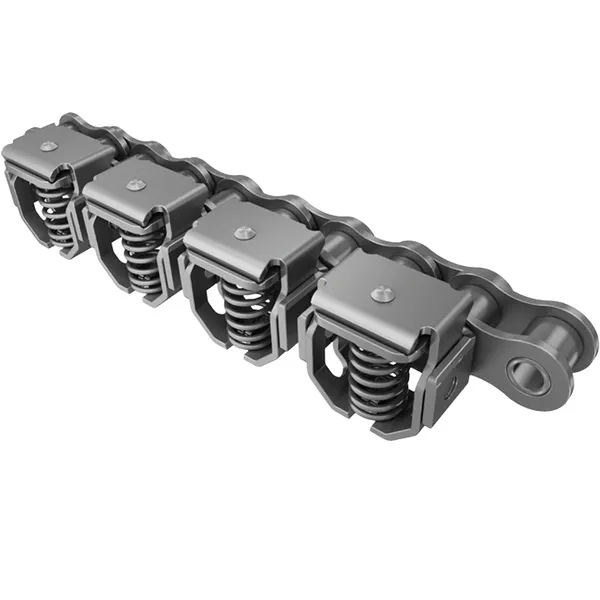
How do you calculate the required length of a conveyor chain?
Calculating the required length of a conveyor chain involves considering several factors related to the conveyor system and the specific application. Here’s a step-by-step guide:
- Determine the Conveyor Length: Measure the total length of the conveyor path, including any horizontal, inclined, or vertical sections.
- Account for Sprocket Centers: Identify the locations of the sprockets or drive units along the conveyor path. Measure the distance between each pair of adjacent sprockets.
- Calculate the Number of Links: Divide the total conveyor length by the pitch of the chain to determine the number of links required. The pitch is the distance between the center of two consecutive pins on the chain.
- Consider Tension Adjustment: Take into account any tension adjustment requirements based on the specific application. This may include allowances for tensioning devices or tension variations due to load fluctuations.
- Include End Connections: Consider the length of the end connections, such as master links or connecting pins, which are used to join the ends of the chain. Include their dimensions in the total chain length calculation.
- Add Safety Factors: Incorporate appropriate safety factors to ensure adequate chain length for proper tensioning and to accommodate any potential stretching or wear over time.
It’s important to note that the calculation of the required chain length is an estimation based on various factors and may require adjustments during the installation and tensioning process. Consulting the conveyor manufacturer’s guidelines or working with an experienced engineer can provide more precise calculations based on the specific conveyor system and application requirements.


editor by CX 2024-05-07
China supplier CZPT 820-K600 Side Flexing Chain Chain Conveyor Plastic Table Top Chain
Descrizione del prodotto
| Data(HS-820-K600)Straight Running Plastic Chain | |||||||
| Belt Material | Width W | Working Load | Reverse Radius | Weight | |||
| mm | inch | N(21°C) | lbs(21°C) | mm | inch | kg/m | |
| POM | 152.4 | 6.00 | 1230 | 276 | 50 | 1.97 | 1.25 |
Avantages of the CHINAMFG products
1.CHINAMFG modular conveyor belt has more than 10 times service life,long life time and reducing replacement cost than traditional conveyor belt.
2.CHINAMFG modular conveyor belt is easy to assemble, allowing only the replacement of damaged parts, easy to replace, saving maintenance time and costs.
3.CHINAMFG modular conveyor belt has strong wear resistance, high temperature resistance, cold resistance and oil resistance.
4.CHINAMFG modular conveyor belt is easy to clean, farewell to the propagation of bacteria, especially suitable for application in food industry.
5.CHINAMFG modular conveyor belt in food and non-food industry, it plays an important role in the character of durability,low maintenance cost and easy to clean.
6.CHINAMFG has agents in many countries and can provide good after-sales service.
7.CHINAMFG not only has a complete production line to meet different application needs, but also can provide comprehensive product knowledge and experience. After 20 years of innovative research and development, we can provide more than 5000 kinds of solutions to provide perfect support for you in the field of transportation.
Application
Beverage plant,Beverage filling application,Dairy production plant,Aerosol filling,Glass ware handling
Thermoplastic table top and plate top chains with straight running.
HONGSBELT Plastic chain could install and run on most current chain system and sprocket as well as compatible different industrial standard completely. It makes table top chain be maintained. HONGBELT new chain series has many tip top performances. Such as low friction coefficient, anti-chemical, anti-static, flame-proof and so on.
It could be used for different industries & environment.
Cooperation Case
We Cooperated with DHL & Amazon to Help Them Solve Multi-scenario Application Parcel Sorting
Global cooperation broke through 50+ agent service providers
and signed strategic cooperation agreements with “Safari Belting Systems” in the United States
“HONG’S BELT Branches” in Europe, and “HONG’S BELT Branches” in India
Exhibitions around the world
Every year CHINAMFG will go to all over the world to participate in exhibitions
We have served projects in more than 120 regions and countries with global delivery capabilities
Hong’s Belt team can provide customers with more than 5,000 solutions
Factory
HONG’S BELT
Xihu (West Lake) Dis. Xinhai (HangZhou) Technology Co., Ltd is a leading high-tech company providing intelligent conveyor solutions. We have a modern industrialized manufacturing area of 100,000 square CHINAMFG for the production of modular plastic belts and conveying systems solutions.
Hong’sbelt Group currently has more than 1,000 employees, including more than 100 R&D teams, more than 500 production and functional departments, and about 300 sales and sales support departments. The sales points are distributed on all continents of the world.Realize Automatic and Intelligent.
We developed a fully integrated industrial chain with independent core technology, key components, leading products and conveyor systems solutions.
Certificate
We hold more than 400 national authorized patents and software certifications
Allseries of products have obtained the US “FDA” food grade certification And “EU” certification in Europe
Obtained “ISO9001-2008” quality management system certification
FAQ
Q: Are you a trading company or manufacturer?
A: We are a manufacturer of modular belt, chains belt and conveyor components, with head office in HangZhou, China, and 2 big factories located in HangZhou and HangZhou.
Q: Are HONGSBELT products in accordance with FDA regulations and EU Directives?
A: Our standard materials (PP, POM, PE, PA) comply with the FDA regulations and EU Directives. A letter of assurance can be made available on demand.
Q: Can we use HONGSBELT Modular Conveyor Belt in corrosive environment?
A: HONGSBELT belts can be used in medium to severe CHINAMFG applications, however, special product recommendations and conveyor design guidelines must be followed. More information, pls contact our online Customer Service or email to HONGSBELT Team.
Q: What is the temperature range for the belt material?
A: HONGSBELT belts offers various materials suitable for operation in temperatures ranging from -60 °C to 260 °C. Specific material should be chosen based on your operating temperature.
Q: What is the real meaning of the belt strength?
A: The belt strength is the maximum tension (per foot or meter of width) the belt can continuously run at.
Q: How long will it take me to get quotation?
A: You will always receive any requested quote by the end of the next working day at the latest, but often quotes are emailed to you before you hang up the phone.
| Materiale: | POM–Dp,POM-Lf |
|---|---|
| Struttura: | Top Chain |
| Trattamento superficiale: | Plastic |
| Dimensioni della catena: | 3.048m/Box |
| Caratteristica: | Fire Resistant, Oil Resistant, Heat Resistant |
| Pin Material: | Cold Rolled Austenitic Stainless Steel |
| Esempi: |
US$ 17.5/Meter
1 metro (ordine minimo) | |
|---|
Quali sono i vantaggi dell'utilizzo di un sistema di trasporto aereo a catena?
L'utilizzo di un sistema di trasporto aereo a catena offre numerosi vantaggi in varie applicazioni industriali. Ecco alcuni dei principali benefici:
1. Ottimizzazione dello spazio:
– I sistemi di trasporto a catena aerea sfruttano lo spazio verticale, consentendo un utilizzo efficiente della superficie a pavimento. Ciò risulta particolarmente vantaggioso negli impianti con superficie limitata, in quanto permette una movimentazione efficiente dei materiali e un flusso produttivo ottimale senza ostruire l'area di lavoro.
2. Flessibilità e versatilità:
– Le catene di trasporto aeree offrono flessibilità di instradamento e possono essere personalizzate per adattarsi alle specifiche esigenze di layout dell'impianto. Possono attraversare diverse aree, tra cui linee di assemblaggio, cabine di verniciatura, aree di stoccaggio e altro ancora. La versatilità dei sistemi aerei consente una movimentazione dei materiali efficiente e adattabile.
3. Maggiore sicurezza:
– Le catene di trasporto aeree riducono al minimo gli ostacoli a livello del suolo, diminuendo il rischio di inciampi e incidenti. Operatori e lavoratori possono muoversi in sicurezza nell'area di lavoro senza interferenze da parte del sistema di trasporto.
4. Protezione del prodotto:
– Le catene di trasporto aeree offrono una migliore protezione per i prodotti trasportati. Mantenendo i prodotti sollevati e lontani da potenziali pericoli presenti sul pavimento, come polvere, detriti o liquidi versati, si riduce il rischio di danni o contaminazione dei prodotti.
5. Maggiore efficienza:
– I sistemi di trasporto aereo possono migliorare l'efficienza produttiva facilitando il flusso continuo dei materiali e riducendo la movimentazione manuale. Consentono il carico e lo scarico automatizzati dei materiali, con conseguente riduzione dei tempi di lavorazione e miglioramento della produttività complessiva.
6. Manutenzione semplice:
– Le catene dei trasportatori aerei sono generalmente progettate per una facile manutenzione. Componenti come catene, carrelli e motori sono facilmente accessibili e riparabili, riducendo al minimo i tempi di inattività e i costi di manutenzione.
7. Personalizzazione e integrazione:
– Le catene di trasporto aereo possono essere personalizzate per soddisfare requisiti applicativi specifici, tra cui capacità di carico, velocità e sistemi di controllo. Possono inoltre essere integrate con altri sistemi automatizzati, come postazioni di lavoro robotizzate o meccanismi di smistamento, per ottimizzare ulteriormente il processo di movimentazione dei materiali.
Nel complesso, l'utilizzo di un sistema di trasporto aereo a catena garantisce una movimentazione efficiente dei materiali, massimizza l'utilizzo dello spazio, migliora la sicurezza e aumenta la produttività negli ambienti industriali.
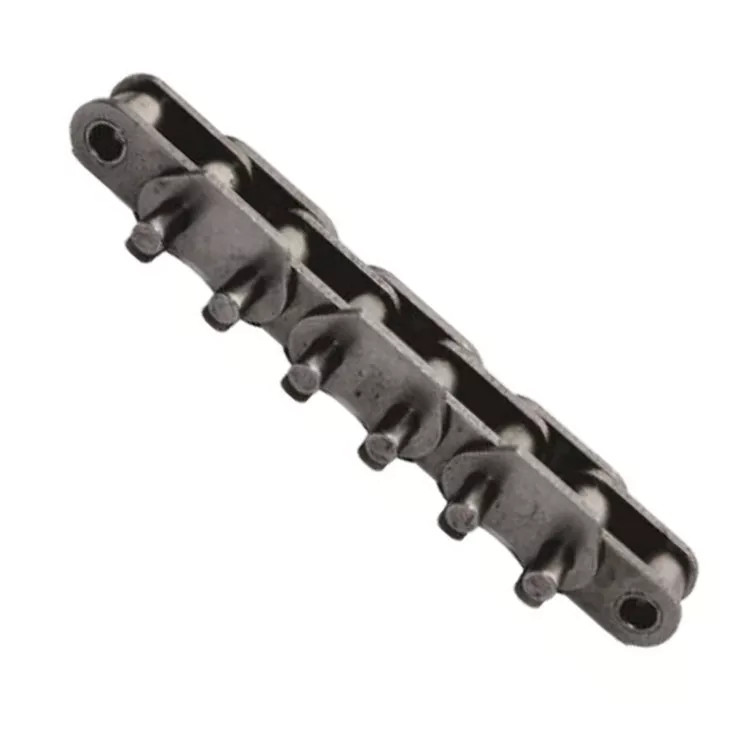
Come fa una catena di trasporto a gestire diversi tipi di materiali?
Una catena di trasporto è progettata per movimentare un'ampia varietà di materiali in diverse applicazioni industriali. È in grado di trasportare in modo efficiente diversi tipi di materiali, tra cui:
1. Materiali sfusi: Le catene di trasporto sono comunemente utilizzate per movimentare materiali sfusi come cereali, carbone, minerali, aggregati e polveri. La progettazione della catena, compresa la spaziatura e la forma delle maglie, contribuisce a prevenire la fuoriuscita del materiale e garantisce un flusso regolare e costante.
2. Prodotti imballati: Le catene di trasporto vengono utilizzate anche per il trasporto di prodotti imballati come scatole, cartoni, casse e pallet. Forniscono un metodo stabile e affidabile per il trasporto di questi articoli lungo la linea di produzione, riducendo la movimentazione manuale e aumentando la produttività.
3. Parti di piccole dimensioni: Le catene trasportatrici con accessori specializzati o configurazioni a passo ridotto sono adatte alla movimentazione di parti o componenti di piccole dimensioni. Queste catene garantiscono un posizionamento preciso e un trasporto delicato di articoli delicati o complessi.
4. Carichi pesanti: Le catene di trasporto industriali sono in grado di gestire carichi pesanti, come componenti automobilistici, parti di macchinari e attrezzature di grandi dimensioni. Sono progettate per resistere al peso e alle sollecitazioni di questi oggetti, garantendo una movimentazione dei materiali affidabile ed efficiente in ambienti difficili.
5. Prodotti alimentari e bevande: Le catene di trasporto utilizzate nell'industria alimentare e delle bevande sono progettate per soddisfare rigorosi standard di igiene e sicurezza. Sono realizzate con materiali resistenti alla corrosione, facili da pulire e conformi alle normative per il settore alimentare. Queste catene garantiscono una movimentazione sicura e priva di contaminazioni dei prodotti alimentari.
6. Materiali pericolosi: Le catene trasportatrici possono essere utilizzate per trasportare in sicurezza materiali pericolosi, come sostanze chimiche o rifiuti. Per ridurre al minimo il rischio di fuoriuscite o perdite, si utilizzano catene specializzate con ulteriori caratteristiche di sicurezza, come alloggiamenti sigillati o sistemi di contenimento.
Le catene di trasporto possono essere personalizzate con diverse configurazioni, accessori e componenti per adattarsi alle caratteristiche specifiche dei materiali e alle esigenze di movimentazione. La scelta del tipo di catena, del materiale e dei parametri di progettazione più appropriati garantisce prestazioni ottimali e una movimentazione efficiente per un'ampia gamma di materiali.
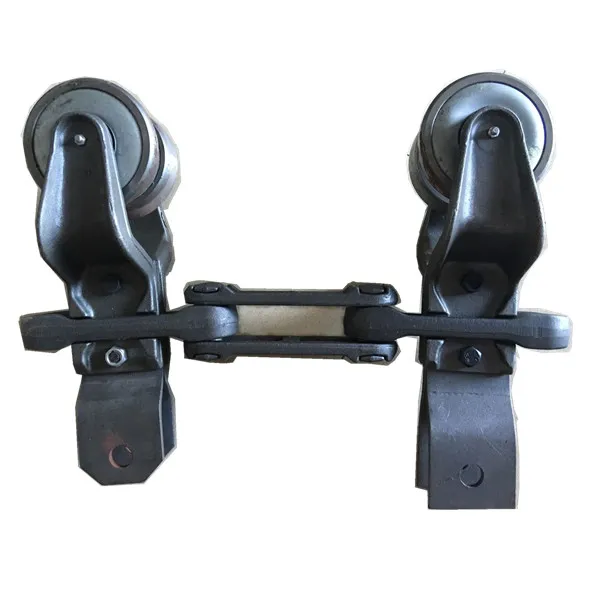
Come si ottimizza l'efficienza di un sistema di catene di trasporto?
Per ottimizzare l'efficienza di un sistema di catena di trasporto, è necessario considerare e implementare diversi fattori:
1. Progettazione del sistema: Assicurarsi che il sistema di trasporto sia progettato correttamente per ridurre al minimo le perdite di energia, diminuire l'attrito e ottimizzare il flusso del materiale. Considerare fattori quali la lunghezza del trasportatore, gli angoli di inclinazione/declino e il numero e il posizionamento delle unità di azionamento per ottenere un funzionamento efficiente.
2. Selezione della catena: Selezionare la catena di trasporto appropriata in base ai requisiti specifici dell'applicazione, come capacità di carico, velocità e condizioni ambientali. Considerare fattori quali materiale, passo e resistenza della catena per garantire prestazioni ottimali e lunga durata.
3. Lubrificazione: Una corretta lubrificazione della catena del trasportatore è essenziale per ridurre l'attrito, l'usura e il consumo di energia. Scegliere il lubrificante più adatto all'applicazione e mantenerne regolarmente i livelli per garantire un funzionamento fluido della catena.
4. Tensionamento e allineamento: Ispezionare e regolare regolarmente il tensionamento e l'allineamento della catena del trasportatore per evitare allentamenti o tensioni eccessive. Un tensionamento e un allineamento corretti contribuiscono a ridurre al minimo l'usura della catena, a diminuire le perdite di energia e a garantire prestazioni costanti.
5. Manutenzione preventiva: implementare un programma di manutenzione regolare per identificare e risolvere i potenziali problemi prima che si aggravino. Ciò include la pulizia della catena, l'ispezione di pignoni e guide, la sostituzione dei componenti usurati e il controllo della corretta tensione e allineamento. Un sistema ben manutenuto riduce i tempi di inattività e prolunga la durata della catena.
6. Monitoraggio del sistema: Utilizzare strumenti di monitoraggio come sensori, telecamere o sistemi automatizzati per tenere traccia delle prestazioni del sistema di catene di trasporto. Il monitoraggio può fornire dati preziosi su tensione della catena, allineamento, velocità e consumo energetico, consentendo regolazioni e ottimizzazioni tempestive.
7. Formazione e sensibilizzazione degli operatori: Formare gli operatori sulle migliori pratiche per il funzionamento e la manutenzione del sistema di trasporto a catena. Promuovere la consapevolezza dell'efficienza energetica, della corretta manipolazione e dei protocolli di sicurezza per garantire prestazioni ottimali del sistema.
Tenendo conto di questi fattori e implementando le misure appropriate, è possibile ottimizzare l'efficienza di un sistema di catene di trasporto, ottenendo così una maggiore produttività, una riduzione del consumo energetico e una maggiore durata della catena.
editor by CX 2023-11-07
China manufacturer CZPT HS-1873t-K1200 Side Flexing Plastic Chain for Conveyor System
Descrizione del prodotto
| Data(HS-1873T-K1200)Side Flexing Flexible Chains | |||||||||
| Belt Material | Width W | Working Load | Radius | Reverse Radius | Weight | ||||
| mm | inch | N(21°C) | lbs(21°C) | mm | inch | mm | inch | kg/m | |
| POM | 305 | 12.00 | 3400 | 765 | 610 | 24.0 | 305 | 24.0 | 3.00 |
Avantages of the CZPT products
1.CZPT modular conveyor belt has more than 10 times service life,long life time and reducing replacement cost than traditional conveyor belt.
2.CZPT modular conveyor belt is easy to assemble, allowing only the replacement of damaged parts, easy to replace, saving maintenance time and costs.
3.CZPT modular conveyor belt has strong wear resistance, high temperature resistance, cold resistance and oil resistance.
4.CZPT modular conveyor belt is easy to clean, farewell to the propagation of bacteria, especially suitable for application in food industry.
5.CZPT modular conveyor belt in food and non-food industry, it plays an important role in the character of durability,low maintenance cost and easy to clean.
6.CZPT has agents in many countries and can provide good after-sales service.
7.CZPT not only has a complete production line to meet different application needs, but also can provide comprehensive product knowledge and experience. After 20 years of innovative research and development, we can provide more than 5000 kinds of solutions to provide perfect support for you in the field of transportation.
Application
Beverages / Bottling Industry
-Deal with various bottle and package sizes to meet market demands.
-Prevent big and small from colliding on the same belt.
-Eco-friendly and sustainable
Cooperation Case
We Cooperated with DHL & Amazon to Help Them Solve Multi-scenario Application Parcel Sorting
Global cooperation broke through 50+ agent service providers
and signed strategic cooperation agreements with “Safari Belting Systems” in the United States
“HONG’S BELT Branches” in Europe, and “HONG’S BELT Branches” in India
Exhibitions around the world
Every year CZPT will go to all over the world to participate in exhibitions
We have served projects in more than 120 regions and countries with global delivery capabilities
Hong’s Belt team can provide customers with more than 5,000 solutions
Factory
HONG’S BELT
Xihu (West Lake) Dis. Xinhai (HangZhou) Technology Co., Ltd is a leading high-tech company providing intelligent conveyor solutions. We have a modern industrialized manufacturing area of 100,000 square CZPT for the production of modular plastic belts and conveying systems solutions.
Hong’sbelt Group currently has more than 1,000 employees, including more than 100 R&D teams, more than 500 production and functional departments, and about 300 sales and sales support departments. The sales points are distributed on all continents of the world.Realize Automatic and Intelligent.
We developed a fully integrated industrial chain with independent core technology, key components, leading products and conveyor systems solutions.
Certificate
We hold more than 400 national authorized patents and software certifications
Allseries of products have obtained the US “FDA” food grade certification And “EU” certification in Europe
Obtained “ISO9001-2008” quality management system certification
FAQ
Q: Are you a trading company or manufacturer?
A: We are a manufacturer of modular belt, chains belt and conveyor components, with head office in HangZhou, China, and 2 big factories located in HangZhou and HangZhou.
Q: Are HONGSBELT products in accordance with FDA regulations and EU Directives?
A: Our standard materials (PP, POM, PE, PA) comply with the FDA regulations and EU Directives. A letter of assurance can be made available on demand.
Q: Can we use HONGSBELT Modular Conveyor Belt in corrosive environment?
A: HONGSBELT belts can be used in medium to severe CZPT applications, however, special product recommendations and conveyor design guidelines must be followed. More information, pls contact our online Customer Service or email to HONGSBELT Team.
Q: What is the temperature range for the belt material?
A: HONGSBELT belts offers various materials suitable for operation in temperatures ranging from -60 °C to 260 °C. Specific material should be chosen based on your operating temperature.
Q: What is the real meaning of the belt strength?
A: The belt strength is the maximum tension (per foot or meter of width) the belt can continuously run at.
Q: How long will it take me to get quotation?
A: You will always receive any requested quote by the end of the next working day at the latest, but often quotes are emailed to you before you hang up the phone.
| Materiale: | POM–Dp,POM-Lf |
|---|---|
| Struttura: | Top Chain |
| Trattamento superficiale: | Plastic |
| Dimensioni della catena: | 3.048m/Box |
| Caratteristica: | Fire Resistant, Oil Resistant, Heat Resistant |
| Certificate: | SGS,FDA,CE,ISO9001 |
| Esempi: |
US$ 70/Meter
1 metro (ordine minimo) | |
|---|

Can a conveyor chain be used in high-speed applications?
Yes, a conveyor chain can be used in high-speed applications depending on the design and specifications of the chain and the conveyor system. However, there are certain factors to consider when using a conveyor chain in high-speed applications:
1. Chain Design: The design of the conveyor chain should be capable of handling high speeds without compromising safety or performance. Specialized high-speed chains are available that are specifically engineered to withstand the demands of high-speed applications.
2. Material Selection: The material used in the construction of the conveyor chain should have high strength and durability to withstand the forces and stresses at high speeds. Common materials for high-speed conveyor chains include alloy steels, stainless steel, and special polymers.
3. Lubrication: Proper lubrication is crucial in high-speed applications to reduce friction, heat, and wear. Lubricants specifically designed for high-speed conveyor chains should be used to ensure smooth operation and extend the chain’s lifespan.
4. Tensioning and Alignment: Accurate tensioning and alignment of the conveyor chain are critical for high-speed applications. Proper tensioning helps to maintain the chain’s stability and prevent excessive vibrations or elongation, which can lead to chain failure or premature wear.
5. Safety Considerations: High-speed applications require additional safety measures to protect personnel and equipment. Proper guarding, emergency stop systems, and regular maintenance inspections are essential to ensure safe operation.
It’s important to consult the conveyor chain manufacturer or an engineering professional to determine the suitability of a specific chain for high-speed applications. They can provide guidance on selecting the appropriate chain design, material, lubrication, and maintenance practices to ensure reliable and efficient operation at high speeds.
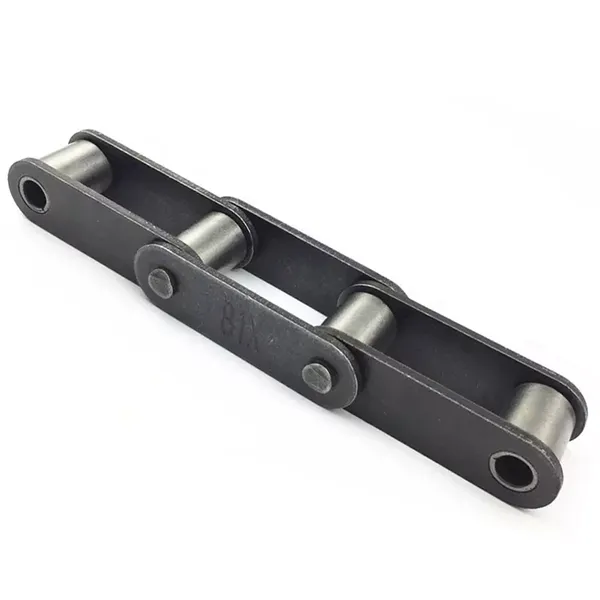
What are the future trends and advancements in conveyor chain technology?
The field of conveyor chain technology is constantly evolving, driven by the need for improved efficiency, productivity, and sustainability. Here are some of the future trends and advancements in conveyor chain technology:
1. Automation and robotics: The integration of conveyor chains with automation and robotics systems is a growing trend. This includes the use of advanced sensors, machine vision, and artificial intelligence to enable autonomous operation, precise positioning, and efficient material handling.
2. Smart and connected systems: Conveyor chains are becoming increasingly connected through the Internet of Things (IoT) technology. This allows for real-time monitoring, data collection, and analysis of various performance parameters such as chain wear, tension, temperature, and energy consumption. Smart systems can optimize maintenance schedules, detect potential failures, and improve overall system efficiency.
3. Lightweight and high-strength materials: The development of lightweight yet high-strength materials is an ongoing focus in conveyor chain technology. Advanced alloys, composites, and engineered plastics offer improved strength-to-weight ratios, reducing energy consumption and increasing the load capacity of conveyor systems.
4. Energy efficiency: Energy efficiency is a key consideration in conveyor chain design. Future advancements aim to minimize power consumption through the use of efficient drive systems, regenerative braking, and smart control algorithms that optimize speed and acceleration profiles. Energy recovery technologies, such as regenerative drives, can also capture and reuse energy during deceleration or braking.
5. Sustainability and environmental friendliness: Conveyor chain technology is moving towards more sustainable and environmentally friendly solutions. This includes the use of eco-friendly materials, improved lubrication techniques to minimize environmental impact, and the adoption of energy-efficient components and systems. Recycling and circular economy concepts are also gaining prominence in the design and manufacturing of conveyor chains.
6. Advanced wear monitoring and predictive maintenance: The future of conveyor chain technology involves advanced wear monitoring systems that can accurately predict the remaining useful life of chains and components. This enables proactive maintenance planning and reduces unplanned downtime. Predictive maintenance algorithms analyze data collected from sensors and provide timely alerts for chain replacement or repair.
These are just a few examples of the future trends and advancements in conveyor chain technology. As technology continues to advance, we can expect further innovations that enhance performance, efficiency, reliability, and sustainability in conveyor systems.

What are the cost considerations when purchasing a conveyor chain?
When purchasing a conveyor chain, there are several cost considerations that need to be taken into account to ensure an optimal investment and operational efficiency.
1. Initial Cost: The initial cost of the conveyor chain includes the cost of the chain itself, as well as any additional components such as sprockets, attachments, and connecting links. It is important to compare prices from different suppliers and evaluate the overall value for the money.
2. Maintenance and Repair Costs: Consider the long-term maintenance and repair costs associated with the conveyor chain. Some chains may require more frequent lubrication or replacement of components, which can add to the overall operating expenses.
3. Service Life: The service life of the conveyor chain is an essential factor in determining its cost-effectiveness. Chains with longer service life may have a higher initial cost but can result in lower replacement and downtime costs in the long run.
4. Energy Efficiency: Energy consumption is an ongoing cost to consider. Conveyor chains that offer lower friction and efficient power transmission can contribute to energy savings and reduce operating expenses.
5. Maintenance Ease: Consider the ease of maintenance when selecting a conveyor chain. Chains that are easier to clean, inspect, and maintain can reduce labor costs and increase operational efficiency.
6. Compatibility and Integration: Ensure that the selected conveyor chain is compatible with the existing conveyor system or equipment. Retrofitting or modifying the system to accommodate a specific chain may incur additional costs.
7. Supplier Support and Warranty: Evaluate the level of technical support provided by the supplier and the warranty coverage offered for the conveyor chain. This can impact the overall cost of ownership and provide peace of mind in case of any unforeseen issues.
It is important to consider these factors holistically and make a cost-benefit analysis based on the specific requirements of the application. Choosing a conveyor chain that aligns with the budget, performance needs, and long-term cost considerations will help optimize the investment and ensure efficient material handling operations.
editor by CX 2023-07-21
China wholesaler Plastic Tabletop Chain Straight Run 820 Series transmission chains conveyor belts cutting roller chain
Relevant Industries: Resorts, Garment Shops, Developing Content Stores, Manufacturing Plant, Equipment Repair Outlets, Meals & Beverage Factory, Farms, Cafe, Home Use, Retail, Food Shop, Printing Retailers, Building works , Power & Mining, Food & Beverage Retailers, Promoting Company
Custom-made assist: OEM, ODM
Normal or Nonstandard: Standard
Type: Leaf Chain
Substance: Plastic
Tensile Energy: None
Pitch: 38.1mm
Pin content: Stainless Steel
Backflex radius(min): 50mm
Certification: ISO9001
Shade: Grey
Common length: 3.048m=ten feet(80 hyperlinks)
Optimum conveyor duration: 12 meters
Merchandise identify: plastic chain
Packaging Information: by cartons
Port: ZheJiang
Straight Run: Solitary Hinge 820 Collection
These chains are mostly employed in the food and packaging business for conveying numerous sorts of containers. For example: PET bottle, PET petaloid bottle, Aluminum and metal can, Cartons, Trays, Packaged products(cartons, shrink packs), Glass, Plastic containers.
Rewards:
Accurary of molding process guatantees ideal flatness
High wear resistance and lower friction
Higher operating load
| Pin Content | stainless metal |
| Normal length | 10 toes (80 backlinks) |
| Greatest conveyor duration | 12 meters |
Programs
Certification
Relevant items
Please get in touch with us if any further questions.
What to look for in a roller chain
There are many different factors to consider when purchasing a roller chain. One of the most important factors is tensile strength, which represents the force required to break the chain. Roller chains are available in three different tensile strengths: minimum, average and ultimate. Each strength reflects a different limit to the load the chain can handle. However, these limits are not always equal and you should be aware of the differences between roller chains.
Canonical chain
Most roller chains have standard sizes printed on the side panels. This is usually “40” or “C2080H”, but can also be the letter “B”. If the chain is old, it will need to be cleaned to see its size. You can find the size on the standard roller chain size chart, but not everyone is marked. To determine the size, measure the diameter and pitch of the chain, then compare the results to the chart to see what size you need.
Heavy-duty roller chains are available with heat-treated pins, side plates, and rollers. In addition to being heat treated, they are also factory pre-stretched, which reduces wear on these parts. If properly maintained, they can last for years, reducing the risk of failure or corrosion. Depending on the application, standard roller chains are available in different sizes. It can be purchased separately. There are several options to choose from, depending on the size and strength of the application.
PEER roller chains contain solid rollers to reduce shock loads on the sprocket teeth. Heat treating and preloading all components of the PEER chain helps minimize initial elongation. Hot-dip lubrication ensures complete lubrication of all chain components, extending their life and reducing maintenance costs. For heavy-duty applications, ASME/ANSI-B29.1 chain is a good choice.
Standard roller chains are made of steel or alloy steel. However, it can be made of other materials such as stainless steel. In addition to steel, stainless steel is often used in food processing machinery where chain lubrication is an issue. Brass and nylon are also sometimes used. However, they are not that popular. Therefore, you should always check with your supplier before purchasing. By comparing the tensile strength of two different chains and making an informed decision, you can get the best price and service.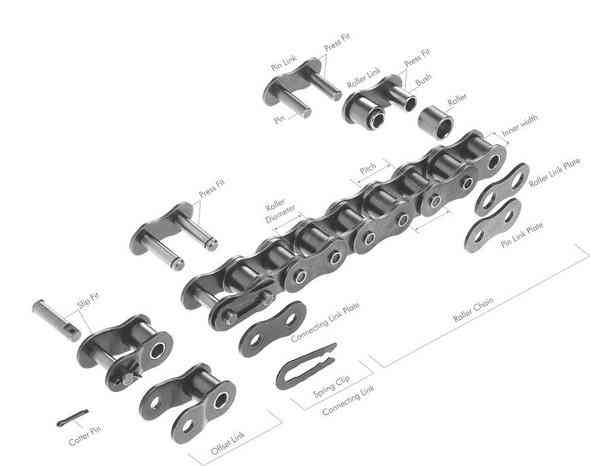
Chain without bushing
Bushless roller chains have advantages over conventional roller chains. Unlike conventional chains, bushless chains have extensive lateral flexibility, which increases the chain’s lubrication flow. The inner plates of bushless chains have protruding shoulders so the oil can flow through them more easily and efficiently. This is an important characteristic of a smooth-running chain. Additionally, bushless chains may have improved shifting performance.
The strength of a bushingless roller chain is measured in terms of tensile strength and fatigue strength. The former measures the load a chain can withstand before breaking. Fatigue strength is equally important, and factors that affect fatigue strength include the steel used to make the chain components, the pitch hole fabrication, the type of shot peening on the chain, and the design and thickness of the chain. For example, if the chain is too thin, it may not be enough for heavy-duty applications.
Like traditional roller chains, bushingless roller chains have two different types of links. The inner link has two inner plates connected by pins, while the outer chain has two outer plates held together by bushings. A bushingless roller chain is similar to a traditional chain, except it eliminates a step in the assembly process by stamping the tube into the inner plate. So if you want a smoother ride, a bushingless roller chain is a better choice.
There are two different sizes of bushingless roller chains. One size is designed for use with standard single-strand chains, while the other size is designed for use with double-strand or triple-strand chains. Bushless chains are generally shorter than conventional chains, so they can fit in tighter spaces. Bushless chains are made of the highest quality materials. These chain attachments are case hardened for optimum strength and durability.
Mute chain
The silent roller chain has a smooth, low-noise drive. They are made of stacked rows of flat chainplates with a gear-like profile that meshes with the sprocket teeth. Each chainplate is attached to a corresponding sprocket, which also allows the chain to bend. While these basic components are the same for every silent roller chain, there are many variations that allow them to be used in a variety of applications.
The most popular high-speed transmission, silent chains feature gear-like sprockets. They can be made from single or multiple strands of material. Single-strand chains are less expensive than multi-strand chains, but they tend to wear out faster if not lubricated. Single-strand roller chains can be used for years without lubrication, but for your application, wide silent chains are still worth considering.
The design and construction of silent chains make them ideal for conveying a wide variety of products. They have flat, heat-resistant surfaces. They are also durable and non-slip. They are available in a variety of pitch sizes, widths, and mounting styles. Whether you need chains for general purpose conveyors or glass bottle transport applications, we have you covered. Ask about the benefits of silent roller chain conveyors.
Inverted tooth chains are another option for quieter chains. These chains are designed to reduce noise from engine-related friction. Silent chains are more common, and manufacturers have fallen in love with them. A silent chain consists of several links connected to the sprocket teeth. Teeth rotate to reduce noise, vibration, and chord action. These are the main reasons why silent chains are so popular.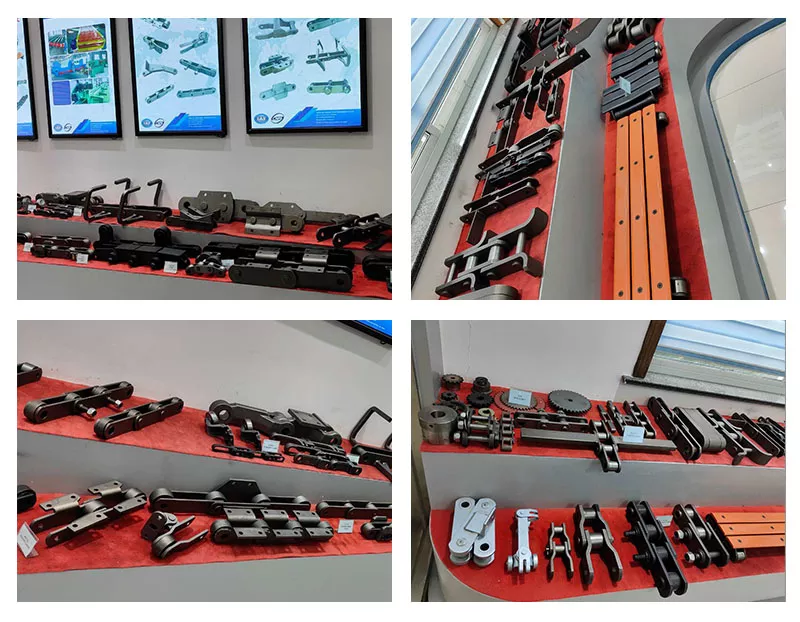
ANSI chain pitch
To measure your bike’s chain pitch, you can use a caliper. This measurement is taken from the center of the rolling pin to the center of the next rolling pin. Chains come in many sizes, but ANSI is the most common chain standard in the United States. A caliper is handy if you’re not sure which size to buy, as it allows you to check for worn sprockets.
Chains that meet ANSI standards will be characterized by a certain pitch. This measurement is based on the width and spacing of the roll. The spacing is usually greater than the width. The standard number will be the right number for the width of the chain or the left number for the rollers. The number on the left indicates whether the chain is lightweight or heavyweight. Heavyweight chains are designated by the suffix “H”.
Common chain sizes are based on ANSI chain pitch. Pitch is the minimum distance between bushing and sprocket. The smaller the chain pitch, the greater the total distance between the two points. This means the chain will last longer. However, if you are buying a chain for a specific application, you should check the pitch carefully as it can affect the performance of the chain.
Roller chain wear measurement
The purpose of roller chain wear measurement is to prevent breakage by monitoring the strain on the chain. There are several ways to measure roller chain wear. The first is to remove the chain from its working position and measure the distance from the sprocket to its measuring end. Another way is to measure the pitch of the chain or the distance between two pins. This method is superior to other methods because it is convenient and accurate.
When measuring the wear of a roller chain, it is important to note that the elements of the chain will gradually deform. About 3.75% of the total wear will be on the pins and the rest will be on the internal links. These wear measurements will vary based on the nominal pitch of the chain and the amount of friction the chain is experiencing. Proper lubrication between pins and bushings, load and frequency of articulation all affect wear rates.
It is important to measure the amount of wear on the roller chain to avoid excessive machine failures. The longer the chain runs, the more wear it will wear. Although the length of the chain should be less than the center distance, the excessive load will cause premature wear. Therefore, lubrication is essential. Additionally, the sag of the chain should not exceed 2% to 4% of its center-to-center distance. Finally, check for unusual noise or visible defects. A common cause of excessive roller chain wear is the size of the load. Every chain manufacturer sets a maximum workload for its product.
There are several ways to measure roller chain wear. If using a high-speed drive, it should have at least 11 teeth, and a medium-speed drive should have at least 25 teeth. Also, be sure to check the length of the chain, even if you should. The same goes for the pin diameter, which should be the same or different pitch as the roller chain.
editor by czh