Product & technical gallery
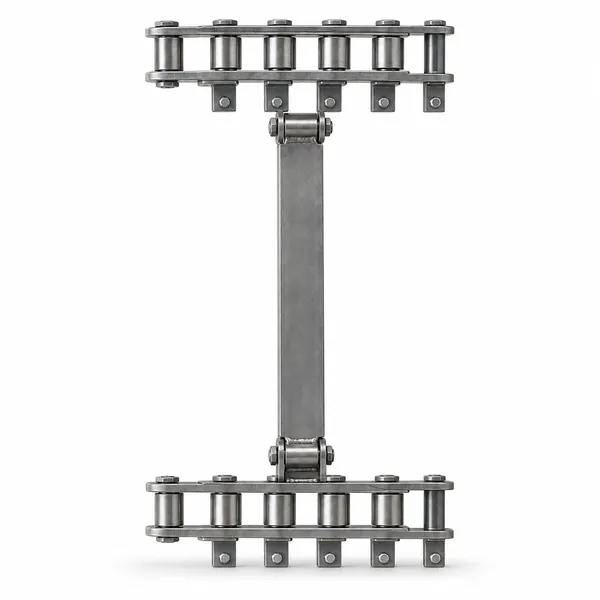
K SERIES · FEEDER BREAKER SCRAPER CHAIN
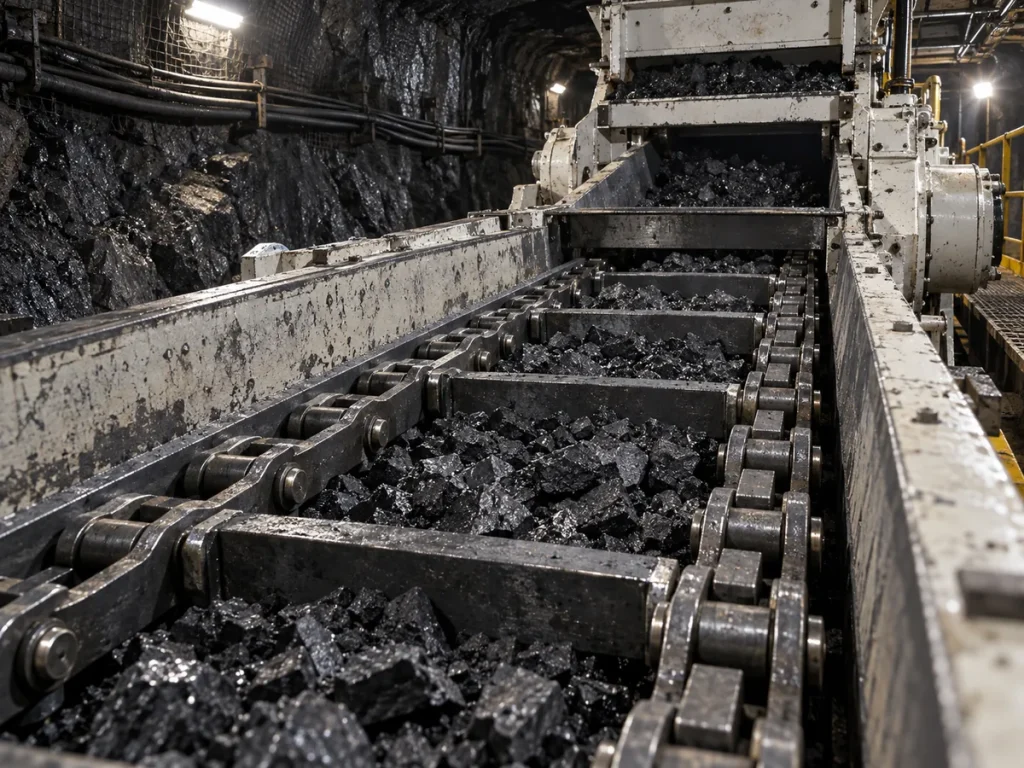
K201B Feeder Breaker Scraper Chain
SKU: K201B · Category: Feeder Breaker Chains
The K201B Feeder Breaker Scraper Chain is a K Series configuration for feeder breaker chain-conveyor service. Its specified configuration uses a 3 1/2 inch pitch (89 mm), a chain unit length of 21 inches (534 mm), and a scraper width of 44 2/5 inches (1127.5 mm). The technical information also provides a detailed component tree that can be used to identify the chain section, links, joint components, and flight/scraper assembly during replacement or custom review.
Configuration Snapshot
| Specification item | K201B value |
|---|---|
| Product type | Feeder Breaker Scraper Chain |
| Pitch | 3 1/2 in (89 mm) |
| Chain unit length | 21 in (534 mm) |
| Repeating assembly description | One Flight Section and two Chain Sections |
| Scraper width | 44 2/5 in (1127.5 mm) |
These values describe the K201B configuration presented on this site. They should not be used to infer undocumented material grades, strength ratings, heat-treatment values, or compatibility with a particular machine model.
Product Overview
K201B belongs to the K Series ladder conveyor chain family used in underground mining material-handling applications. The K Series application scope includes shuttle cars, underground feeder breaker chain conveyors, and coal-washing service. For this page, the commercial scope is narrower: K201B is presented specifically as a feeder breaker scraper chain because that use is directly identified in the technical information.
A feeder breaker chain works as an assembly rather than a standalone link. The pitch must correspond with the chain/sprocket geometry, while the flight or scraper arrangement must suit the conveyor width and material-handling layout. The K201B chain unit combines flight and chain sections into a repeating arrangement, and the component identifiers give buyers a practical way to compare an existing chain with the product model.
Because underground machines may have been repaired or modified during service, a model name alone is not always enough for replacement. Where possible, compare the existing drawing and physical chain with the K201B dimensions and component arrangement before confirming the order.
Chain Structure and Components
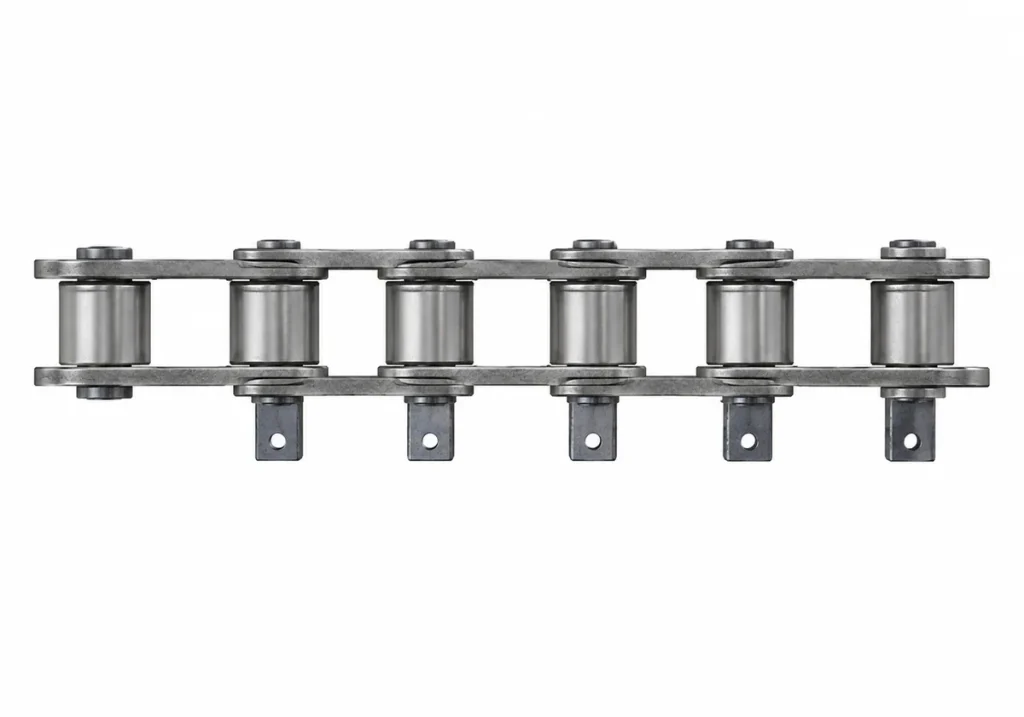
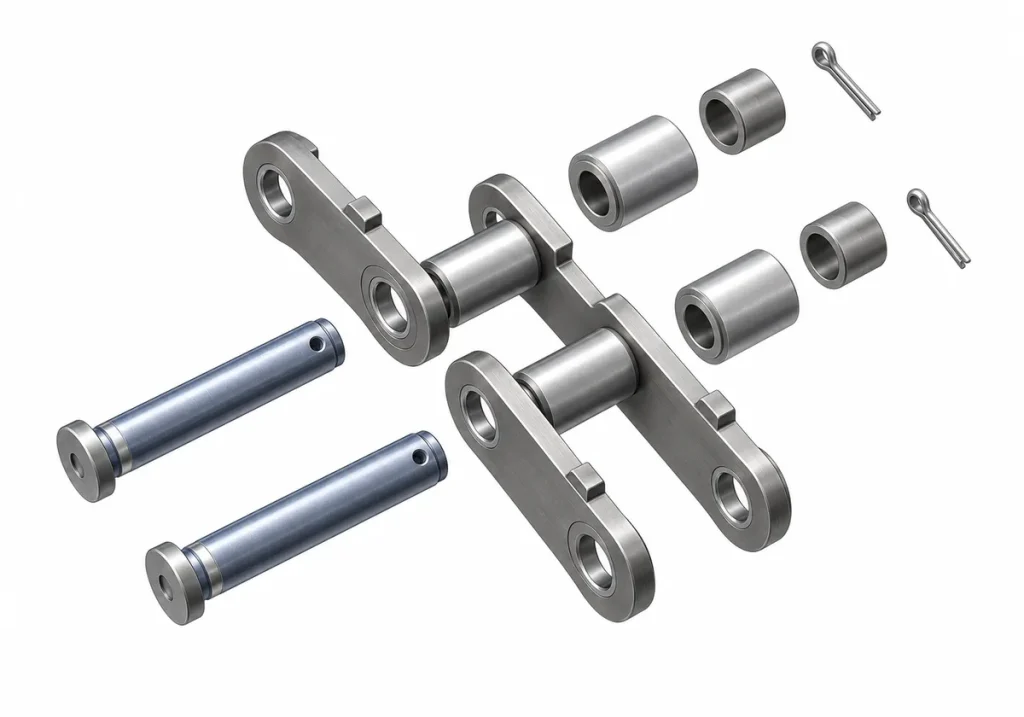

The K201B secondary component structure is documented as:
- K201B01 – Chain Section
- K201B02 – Outer Link
- K201B03 – Inner Link
- K201B04 – Flight Section
The tertiary component structure is documented as:
- K201B001 – Outer Plate
- K201B002 – Inner Plate
- K201B003 – Bush
- K201B004 – Pin
- K201B005 – Locating Bush
- K201B006 – Spring Pin
- K201B007 – Scraper Head
- K201B008 – Scraper Plate
This breakdown matters during identification because wear or damage may affect only part of the assembly. A purchaser may see a damaged scraper plate or pin and assume a component-level order is sufficient, but the surrounding joint and attachment geometry should still be checked. The component identifiers above describe the K201B structure; standalone component supply should be confirmed as part of the RFQ rather than assumed.
Dimension and Selection Drawing
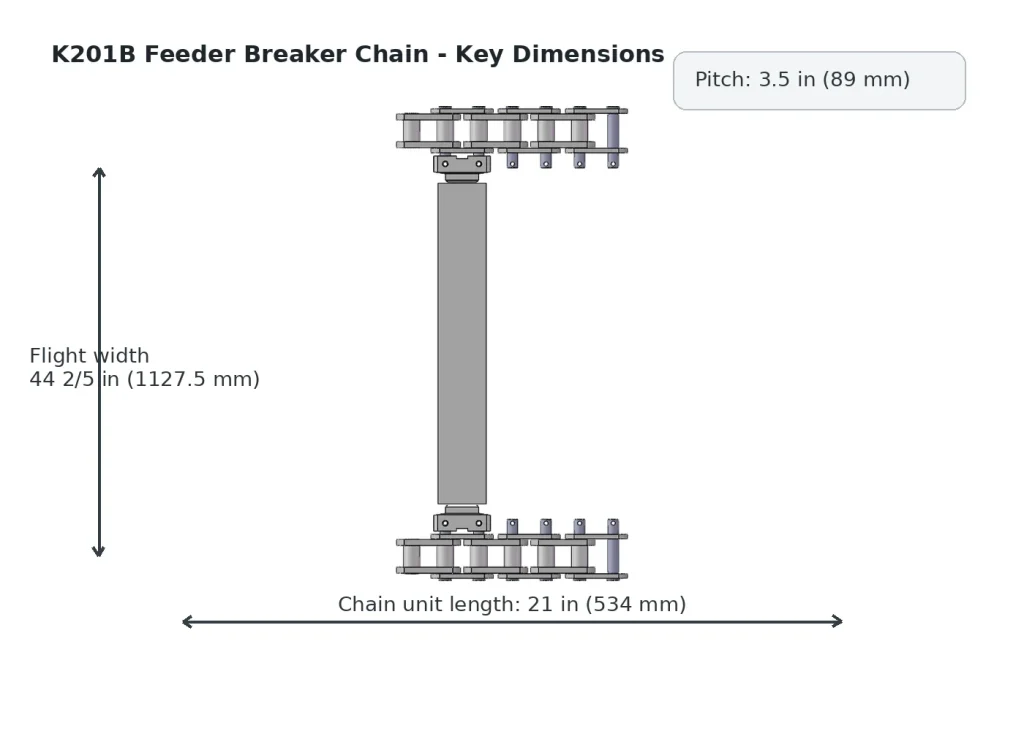
The dimension view should be compared with the existing chain before the specification table below. Use the drawing as a reference for the product model, then confirm the actual chain measurements from the machine or approved drawing.
For related drive-system context, see industrial chain and sprocket matching.
Technical Specifications

| Specification | K201B |
|---|---|
| Chain family | K Series Ladder Conveyor Chain |
| Product description | Feeder Breaker Scraper Chain |
| Pitch | 3 1/2 in (89 mm) |
| Chain unit length | 21 in (534 mm) |
| Unit arrangement | One Flight Section + two Chain Sections |
| Scraper width | 44 2/5 in (1127.5 mm) |
| Chain Section | K201B01 |
| Outer Link | K201B02 |
| Inner Link | K201B03 |
| Flight Section | K201B04 |
Material, hardness, tensile capacity, mass, lubrication specification, and machine compatibility are not published here because the technical information does not provide model-specific values for those fields. If they are required, include them in the RFQ specification or send the existing approved drawing.
Underground Feeder Breaker Application
K Series chains are documented for underground feeder breaker chain conveyors. In that environment, selection should consider the complete conveying system: existing sprocket engagement, chain path, scraper/flight geometry, material handled, contamination, machine adjustment system, and maintenance constraints. Those conditions determine what must be confirmed, but they do not justify inventing a universal tension setting or service interval.
When reviewing K201B for an existing feeder breaker, check whether the measured pitch and repeating unit length correspond with the specified configuration, then verify the 44 2/5 inch scraper width and the flight/link arrangement. If any of those points differ, treat the chain as an unidentified or custom configuration until a drawing-based review is complete.
See Underground Feeder Breaker Applications
Selection and Customisation Inputs
A useful K201B enquiry should answer five questions:
- Is the existing chain positively identified as K201B, or is the model being considered from measurements?
- Does the measured pitch correspond with 3 1/2 inches?
- Does the repeating unit length correspond with 21 inches?
- Does the scraper width correspond with 44 2/5 inches?
- Does the link, flight, and scraper component arrangement match the K201B structure?
If the answer to any point is uncertain, send photographs and a drawing or measured sketch. Also include the feeder breaker or conveyor context, handled material, quantity, and any customer-controlled requirements for material, testing, inspection, or documentation.
Use the Chain Selection Guide
Inspection and Maintenance Considerations
K201B inspection should be coordinated with the machine maintenance procedure. Before physical inspection or measurement, follow the equipment and site isolation requirements. Do not rely on a generic web instruction for lockout, chain adjustment, or stored-energy control.
With the chain safely accessible, document link and plate condition, visible pin/bush joint condition, the flight section, scraper head and scraper plate, and any signs of uneven tracking or abnormal engagement. Look for deformation, damaged attachment areas, unusual side contact, loose or missing retention features, and material build-up that prevents a clear inspection. If the chain has been repeatedly adjusted, record the adjustment position and compare it with the machine maintenance history where available.
No universal wear percentage or discard limit is published on this page. Replacement decisions should use the machine documentation, approved chain specification, measured wear trend, and engineering review.
Read the Maintenance and Inspection Guide
Manufacturing and Quality Workflow
K Series product information identifies heat-treated pins as a family feature. For K201B procurement, manufacturing and inspection should be controlled against the approved drawing and purchase specification rather than assumed process parameters.
The production review should confirm the required component identities, dimensions, assembly orientation, and flight configuration. Where the customer controls material, heat treatment, hardness, testing, traceability, or inspection reporting, those requirements should be stated on the RFQ or drawing. Missing technical requirements should be resolved before production instead of being filled in by a generic website specification.
K201B Identification Checklist
Before treating an installed chain as K201B, compare the measurements and construction details in a deliberate sequence. Start with the nominal 3 1/2 inch pitch, then verify the 21 inch repeating chain unit and the 44 2/5 inch scraper width. After those three measurements agree, compare the chain structure: the presence and arrangement of the Chain Section, Outer Link, Inner Link and Flight Section, followed by the visible joint and scraper components. A photograph or drawing should show enough of the assembly to confirm that the measurements belong to the same chain configuration.
This checklist is especially useful when an old maintenance record names K201B but the installed chain has been repaired over time. A historical model reference is useful, but the current assembly should still be checked before ordering. If the current scraper width, flight geometry, pin arrangement or link construction conflicts with the product model, keep the discrepancy visible in the RFQ and request an engineering review rather than forcing the chain back to the expected catalogue value.
For repeat orders, retain the approved drawing, purchase reference and any inspection record that confirms the supplied configuration. Those records reduce the amount of re-measurement required on the next shutdown and make it easier to distinguish genuine wear from a different chain variant.
If K201B Is Only a Suspected Match
Treat K201B as a working hypothesis until the dimensions and structure agree. Record the model reference source – marking, drawing, previous order or maintenance record – and then compare it with the installed chain. If the pitch is 3 1/2 inch but the unit length, scraper width, flight construction or joint arrangement differs, keep the chain unidentified and send the discrepancy for review. A technically honest RFQ is more useful than a confident model label supported by only one matching dimension.
ORDER PLANNING
MOQ, Samples, Lead Time and Trade Terms
Use these planning ranges to qualify a sourcing request before drawings and final production details are confirmed.
Standard products are normally planned around production quantity. High-value or oversized assemblies may be evaluated by total order value.
Qualified 1–5 piece sample requests may be considered at sample pricing when the configuration and process allow.
Different approved models can be combined toward a total order value of approximately USD 1,500.
One- or two-piece requests are considered only for qualified paid samples, replacement validation or engineering cases, not routine retail orders.
Standard items: 10–25 working days. Custom components: 20–45. Project-based equipment or complex packages: 45–120.
EXW, FOB, CIF and DAP are normally supported. FCA, CFR, CPT, CIP and DDP can be discussed according to shipment requirements.
SUPPLIER REVIEW SUPPORT
Third-Party Supplier Verification Materials
Third-party supplier audit and company-verification materials supported by SGS / TÜV Rheinland are available within the EVER-POWER supplier network to help buyers review supplier identity, business operations, supplier profile and general manufacturing capability. These supplier assessments are not product certifications. For an entity-specific or order-specific review, ask us for the current matching verification package together with any required product inspection reports, material documents or compliance records.
Frequently Asked Questions
What is the K201B pitch?
3 1/2 inches (89 mm).
What is the K201B chain unit length?
21 inches (534 mm), described as one Flight Section and two Chain Sections.
What is the K201B scraper width?
44 2/5 inches (1127.5 mm).
Can K201B be replaced by another 3.5 inch chain?
Not on pitch alone. The unit length, scraper width, component arrangement, flight geometry, and equipment interface must also be checked.
Do you supply K201B components separately?
The technical breakdown identifies the component structure, but this page does not claim that every component is stocked or sold separately. Identify the required component and send the chain model, photographs, dimensions, drawing if available, and quantity for review.
What if my chain has no readable model marking?
Send measured pitch, unit length, scraper width, clear photographs of the chain and flight arrangement, and any available machine or drawing information. Treat the chain as unidentified until its dimensions, geometry and machine context support a match.
Request a K201B Quote
For a K201B enquiry, send the K201B reference, required quantity, any existing drawing and customer-controlled technical requirements. For replacement work, add photographs plus measured pitch, 21 in chain-unit context, scraper width and the flight/scraper arrangement so the existing assembly can be compared with the K201B configuration.